Image to help understand the article
A pastor shaped by faith and resistance
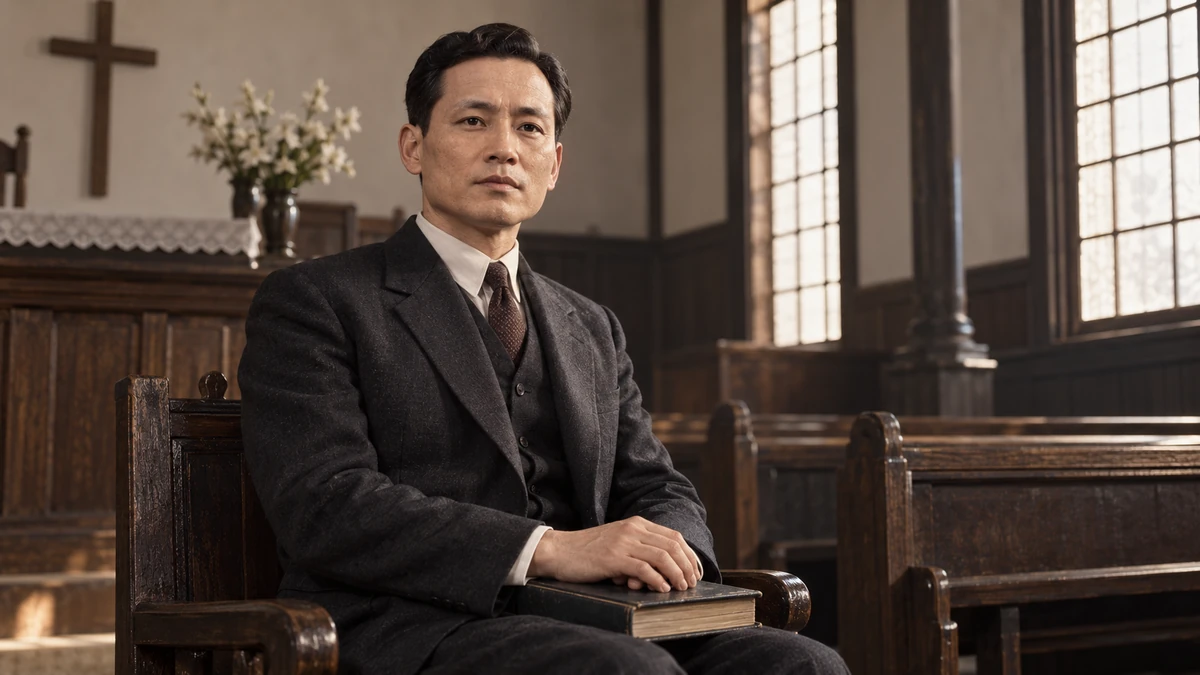
Ju Ki-chul, a Presbyterian minister remembered as both a Christian martyr and a Korean independence activist, resisted Japan’s campaign to force Koreans to worship at Shinto shrines during its colonial rule of the Korean Peninsula. Arrested repeatedly for his refusal, he died in a Pyongyang prison on April 21, 1944.
Ju was born Nov. 25, 1897, in Ungcheon, now part of Changwon in South Gyeongsang Province. His birth name was Ju Ki-bok, but after his baptism he adopted the name Ki-chul to express his determination to practice Christianity faithfully.
He began attending Ungcheon Church with his eldest brother in 1910. After hearing a lecture by writer and intellectual Yi Kwang-su, Ju enrolled in Osan School in Jongju, in what is now North Korea, and graduated in 1916. He later entered a newly established Christian college but returned home because of an eye condition.
By 1919, Ju was serving as a deacon at Ungcheon Church. That year, he organized a study group and participated in the March 1 Movement, the nationwide uprising against Japanese colonial rule.
From seminary to prominent pulpits
Ju decided to enter the ministry after attending Christian revival meetings in 1920. He began studying at the Presbyterian Theological Seminary in Pyongyang in 1922, graduated in December 1925 and was ordained later that month.
He became senior pastor of Choryang Church in Busan in January 1926 and also taught at a regional Bible institute. Among his students were Cho Yong-hak, who later died after opposing shrine worship, and Son Yang-won, who was imprisoned for five years for the same resistance.
Ju served at Choryang Church until 1931 before moving to Munchang Church in Masan and later Sanjonghyon Church in Pyongyang. He held senior positions in the regional Presbyterian governing body and preached at revival meetings around the country.
His first wife, An Gap-su, died of illness in 1933. Ju married Oh Jeong-mo, a deacon at his Masan church, in 1935. The following year, at the request of his mentor Cho Man-sik and an invitation from Sanjonghyon Church, Ju returned to Pyongyang as its senior pastor.
There, he became known for sermons emphasizing complete personal sacrifice. His preaching linked Christian conviction with resistance to Japanese colonial authority.
Defying compulsory shrine worship
Japan intensified pressure on Christian schools and churches to participate in Shinto shrine rites, which colonial authorities demanded as an expression of loyalty. For Christians such as Ju, bowing at the shrines violated the commandment against worshipping other gods. Refusal also became an act of resistance to Japan’s efforts to impose its rule and identity on Koreans.
Ju was first detained by Pyongyang police in the spring of 1938. He received a 10-year sentence after his arrest that April but was released in June. Authorities arrested him again in August and freed him from a police station in Daegu on Jan. 29, 1939.
His health had deteriorated so severely that missionary Bernheisel continued assisting with evening services after Ju returned to Sanjonghyon Church. In October 1939, colonial police pressured the Pyongyang Presbytery to prevent ministers and elders who rejected shrine worship from preaching or praying during Sunday services.
Ju continued preaching and was arrested again that month. On Dec. 19, the presbytery removed him from the ministry for refusing to comply with its shrine worship decision.
He delivered his final sermon, known as “My Five Prayers,” at Sanjonghyon Church in February 1940. Although released from police custody on April 20, he was arrested again before dawn on Sept. 20 during a nationwide roundup of shrine worship opponents.
Death in prison and posthumous recognition
Ju was held in Pyongyang prison without a final trial judgment for much of the next five years. His health worsened from the effects of torture, and officials transferred him to a prison hospital ward on April 13, 1944.
He met with his wife for the last time on April 21 and died in prison that night.
South Korea posthumously awarded Ju the Order of Merit for National Foundation, Independence Medal, in 1963. He is remembered alongside Han Sang-dong as a leading figure in the movement against compulsory shrine worship and, with Son Yang-won, as one of the most revered pastors in Korean Protestant history.
Comments
Post a Comment