Image to help understand the article
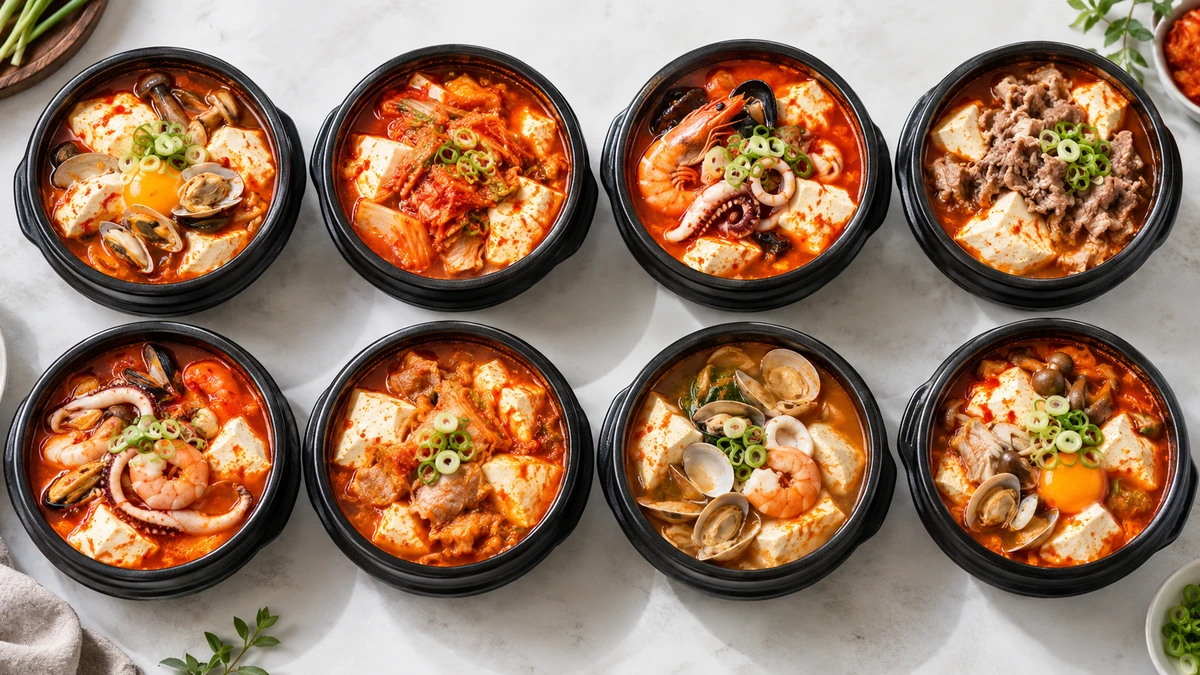
Not all bowls of sundubu-jjigae, a Korean stew built around delicate, unpressed tofu, have the same nutritional profile. Data from South Korea’s Ministry of Food and Drug Safety show substantial differences among eight varieties, particularly in calories and sodium.
Prepared meal kits contain more sodium
For each 100-gram serving, assorted-ingredient sundubu-jjigae had the fewest calories at 25 and the least sodium at 122 milligrams. Seafood and napa cabbage kimchi with pork versions each contained 29 calories, while kimchi sundubu-jjigae had 35 calories.
The prepared meal-kit varieties were generally higher in both measures. They ranged from 42 calories and 375 milligrams of sodium for Gangneung-style spicy seafood soft tofu stew to 53 calories and 339 milligrams of sodium for a seafood version. A jjamppong-style soft tofu stew — inspired by the spicy Korean-Chinese noodle soup — had the most sodium at 422 milligrams per 100 grams.
Seafood version leads in protein
Seafood sundubu-jjigae had the most protein among the eight varieties, at 4.09 grams per 100 grams. It was followed by the prepared jjamppong-style version at 3.82 grams and the Gangneung-style meal kit at 3.78 grams.
The figures come from the ministry’s food nutrient database and reflect surveys conducted from 2017 through 2024. Because all values are calculated per 100 grams rather than per bowl, diners would need to consider the size of an actual serving when assessing total calories, sodium and protein.
Comments
Post a Comment