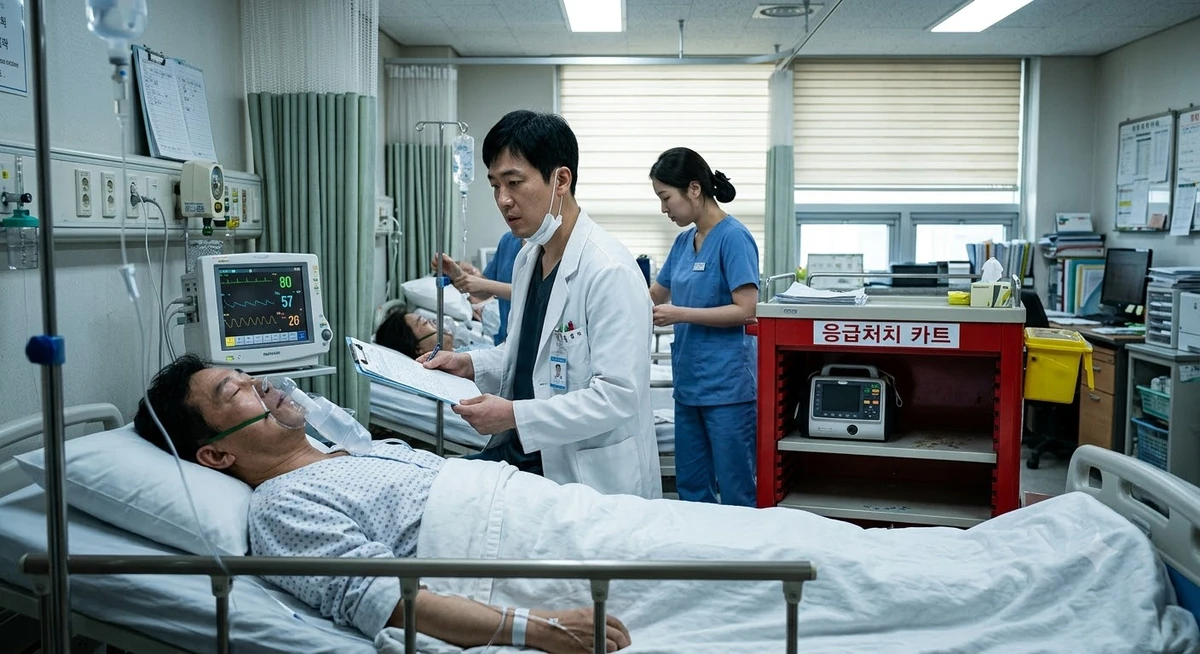
Image to help understand the article
Hundreds of Korean clinics performing frequent sedation found without emergency equipment
A review of 440 South Korean clinics that frequently use sedation drugs found that most do not have essential emergency equipment on site, raising concerns about patient safety during procedures involving medications such as propofol, midazolam and ketamine.
The data, submitted by the Health Insurance Review and Assessment Service to South Korea’s parliamentary Health and Welfare Committee member So Byung-hun, showed that only two of the 440 clinics had both installed and reported having ventilators. That represents 0.5% of the facilities surveyed.
Only 66 clinics, or 15%, had defibrillators. The remaining 85% operated without equipment used to respond to cardiac emergencies, according to the findings.
Legal gaps leave many clinics outside equipment requirements
The clinics were selected because they each prescribed more than 600 cases of sedation or sleep anesthesia drugs during the first half of this year, based on national health insurance billing records.
South Korea’s current regulations require ventilators in areas such as operating rooms and intensive care units, while defibrillators are required in intensive care units. However, many smaller clinics perform sedation in procedure rooms, such as those used for endoscopy, meaning they are not legally required to maintain the same emergency equipment.
The report argued that the current system creates a regulatory gap and called for changes requiring clinics that frequently perform sedation to prepare emergency response equipment.
Concerns grow as sedation procedures increase
The Korean Society of Anesthesiologists identifies respiratory suppression as one of the biggest risks associated with sedation. Without timely intervention, breathing problems can become fatal.
The issue has gained attention following recent deaths linked to sedation procedures, including two patient deaths at a dental clinic in Seoul’s Gangnam district within an eight-month period.
Questions have also been raised about accident reporting. Under South Korea’s Patient Safety Act, mandatory reporting of serious incidents applies to hospitals with 200 or more beds and general hospitals, while smaller clinics are not required to report fatal incidents.
Data from the Korea Institute for Healthcare Accreditation showed that from 2021 through May this year, clinics reported 33,606 patient safety incidents, but only one was classified as a serious case. About 97% of those reports came from pharmacists who identified prescription errors at pharmacies.
Emergency response information may not reach health authorities
South Korea’s National Fire Agency recorded 474,634 ambulance dispatches to medical facilities and other healthcare-related locations from 2021 through August this year. The reported causes included 15,509 cardiac arrests, 29,382 cases of impaired consciousness and 58,768 cases of breathing difficulties.
However, the agency said there is currently no system requiring emergency responders to share information about clinic-based emergency patients after transport with the Ministry of Health and Welfare or local public health offices.
As a result, local authorities may not become aware of serious incidents unless families file complaints or the cases receive media attention. Gangnam district officials noted that local health authorities face limitations in immediately identifying serious medical accidents occurring at clinics.
Sedation procedures at clinics continue to rise
The safety concerns come as sedation procedures at smaller clinics have increased. The number of sedation-related treatments billed by clinics rose from 298,375 cases in 2021 to 428,425 cases last year, a 43.6% increase. In the first half of this year alone, clinics billed 236,043 cases.
The increase has been especially notable for so-called visiting anesthesia services, where clinics without resident anesthesiologists hire outside anesthesia specialists. Those cases rose from 51,291 in 2021 to 86,732 last year, a 69.1% increase.
Comments
Post a Comment