Image to help understand the article
A U.S. Native Used in Korean Supplements
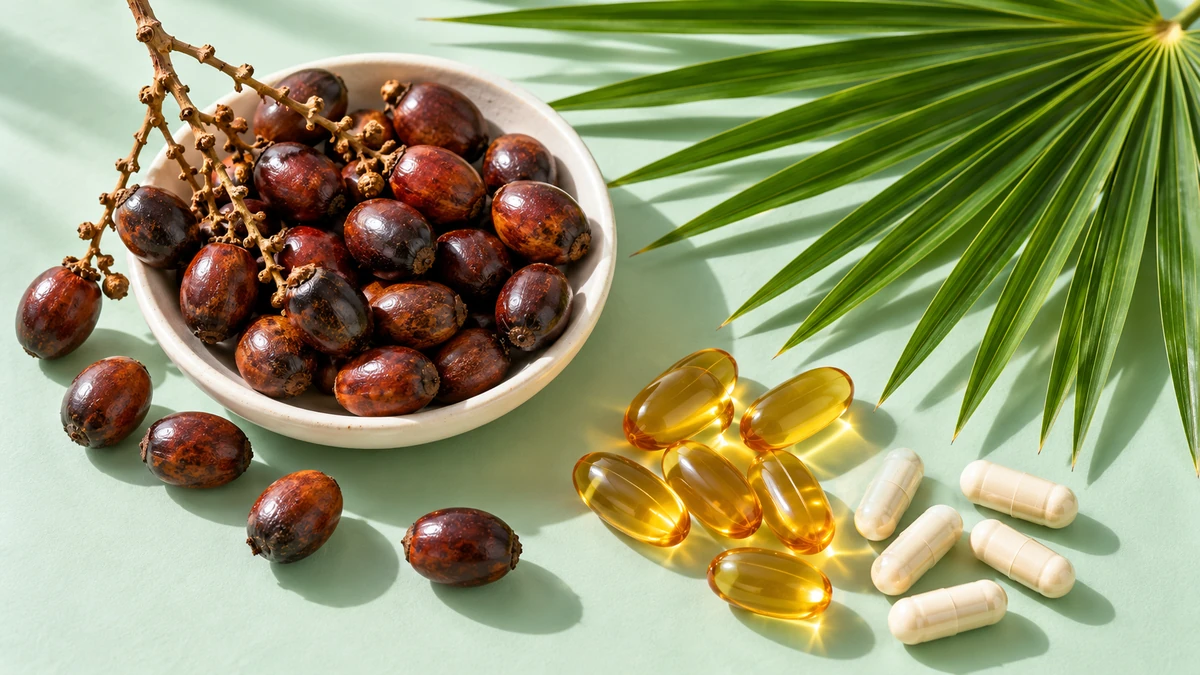
Saw palmetto, scientifically known as Serenoa repens, is a small palm native to subtropical and tropical areas of the southeastern United States, including Florida and Georgia, as well as Mexico. Its reddish-brown fruit is extracted for use in dietary supplements marketed for prostate health.
The plant, also called the American dwarf palm, is not cultivated in South Korea. That means all saw palmetto ingredients used in Korean health supplements are imported, primarily from the southern United States.
South Korea Tightens Quality Standards
South Korea’s Ministry of Food and Drug Safety, or MFDS, recognizes saw palmetto fruit extract as an ingredient that “may help to maintain healthy prostate” function. That language describes a potential health benefit and does not classify the supplement as a medicine.
Korean regulators now require saw palmetto supplements to identify the ingredient’s country of origin. Standards also require the extract to contain at least 80% total fatty acids, 0.2% sterols and 0.1% beta-sitosterol. The rules are intended to prevent manufacturers from selling products diluted with other plant oils.
Concerns about adulteration are not theoretical. Overseas authorities have identified some ingredients from India that were mixed with palm or coconut oil to raise measured levels of fatty acids and lauric acid. Of 93 saw palmetto extract imports tested in South Korea since January 2024, one failed to meet fatty-acid and lauric-acid requirements.
Dosage and Safety Warnings
For standard saw palmetto fruit extract, the MFDS lists a daily intake of 70 to 115 milligrams based on lauric acid content and says it should be taken only by adult men. A separately approved combination ingredient has a daily intake of 705 milligrams. Consumers should follow the instructions for the specific product because formulations differ.
The agency recommends taking saw palmetto after a meal with plenty of water because it may cause nausea, diarrhea or other digestive problems. Reported adverse effects include dizziness, headaches and nausea. Korean safety reviews have also recorded reports of weakness, reduced libido, ejaculation disorders and a drop in blood pressure when standing. Cases reported overseas have included brain bleeding, breathing difficulty, insomnia and fatigue.
People should stop taking the supplement and consult a health professional if they experience an adverse reaction. Anyone allergic to saw palmetto or other palms should avoid it. Possible allergic symptoms include rash, hives, itching, or swelling of the face, lips, tongue or throat.
Medication and Bleeding Concerns
People with bleeding disorders, liver disease or upcoming surgery or dental treatment should consult a health professional before taking saw palmetto. The same advice applies to those using blood thinners such as warfarin, prostate medications including finasteride or tamsulosin, or hormone treatments. The full range of possible drug interactions remains unclear.
The MFDS also warns that combining saw palmetto with ingredients that may affect platelet function — including garlic, ginger, ginkgo and ginseng — could increase bleeding risk. Children, pregnant women and nursing mothers should use caution with combination products. Saw palmetto may be unsafe during pregnancy, and safety information for breastfeeding is limited.
What American Consumers Should Understand
Most saw palmetto products sold in South Korea come in capsules, often containing about 500 to 1,000 milligrams per serving. Many combine the extract with ingredients such as zinc, selenium, manganese, folic acid, B vitamins or octacosanol. Liquid extracts and tablets are also sold overseas.
As in the United States, these products are supplements rather than prescription drugs. The U.S. Food and Drug Administration has not evaluated saw palmetto for medicinal use, and health supplements are not regulated as strictly as pharmaceuticals. Consumers with prostate symptoms should seek a diagnosis rather than relying on a supplement, particularly if they have an existing medical condition or take medication.
Comments
Post a Comment