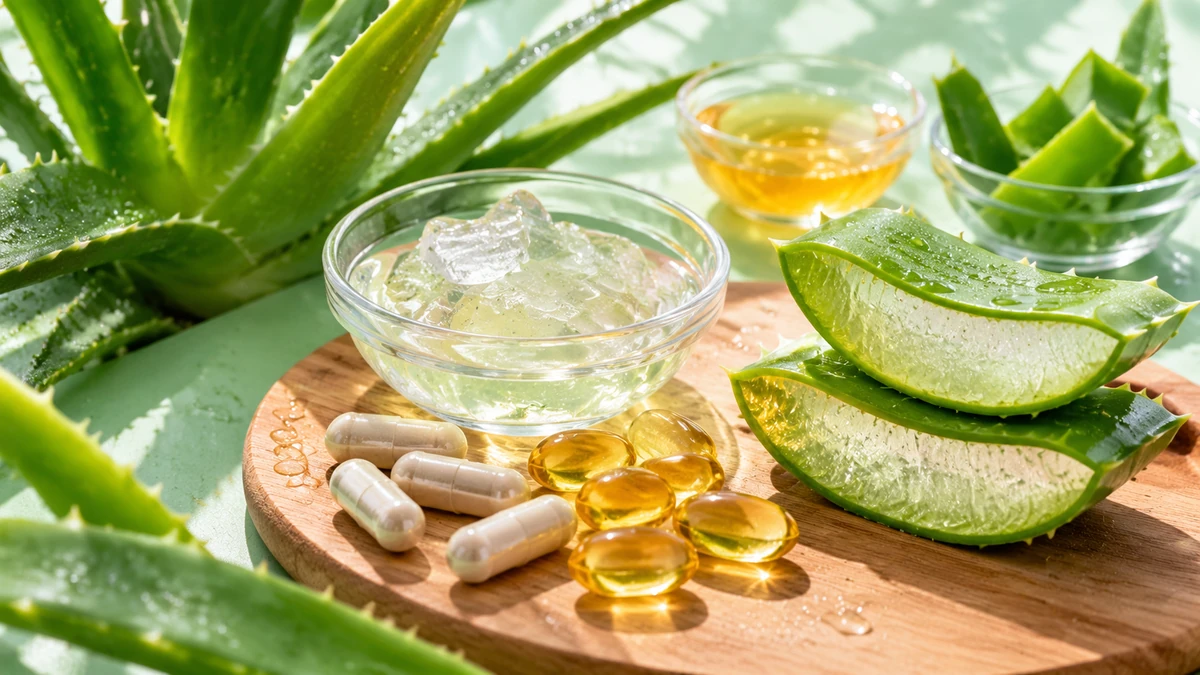
Image to help understand the article
South Korea’s Ministry of Food and Drug Safety distinguishes between aloe gel and whole-leaf aloe products, setting separate recommended daily intake ranges and warning consumers about potential health risks associated with whole-leaf preparations.
Different Aloe Ingredients, Different Uses
Aloe is a perennial succulent belonging to the genus Aloe, with roughly 200 species originating in the Middle East, Madagascar and southern Africa. The plant is also known as aloe or tree aloe. Its extracts are used in products ranging from burn treatments and cosmetics to hand creams and dietary supplements.
Aloe supplements generally fall into three categories based on the part of the leaf used: the transparent inner gel, the latex found beneath the outer leaf layer, or the entire leaf. The distinction matters because these preparations have different safety profiles.
South Korea's Approved Health Claims
South Korea's Ministry of Food and Drug Safety (MFDS), the country's food and product safety regulator, recognizes aloe gel as an ingredient that may help support skin health, intestinal health and immune function. Whole-leaf aloe was previously recognized for helping promote regular bowel movements.
However, the MFDS removed whole-leaf aloe from its list of recognized functional ingredients because it contains the outer leaf layer, including latex, and prolonged consumption has been associated with reports of liver toxicity. Aloe gel with the outer layer and latex removed remains an approved functional ingredient.
South Korea revised its health supplement standards in 2023, setting a maximum allowable concentration of 10 milligrams per kilogram for aloin, the combined amount of aloin A and B, in aloe gel products.
Daily Intake and Consumer Warnings
According to MFDS guidance, the daily intake ranges are 110 to 420 milligrams for aloe gel and 20 to 30 milligrams for whole-leaf aloe.
Consumers should stop taking aloe gel and consult a health professional if adverse reactions occur. For whole-leaf aloe, the ministry advises children, pregnant women and breastfeeding women to avoid consumption. People with stomach, kidney or liver conditions, as well as those taking medication, should consult a health professional before using these products.
Potential Side Effects and Longer-Term Risks
The U.S. National Center for Complementary and Integrative Health (NCCIH) reports that short-term oral use of aloe gel for up to 42 days was found to be safe in studies. Aloe latex, however, can cause abdominal pain, cramps and diarrhea.
Excessive latex consumption may also increase the risk of adverse effects from cardiac glycoside medications, including digoxin, which is used to treat certain heart conditions. Cases of acute hepatitis have been reported following prolonged use of whole-leaf aloe extracts, with reported periods of consumption ranging from three weeks to five years.
The International Agency for Research on Cancer (IARC) classifies non-decolorized whole-leaf aloe extract as Group 2B, meaning it is possibly carcinogenic to humans. This classification applies to the specified extract, not automatically to purified aloe gel.
A toxicology review published through the U.S. National Library of Medicine has also documented reports involving diarrhea, low potassium levels, melanosis coli, a pigmentation condition affecting the colon, and kidney failure following consumption of aloe preparations.
People allergic to plants in the lily family may experience skin irritation, hives, abdominal cramps or diarrhea after consuming aloe. A case of substantial bleeding during surgery following aloe tablet use has also been reported, with aloe's possible antiplatelet effects suspected as the cause.
Pregnancy, Breastfeeding and Food Products
Both South Korean guidance and the NCCIH caution against oral aloe use during pregnancy and breastfeeding, particularly preparations containing latex. A toxicology review notes that aloe latex may stimulate uterine contractions, potentially increasing the risk of premature labor or miscarriage. Anthraquinone compounds may also cause diarrhea in nursing infants, making aloe-based laxative ingredients a concern during breastfeeding.
Regulatory differences also matter when consumers purchase aloe products. South Korea's standards for health functional foods require aloe ingredients to use gel with the outer leaf layer and latex removed. Ordinary food products, however, do not have equivalent aloin concentration limits or specific testing standards.
Two imported samples of Aloe ferox ingredients used in ordinary foods reportedly contained approximately 1,300 to 15,000 milligrams of aloin per kilogram. That is roughly 130 to 1,500 times the Korean standard of 10 milligrams per kilogram for health functional aloe gel.
The distinction highlights why consumers should not assume that every food or supplement labeled as containing aloe has undergone the same ingredient controls. People with existing medical conditions or those taking medication should seek professional advice before using aloe products.
Comments
Post a Comment