Image to help understand the article
Three-way summit set alongside APEC
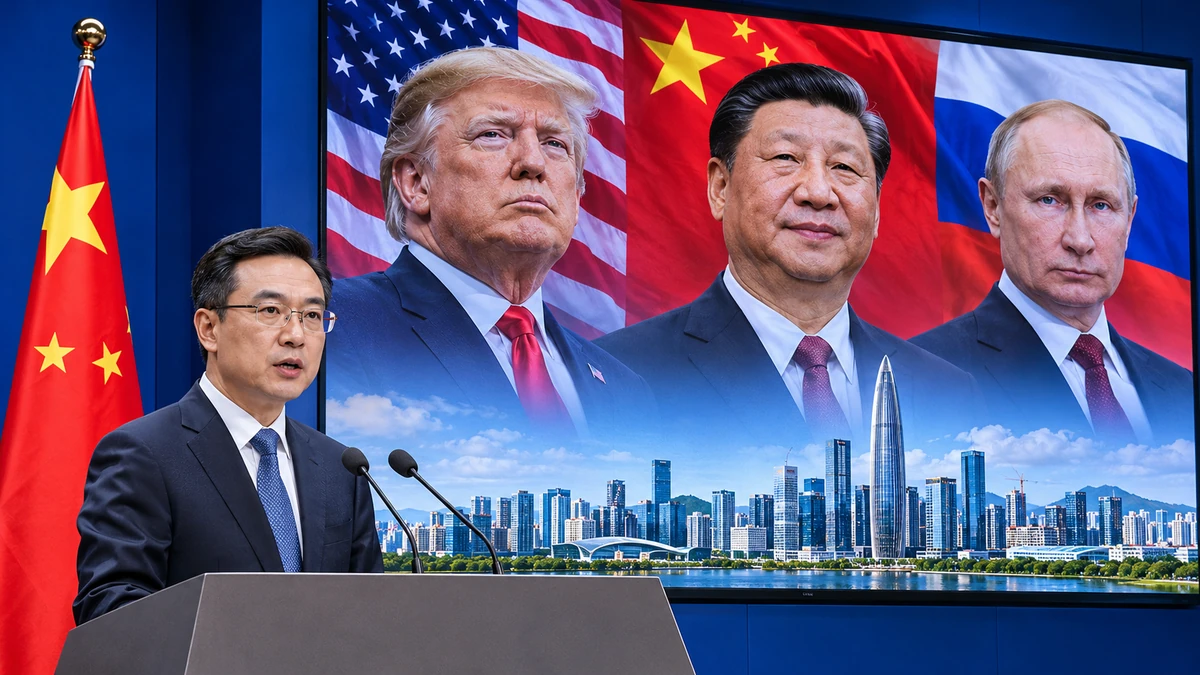
China said President Xi Jinping will meet with U.S. President Donald Trump and Russian President Vladimir Putin on Nov. 19 in Shenzhen, confirming what would be the first summit bringing together the leaders of the three countries.
A Chinese Foreign Ministry spokesperson announced the meeting Nov. 16. The White House had first disclosed the plan Nov. 13, followed by confirmation from the Kremlin a day later. Beijing had previously said only that it was communicating with the other governments.
The summit is being arranged on the sidelines of the Asia-Pacific Economic Cooperation leaders’ meeting, scheduled for Nov. 18-19 in Shenzhen, a major technology and manufacturing center in southern China’s Guangdong province. China is hosting APEC for the third time and the first time in 12 years. The 2026 gathering carries the theme “Building an Asia-Pacific Community for Common Prosperity.”
An APEC business summit will be held Nov. 17-18, with about 1,000 government and corporate representatives from member economies expected to attend.
Disputes over Ukraine and nuclear arms
The three governments have not announced a detailed agenda or format. Potential topics include the wars in Ukraine and Iran, nuclear arms reductions and artificial intelligence.
Trump has expressed interest in nuclear arms talks among the United States, China and Russia, but Beijing has been reluctant to join negotiations with Washington and Moscow. China has maintained that the two countries with the largest nuclear arsenals should reduce their weapons first.
Putin is expected to seek discussion of ending the war in Ukraine. The Kremlin has suggested peace negotiations could be raised, while the White House has said Ukraine is not on the agenda.
China also reportedly opposes including Ukraine in the three-way talks. German President Frank-Walter Steinmeier said Xi expressed displeasure over the issue and argued that Europe should participate because the conflict is a European matter.
Officials from the three countries spent weeks negotiating the agenda and diplomatic arrangements, with disagreements emerging over both the subjects and structure of the meeting. Analysts generally remain skeptical that their competing interests will allow a major agreement reshaping the international order.
South Korea warns against a new Yalta
The Korean Peninsula could also come up, although analysts say China and Russia, both allies of North Korea, are unlikely to emphasize denuclearization. North Korea has meanwhile sent a delegation led by senior official Jo Yong Won to Russia.
South Korean officials have warned that the summit must not become a “second Yalta,” a reference to the 1945 conference where the United States, Britain and the Soviet Union discussed the post-World War II order without many affected countries at the table.
South Korea’s foreign minister raised concerns about protecting Seoul’s interests during a Nov. 13 meeting with China’s foreign minister in Beijing. The warning reflects anxiety that decisions by Washington, Beijing and Moscow could affect security on the Korean Peninsula without direct South Korean participation.
Trump joins Xi and Putin at pivotal gathering
For the United States, the meeting places Trump at the same table with America’s two most powerful strategic rivals during a major Asia-Pacific economic forum. The proposed agenda also highlights sharp differences among the three governments, particularly over Ukraine and whether China should participate in nuclear arms reductions alongside the United States and Russia.
South Korean President Lee is also traveling to regional meetings in Manila and Shenzhen. He is scheduled to attend ASEAN-related gatherings, including a China-Japan-South Korea summit and the East Asia Summit, before traveling to Shenzhen on Nov. 18. His APEC schedule includes a meeting with South Korean residents in southern China, the CEO summit and a welcome dinner hosted by Xi and his wife.
Comments
Post a Comment