Image to help understand the article
Choe Si-hyeong, the second leader of Donghak, transformed a persecuted Korean religious movement into an organized national faith while spending much of his life evading arrest. He published its foundational texts, built networks of believers and developed an ethical doctrine centered on reverence for heaven, people and all things.
Known by the religious name Haeweol, Choe inherited leadership of Donghak in 1863. He initially opposed armed rebellion and favored peaceful missionary work and legal petitions, but eventually mobilized his followers during the Donghak Peasant Movement as Japanese forces became involved. He was arrested in 1898 and executed by hanging in Seoul on June 2 of that year.
From Paper Mill Worker to Religious Leader
Choe was born March 21, 1827, in Gyeongju, in southeastern Korea, as the only son of Choe Jong-su and his wife. His original name was Choe Gyeong-sang; he adopted the name Choe Si-hyeong in 1875.
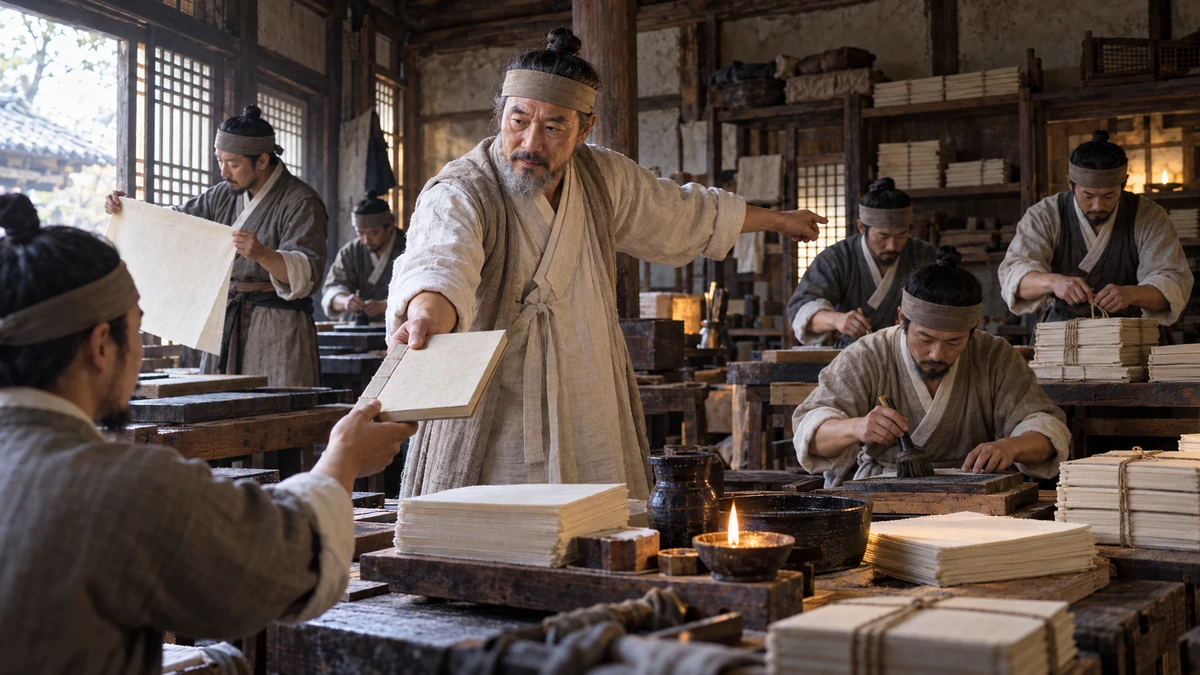
His mother died when he was 5, and his father died when he was 12. Beginning at age 17, he supported himself by working at a paper mill. He married a woman from the Miryang Son clan at 19 and later moved to what is now Pohang, where he farmed and served for six years as a village representative.
Choe began following Donghak in June 1861. He traveled several times a month to study under his distant relative Choe Je-u, the movement's founder, then returned home to practice what he had learned through meditation and rigorous self-discipline.
In 1863, Choe Je-u directed him to spread the faith. Choe traveled through communities across Gyeongsang province and was appointed to a senior regional position that July. On Aug. 14, he received the movement's spiritual authority, making him Donghak's second leader.
Rebuilding a Faith Under Persecution
When authorities arrested Choe Je-u in December 1863, Choe Si-hyeong went into hiding in Daegu while helping care for his imprisoned teacher. As officials closed in, he fled to the Taebaek Mountains and later stayed in areas along Korea's eastern coast, supporting both his own family and Choe Je-u's surviving relatives.
Choe Je-u was executed by the Joseon government in 1864. Choe Si-hyeong then set out to rebuild Donghak, settling in Yonghwa-dong, a community with many believers. He organized 49-day prayer periods four times a year, established a religious association to conduct memorial rites for the founder and gathered followers who had been scattered by persecution.
He also recopied and edited scriptures so believers could study them. His preference was peaceful religious work without political intervention. In 1871, he opposed Yi Pil-je's plan for an uprising in Yeonghae, warning that it could not succeed. The rebels were defeated, and Donghak again faced intensified suppression.
Moving through mountain communities to avoid arrest, Choe established new bases in Yeongwol, Inje and Danyang. He created a local organizational system in 1878 and opened a scripture publishing center in Inje County in 1880, producing the “Donggyeong Daejeon,” one of Donghak's central texts. The following year, a publishing center in Danyang issued the “Yongdam Yusa.”
In 1884, Choe formalized another nationwide administrative structure, known as the Yukim system, to organize believers and support doctrinal study. As Donghak expanded, he moved its headquarters to Jangnae-ri in Boeun County in 1885.
A Legal Campaign for Recognition
With searches and arrests continuing, Choe and his followers began a public campaign in 1892 to clear Choe Je-u's name and end the persecution of Donghak believers. That November, followers from around the country gathered at Samnye Station in Jeonju and petitioned provincial governors in the Chungcheong and Jeolla regions.
After those demands went unanswered, more than 40 regional representatives traveled to Seoul in February 1893. Led by Park Gwang-ho, they appealed directly to King Gojong outside Gwanghwamun, the main gate of the royal palace. The representatives remained there for three days and nights before withdrawing after the king promised favorable consideration if they dispersed.
When repression continued, Choe organized a third campaign. On March 10, tens of thousands of believers assembled in Boeun. They demanded vindication for Donghak's founder, freedom to spread their religion and punishment for corrupt officials, while also raising a slogan opposing Japanese and Western influence.
Choe prohibited violence during the demonstration. After meeting royal envoy Eo Yun-jung and seeing several officials accused of corruption removed from office, he voluntarily ended the gathering. He continued to reject calls for an armed revolt as premature and focused instead on expanding the religious community.
The Donghak Peasant Movement
The balance shifted in 1894, when Jeon Bong-jun attacked the government office in Gobu, launching what became known as the Donghak Peasant Movement. Choe initially opposed military action.
The northern branch of Donghak under Choe emphasized restoring Choe Je-u's reputation and securing freedom to practice the faith. It kept its distance from the more political and military course pursued by the southern branch led by Jeon. Choe also viewed Jeon's contacts with Heungseon Daewongun, an influential royal figure, with suspicion and warned that the movement could be exploited.
Under pressure from followers, however, Choe gathered believers in Cheongsan, Chungcheong province, that April. Northern forces raided a government office in Hoedeok and seized weapons, but initially dispersed to avoid a direct clash with government troops.
Jeon rose again in the ninth month of the lunar calendar, citing the arrival of Japanese troops and the government's failure to meet the movement's demands. Choe then ordered northern Donghak leaders to mobilize. His forces joined Jeon's southern army in Nonsan and fought combined Korean government and Japanese troops around Gongju. They suffered a major defeat there, followed by further losses in Nonsan and Jangsu.
After the movement was suppressed in late December 1894, Choe continued spreading Donghak while in hiding. In 1897, he transferred spiritual authority to Son Byeong-hui, who became the third leader and later renamed the religion Cheondogyo.
Choe was captured in Wonju in March 1898 after an informant reported him to authorities. He was taken to Seoul and hanged June 2. King Gojong formally cleared his name in 1907.
A Philosophy of Reverence
Choe's legacy rests not only on preserving Donghak's scriptures and institutions but also on developing its religious thought. His view of the divine was pantheistic and immanent: God was understood as present within human beings and, more broadly, within all existence.
That belief produced what became known as the Three Reverences: reverence for heaven, reverence for people and reverence for material things. Choe also taught that cultivating the divine within one's own heart was itself a way of serving God.
His life traced an extraordinary path from orphaned paper mill worker to leader of a national religious movement. He repeatedly favored peaceful preaching and lawful protest over rebellion, but when Japanese military intervention transformed the crisis of 1894, he chose to lead Donghak's northern branch into an alliance with the southern forces.
Comments
Post a Comment