Image to help understand the article
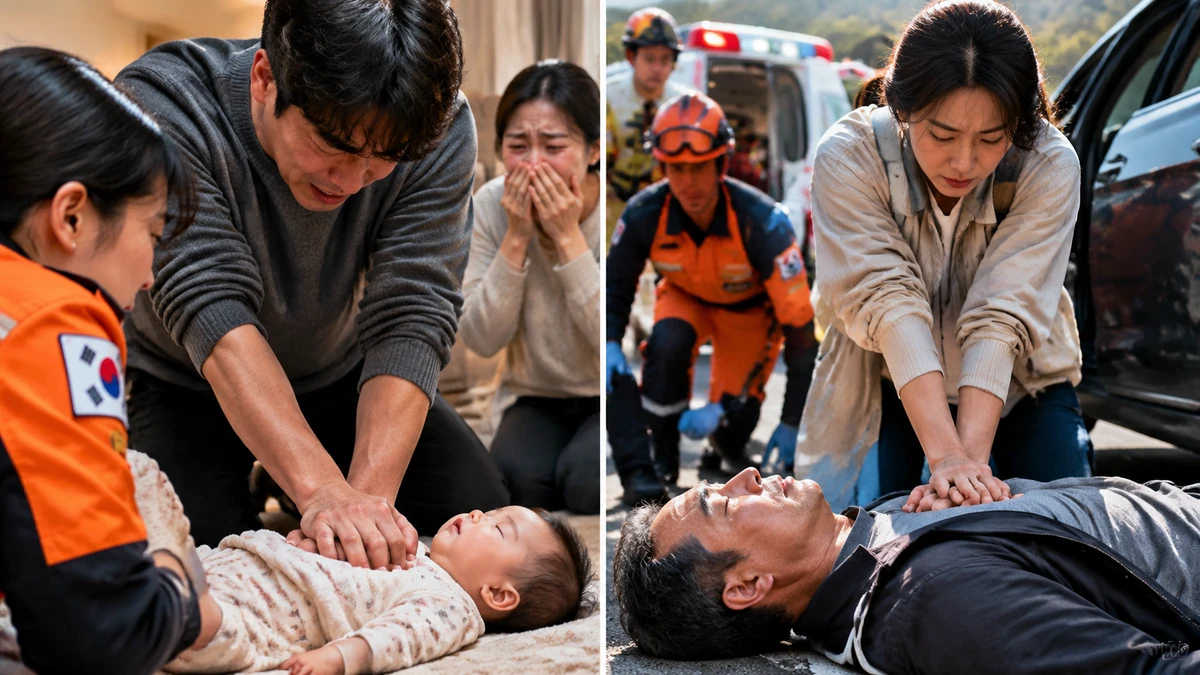
Two dramatic cardiac arrest rescues in South Korea have drawn attention to the lifesaving importance of cardiopulmonary resuscitation (CPR), after a father and a nurse began chest compressions before emergency crews arrived. One survivor was a 6-month-old infant in Busan; the other was a driver who collapsed behind the wheel in Daegu.
Father Uses Video Guidance to Save Baby in Busan
The first incident occurred at about 11:16 a.m. on Oct. 19 in Jangnim-dong, Saha-gu, Busan. According to the Busan Saha Fire Station, a father found his baby struggling to breathe after being fed formula. When he picked up the infant, the baby's body had gone limp and the lips had turned blue.
After receiving the emergency call, South Korea's 119 emergency dispatch center connected the father with an emergency medical guidance center. Staff used a video call to demonstrate CPR, allowing him to begin chest compressions while waiting for an ambulance. The first emergency crew arrived about seven minutes later.
Paramedics found that the baby had no signs of consciousness, breathing or a pulse. They immediately began CPR and rescue breathing, with a second ambulance crew later taking turns performing chest compressions. When the infant developed ventricular fibrillation, rescuers delivered an electrical shock. The baby's heartbeat and circulation returned inside the ambulance, and the child began breathing again.
The infant received hospital treatment and was discharged on Nov. 4 after recovering. On Nov. 8, the family visited the Sinpyeong 119 Safety Center to thank the emergency responders. The baby's mother also submitted a commendation through South Korea's national public petition system, praising the video-guided CPR instructions and the crews' rapid response.
Nurse and Bystanders Rescue Driver in Daegu
A second rescue took place on Nov. 15 in Daegu. Nurse Choi Ji-yeon was traveling with her family when she spotted a driver who had lost consciousness on the road. While her husband called 119, Choi and other bystanders helped move the driver out of the vehicle and began forceful chest compressions.
Police officers also joined the CPR effort. The driver regained consciousness that evening.
Other CPR Rescues Recognized Across South Korea
The two incidents came amid other reports highlighting successful cardiac arrest rescues. On Nov. 16, news emerged that comedian Kim Sook and actor Lim Hyung-joon had received commendations from the Gyeonggi provincial governor for helping save comedian Kim Soo-yong, who collapsed from cardiac arrest during a filming session in November 2025.
Separately, the Ulsan Fire Department held a special promotion ceremony on Nov. 17 for four firefighters recognized for their service. Among them was firefighter Kim Woo-jin of the Taehwa 119 Safety Center, who was promoted to senior firefighter. His record included 2,299 emergency response calls and the transport of 59 critically ill patients. He had also received the Heart Saver award twice for helping revive cardiac arrest patients.
Why Immediate CPR Matters
Cardiac arrest occurs when the heart suddenly stops beating effectively or can no longer generate a pulse. Blood flow to the brain and other vital organs drops sharply, and brain cells can begin to suffer damage within minutes.
Searches related to the incidents also included questions about cardiac arrest causes and warning signs. According to the information cited in the Korean report, coronary artery disease accounts for 68% of sudden cardiac deaths among cardiac causes, while about half of patients experience cardiac arrest without prior warning symptoms.
The rescues in Busan and Daegu underscore a central lesson of emergency response: CPR performed by someone at the scene can begin lifesaving treatment before professional responders arrive.
Comments
Post a Comment