Image to help understand the article
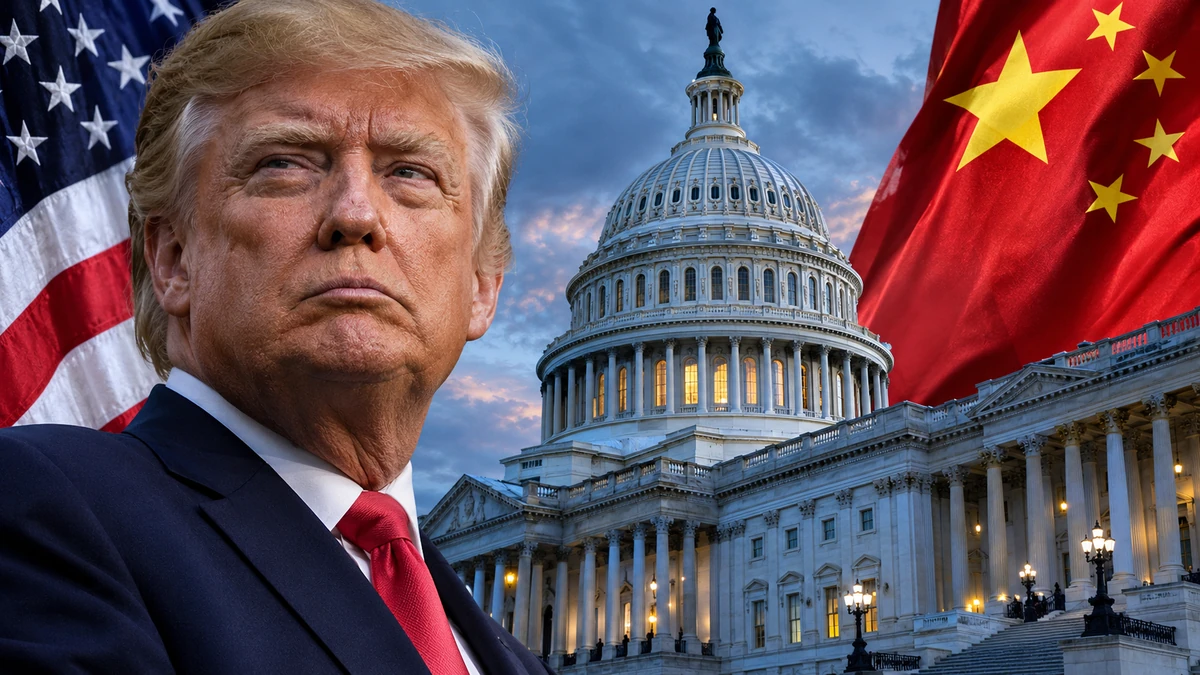
Democrats’ midterm election victory and takeover of Congress could complicate President Donald Trump’s efforts to maintain a more stable relationship with China, particularly over Taiwan and advanced technology, according to analysts cited by Singapore’s Chinese-language newspaper Lianhe Zaobao.
Dennis Simon, a senior fellow at the Quincy Institute, said Democratic control would not necessarily end efforts to build a constructive and strategically stable U.S.-China relationship. But he said it could make that goal more difficult to achieve and sustain by limiting the administration’s ability to make concessions to Beijing.
Taiwan Arms Sales and Technology Controls
Congressional pressure could be especially pronounced over U.S. weapons sales to Taiwan, the self-governing island claimed by Beijing. Trump temporarily held up a $14 billion arms package after meeting Chinese President Xi Jinping in Beijing in May.
Democrats could demand that the administration explain the delay or pursue legislation that increases political pressure on the White House. However, the process of initiating and approving an arms sale remains largely under executive branch control, Lianhe Zaobao reported.
Democratic lawmakers could also seek tougher licensing requirements for semiconductor exports, including closer reviews of advanced artificial intelligence chips and computing equipment. Congress could move to restrict transfers of sensitive technology and Chinese investment in strategically important U.S. industries.
Some Chinese scholars, however, played down the election’s likely effect on bilateral relations, noting that China was not a central campaign issue. Zhu Feng, an international relations expert at Nanjing University, said Democrats understand that a stable relationship benefits both countries and predicted Trump’s transaction-focused diplomatic style would remain unchanged. Luo Minghui, an associate professor of public policy and global affairs at Singapore’s Nanyang Technological University, said even a politically weakened Trump would be unlikely to make major changes to China policy.
APEC Meeting Emerges as a Test
Attention is now turning to the Asia-Pacific Economic Cooperation summit, scheduled for the 18th and 19th in Shenzhen, southern China. Trump and Xi are expected to meet there for the third time this year, following talks in May and September.
Sun Chenghao, a researcher at Tsinghua University’s Center for International Security and Strategy, described the expected meeting as an important test of whether Washington and Beijing can preserve strategic stability amid political change in the United States.
Beyond the atmosphere surrounding the leaders’ meeting, analysts will be watching whether any agreements are carried out. Key issues include tariff reductions, a mechanism for trade and investment talks, and dialogue on artificial intelligence.
Luo said China would continue to prioritize leader-level diplomacy while looking ahead to the next U.S. presidential election. A Trump-Xi meeting at APEC, he added, could itself serve as a sign that the relationship remains stable.
Comments
Post a Comment