Image to help understand the article
Nationwide ground stop lifted after more than four hours
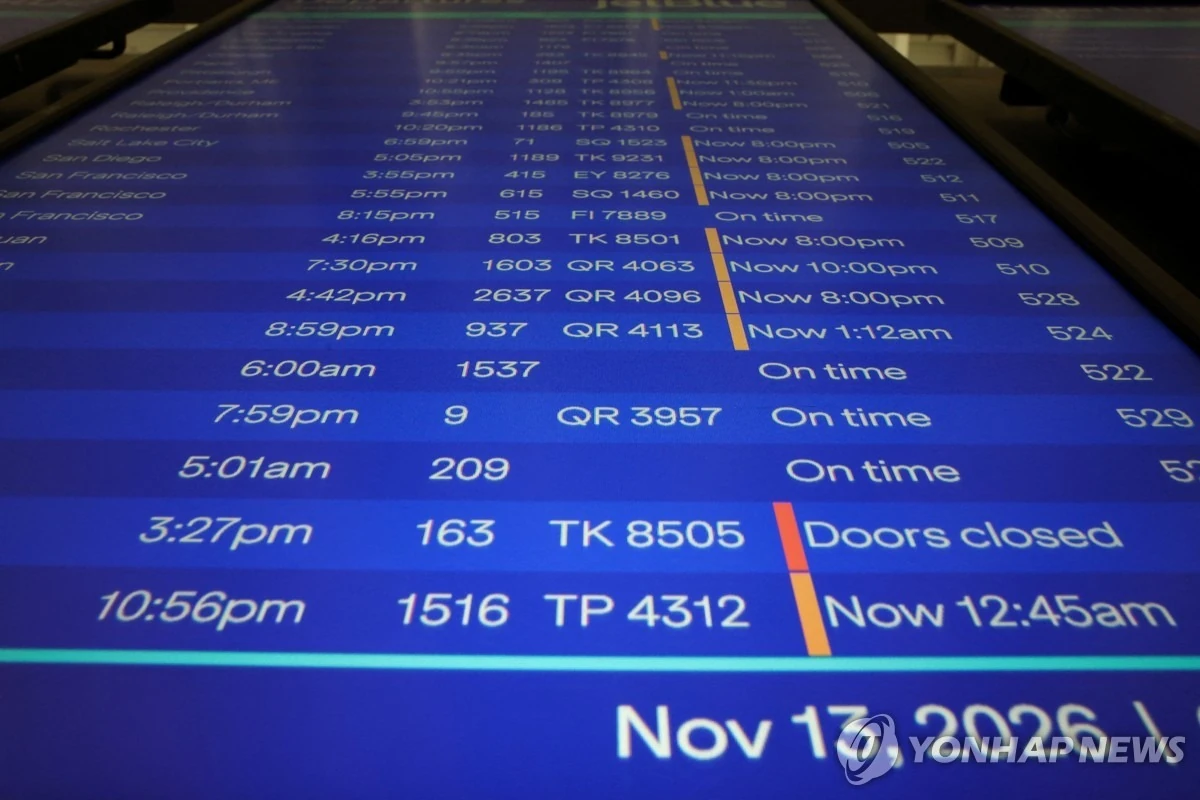
The Federal Aviation Administration halted departures at airports across the United States on the afternoon of the 13th after a communications failure affected air traffic control facilities nationwide. The ground stop, imposed at about 4 p.m. Eastern time, was lifted at approximately 8:15 p.m., about four hours and 20 minutes later.
The FAA cited an “unusual situation” and safety concerns in ordering all departing flights to remain on the ground until further notice. International flights already heading to the United States were handled individually, while some transoceanic services and flights involving Alaska and Hawaii were permitted to operate. Certain flights from the West Coast to Asia and from the East Coast to Europe also continued.
United Airlines resumed some flights scheduled for Friday night after the order was lifted. Aviation officials cautioned that a full recovery would take time because aircraft and crews had been displaced and airlines faced a large backlog of delayed and canceled flights.
Aging air traffic control equipment under scrutiny
Officials said the disruption appeared to stem from a communications problem affecting every Air Route Traffic Control Center, the facilities responsible for managing aircraft between airports. The problem reportedly involved radio frequencies used by controllers to communicate with pilots, but the precise cause remained under investigation.
Transportation Secretary Sean Duffy said FAA technicians were examining the failure. He said aging switches, routers and copper wiring dating to the 1980s had become overloaded. The problem occurred in the older network, while newer equipment continued operating normally, he said.
An unidentified official pointed to a failed network router. The developer of the SMART AI platform said its system was not responsible. The FBI was investigating whether a software update played a role, but preliminary federal reviews found no evidence of a cyberattack, terrorism or other criminal activity. Officials said there was no indication the failure was a malicious attack directed at the United States.
Thousands of cancellations ripple through major hubs
About 3,100 aircraft were heading toward U.S. airports when the ground stop began, while roughly 30,000 flights had been scheduled to depart that day. Millions of travelers were affected as disruption spread through major hubs ahead of the weekend. In Chicago and Denver, some passengers were taken off planes and left airport terminals.
More than 8,000 U.S. flights had been delayed and about 400 canceled by 5 p.m. By 6:40 p.m., cancellations had climbed to roughly 3,300 and delays to about 10,200. Later estimates put the total number of canceled flights at about 5,000, with tens of thousands delayed.
European and Canadian aviation authorities suspended U.S.-bound departures at the FAA’s request. A prolonged shutdown risked leaving aircraft stranded at American airports and spreading disruption across the global aviation network.
Flights from South Korea also disrupted
The outage briefly affected service from Incheon International Airport, South Korea’s main international gateway. Four flights scheduled for the 9 a.m. hour to New York, Atlanta and Boston were initially listed as canceled, and check-in for some afternoon flights to the United States was temporarily suspended.
Korean Air later reinstated its KE033 service from Incheon to Atlanta. Asiana Airlines also reversed the cancellation of OZ222, scheduled to depart Incheon for New York at 8:40 a.m. Airport officials said operations were moving back toward normal as the carriers resumed some U.S. routes.
Recovery expected before Thanksgiving
Duffy said conditions were expected to improve the following day and that operations should return to normal before Thanksgiving. Airlines still faced the task of repositioning crews and aircraft while clearing accumulated delays and cancellations.
The previous nationwide departure halt occurred on Jan. 11, 2023, when contractors accidentally deleted files connected to the Notice to Air Missions system, which provides pilots with essential safety information. That failure delayed thousands of flights.
The latest breakdown renewed scrutiny of the aging technology used by U.S. air traffic controllers. The United States began a $12.5 billion modernization effort last year, but progress has been slow. Duffy has asked Congress for $50 billion in emergency funding to accelerate improvements to the air traffic control system.
Comments
Post a Comment