Image to help understand the article
Written in the fifth century B.C., Herodotus’ Histories is widely regarded as the foundational work of Western historical writing. Its central question remains compelling: Why did the Greek city-states and the Persian Empire go to war?
Born around 484 B.C. in Halicarnassus and believed to have died around 425 B.C., Herodotus said he traveled extensively throughout the ancient world, gathering accounts from people he encountered. His work combines mythology, rumors, travel observations, descriptions of foreign customs and accounts of major military campaigns. Although it is not an impartial record by modern standards, it remains one of the most important surviving sources for the ancient world.
A history of empire, conflict and competing accounts
The Histories traces events from approximately 560 B.C. to 478 B.C., when the Athenians captured Sestos. Much of its geographical coverage concerns territories within the Persian Empire. Herodotus portrays the conflict between Persia and the Greek states as a struggle between imperial domination and the defense of freedom, particularly by Athens and its Greek allies.
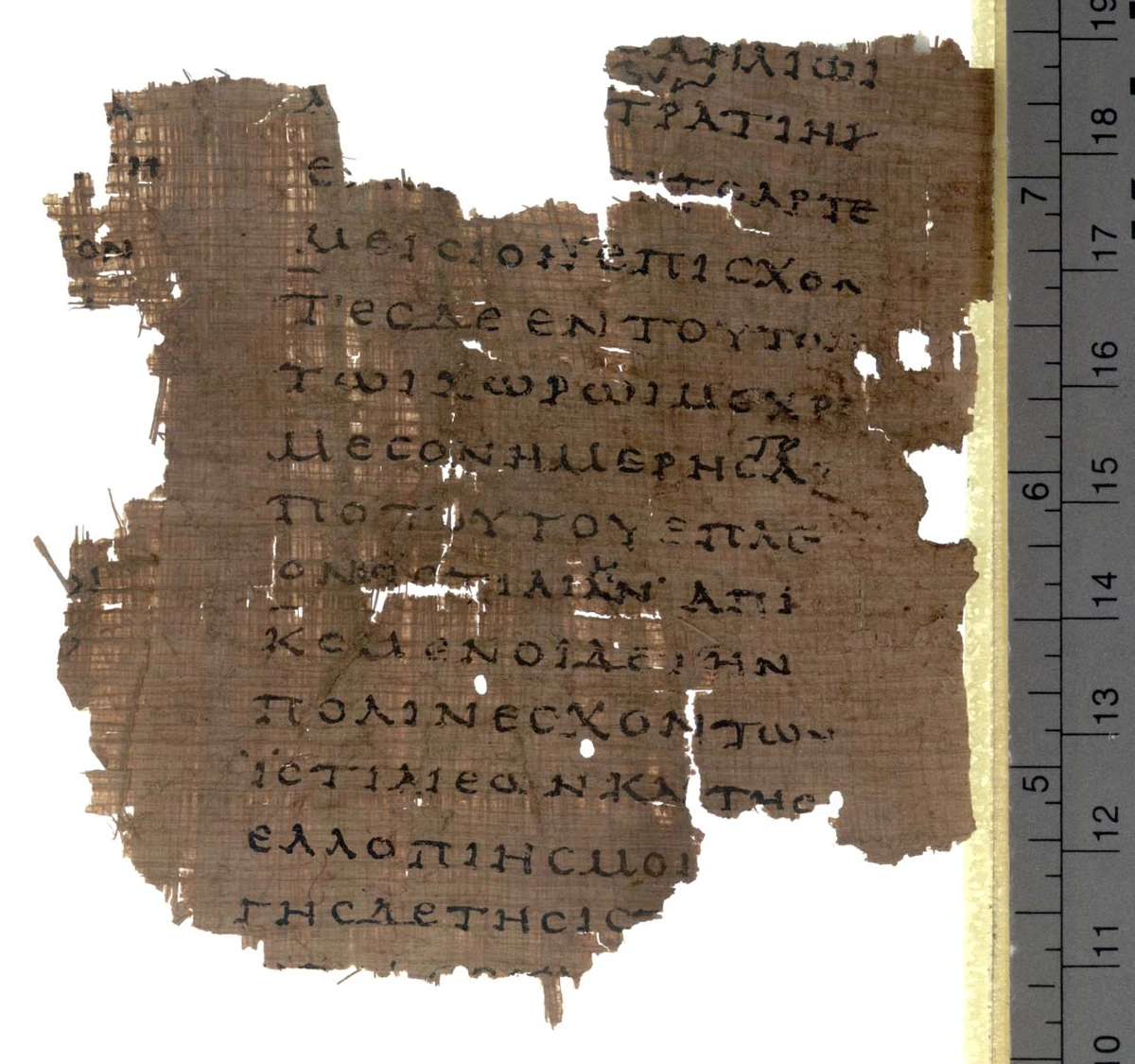
Herodotus wrote in the Ionic Greek dialect and did not give the work its familiar title. Later scholars in Alexandria called it The Histories of Herodotus, or Herodotou Mousai, and divided it into nine books, each named after one of the nine Muses. The oldest surviving manuscripts date from the ninth or 10th century A.D., during the Byzantine era.
From legendary abductions to the Persian Wars
The first book opens with competing accounts of ancient abductions involving Io, Europa, Medea and Helen of Troy. Herodotus presents these stories as traditions reported by Persian scholars rather than established facts. He then identifies Croesus, king of Lydia, as the first person he knows to have committed an injustice against the Greeks.
The narrative moves through the rise of the Lydian and Persian kingdoms, including the reigns of Gyges and Croesus, the emergence of Cyrus II and the expansion of Persian power. Croesus famously consults the oracle at Delphi, which predicts that attacking Persia will destroy a great empire. The prophecy proves ambiguous: Croesus loses his kingdom to Cyrus and eventually becomes an adviser to the Persian ruler.
The second book turns almost entirely to Egypt, examining the Nile, religious practices, animals, medicine, burial customs and the reigns of Egyptian kings. It includes accounts of the construction of the Great Pyramid of Giza under King Cheops and a story claiming that an experiment involving children who had not heard human language was used to identify the world's oldest people.
The third and fourth books follow Persian expansion under Cambyses II and Darius I. They recount the conquest of Egypt, Cambyses' unsuccessful expedition toward Ethiopia, political revolts within Persia and Darius' campaign against the Scythians. Herodotus also records descriptions of Scythian geography, religion and burial practices, alongside accounts of Libya, Asia and Europe.
How the Greek city-states resisted Persia
Books five and six bring the narrative closer to mainland Greece. The Ionian Revolt begins when Aristagoras of Miletus challenges Persian authority. After Sparta refuses to help, Athens provides support. The burning of Sardis prompts Darius to vow revenge against the Athenians.
The Persian campaign eventually reaches the Battle of Marathon, where Athenian forces defeat the invading army. Herodotus also recounts the story of Pheidippides, who ran to Sparta seeking assistance and encountered the god Pan, according to the account.
Books seven and eight describe the invasion led by Darius' successor, Xerxes I. After assembling a vast army, Xerxes crosses the Hellespont using a bridge made from ships. A storm destroys hundreds of vessels, but the Persian advance continues. At Thermopylae, a Greek force led by Spartan king Leonidas I holds the narrow passage for three days before being defeated after Ephialtes reveals an alternative route to the Persians.
Herodotus gives the Persian army an extraordinary figure of approximately 5.28 million soldiers, a number that illustrates why his military statistics are treated cautiously by modern historians. The account continues with the evacuation and destruction of Athens, followed by the naval Battle of Salamis, where a Greek fleet of 378 ships confronts the Persian navy. Artemisia, a female commander fighting on the Persian side, advises Xerxes to return home.
The Greek victories and the question of the ending
The ninth book concludes with the Greek victories at Plataea and Mycale. At Plataea, the Persian commander Mardonius is killed and his forces collapse. Greek forces subsequently capture Sestos, providing the narrative's endpoint in 478 B.C.
The work closes with a story about Persian proposals to leave their difficult homeland and settle elsewhere, a suggestion attributed to the Persians during Cyrus' reign but ultimately rejected. The episode reflects a recurring concern in the narrative: the risks that accompany imperial expansion.
Scholars continue to debate whether the Histories was left unfinished or whether Herodotus deliberately ended it where he intended. Some passages promise accounts that never appear, including a proposed discussion of Assyria. The work's composition is generally understood to have unfolded over an extended period, with Herodotus revising his plans along the way.
Why Herodotus still matters
Herodotus did not produce history in the modern sense of a strictly documented, impartial investigation. His account blends oral traditions, religious stories, geographical observations and military narratives, sometimes preserving claims that are difficult to verify. Yet his effort to investigate why events happened, compare competing explanations and preserve the achievements of both Greeks and non-Greeks established a lasting model for historical inquiry.
His stated purpose was to prevent human achievements from disappearing into obscurity and to explain the causes of the conflict between the Greek and Persian worlds. More than 2,400 years later, the Histories remains a starting point for understanding how Western historical writing developed.
Comments
Post a Comment