Image to help understand the article
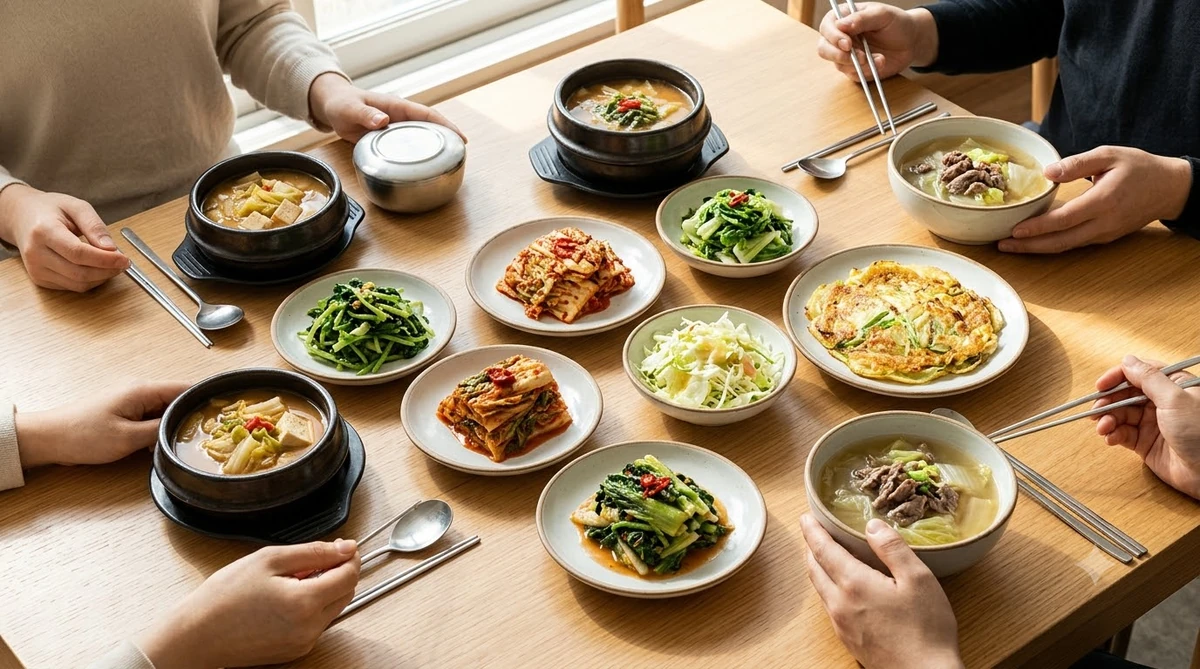
Cabbage appears across Korean cooking in soups, seasoned side dishes, fresh kimchi and savory pancakes. But a comparison of eight dishes shows that their nutritional profiles vary widely depending on how they are prepared.
Data from South Korea’s Ministry of Food and Drug Safety place the dishes on the same 100-gram basis, rather than comparing typical servings. The figures were collected from 2014 through 2019.
Calories range from 9 to 160
Young napa cabbage soybean paste soup had the fewest calories, at 9 per 100 grams. Beef and napa cabbage soup had 16 calories, while napa cabbage soybean paste soup had 20. All three soups contained no more than 20 calories and only 0.4 to 0.41 grams of fat.
Several Korean side dishes fell in the middle: fresh napa cabbage kimchi, known as geotjeori, had 55 calories; seasoned napa cabbage had 61; and young napa cabbage kimchi had 63.
At the high end, baechujeon — napa cabbage coated in batter and pan-fried like a savory pancake — had 160 calories. Cabbage salad followed with 150 calories. The salad had the most fat, at 11.71 grams, while the pancake had 5.78 grams.
The pancake also contained the most carbohydrates, at 23.68 grams. Young napa cabbage soybean paste soup had the least, at 0.85 grams.
Fresh kimchi has the most sodium
Geotjeori had the highest sodium level, at 328 milligrams per 100 grams. Unlike longer-fermented kimchi, geotjeori is generally eaten soon after fresh cabbage is seasoned.
Seasoned napa cabbage followed with 276 milligrams of sodium. Beef and napa cabbage soup had 248 milligrams, and young napa cabbage kimchi had 246. Napa cabbage soybean paste soup contained 223 milligrams, the cabbage pancake had 218, and young napa cabbage soybean paste soup had 195.
Cabbage salad had the least sodium, at 97 milligrams, making it the only dish in the comparison below 100 milligrams. That did not make it the lowest-calorie option: It ranked second-highest in calories and first in fat.
Fresh napa cabbage kimchi also contained more sodium than the young napa cabbage kimchi included in the comparison, 328 milligrams versus 246 milligrams per 100 grams.
Protein and sugar also vary
The cabbage pancake had the most protein, at 3.44 grams per 100 grams. It was followed by cabbage salad at 2.69 grams, fresh napa cabbage kimchi at 2.28 grams and seasoned napa cabbage at 2.01 grams. Young napa cabbage soybean paste soup had the least protein, at 0.5 grams. Among the soups, the beef and napa cabbage version had the most, at 1.84 grams.
Napa cabbage soybean paste soup and beef and napa cabbage soup each registered no sugar, while the young napa cabbage soup had 0.06 grams. Cabbage salad had the most sugar, at 7.95 grams, followed by seasoned napa cabbage at 6.24 grams. The cabbage pancake had 3.35 grams, fresh kimchi had 1.3 grams and young napa cabbage kimchi had 0.38 grams.
The comparison underscores that the name of the vegetable alone reveals little about a finished dish. Among these eight preparations, soups were lowest in calories and fat, while salad had the least sodium but the most fat and sugar.
Comments
Post a Comment