Image to help understand the article
A monumental painting in black and white
Pablo Picasso’s “Guernica,” completed in Paris in 1937, is one of modern art’s defining statements against war. The oil painting stretches roughly 11 feet high and 25 feet wide, filling its limited palette of black, white and gray with fractured bodies, terrified faces and animals caught in a scene of destruction.
Painted on a canvas made from linen and jute, the work is now on permanent display at the Reina Sofía museum in Madrid. Its title refers to Guernica, a city in northern Spain’s Basque region that was bombed during the Spanish Civil War.
From an exhibition commission to a protest
Spain’s Republican government commissioned Picasso in January 1937 to create a large work for the Spanish pavilion at that year’s Paris International Exposition. Picasso, who was living on Rue des Grands-Augustins in Paris and held the honorary title of director-in-exile of the Prado Museum, initially made sketches centered on an artist’s studio.
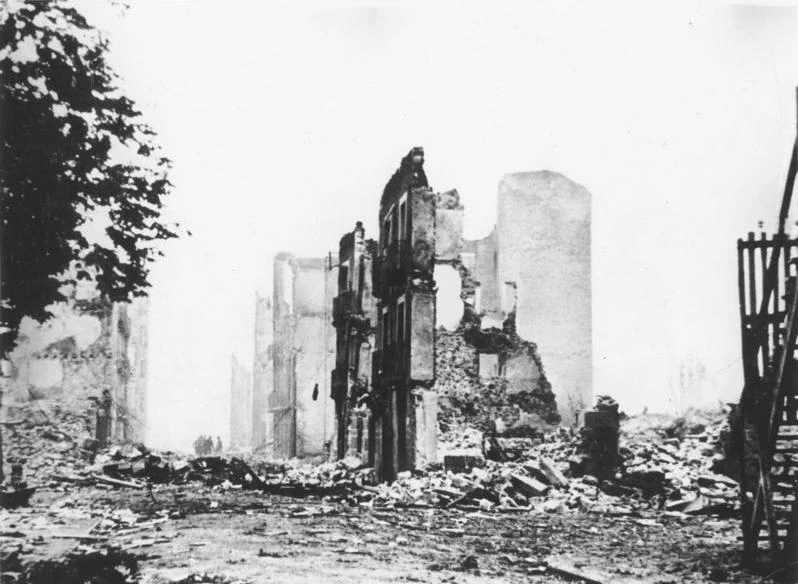
That plan changed after the April 26 bombing of Guernica. The city, a center of Basque culture and a northern stronghold of Republican resistance, was about 6 miles from the front and stood along a route leading to Bilbao.
Nazi German aircraft under Col. Wolfram von Richthofen bombed the city for about two hours. The planes belonged to the Condor Legion, which Adolf Hitler had sent to support the forces of Gen. Francisco Franco. Italian fascist forces also participated in the attack.
Richthofen wrote that the operation was intended to block and disrupt a Republican retreat. He also recorded that smoke obscured roads, bridges and the outskirts, leading bombs to be dropped over the city center. Explosives destroyed homes and water lines, while incendiary bombs spread flames through a city filled with wooden structures.
The attack came on a Monday, when Guernica held its market. With many men away fighting for the Republican side, large numbers of women and children were in the city. Debris blocked roads as the bombing intensified, and a bridge leading out of Guernica was destroyed.
A munitions factory outside the city escaped attack, fueling accusations that the bombing was designed to terrorize civilians. Journalist George Steer’s eyewitness reporting brought the destruction to an international audience and helped prompt Picasso to make it the subject of his commission. Poet Juan Larrea also visited Picasso and urged him to address the bombing.
After reading Steer’s account on May 1, Picasso abandoned his studio theme and began preliminary drawings for what became “Guernica.”
Creating the painting
Photographer and artist Dora Maar found a studio near Notre-Dame large enough to accommodate the enormous canvas. The space had previously served as headquarters for Contre-Attaque, a left-wing group, and had hosted anti-fascist speeches — a history Maar considered appropriate for a large-scale work of protest.
Maar photographed the painting’s development, documenting its changing forms stage by stage. Some scholars have argued that her photography contributed to Picasso’s stark monochrome palette. Art historian John Richardson said the photographs helped give the painting the immediacy of a black-and-white image.
Picasso used specially prepared matte household paint to minimize reflections. American artist John Ferren helped prepare the canvas, and Maar painted part of the dying horse at Picasso’s request.
Although Picasso generally kept strangers out of his studio, he allowed influential visitors to see “Guernica” in progress, believing that public attention could support the anti-fascist cause. He described his artistic work as part of a struggle against reaction and the death of art, and said the painting addressed the suffering and death inflicted on Spain by the military.
Picasso completed the work June 4 after 35 days of painting. It was unveiled the following month at the Spanish pavilion of the Paris exposition.
A room filled with suffering
“Guernica” resembles a vast interior compressed into the three-part arrangement of a triptych, the format often associated with Christian altarpieces. At the center, a wounded horse collapses beneath a woman holding a lamp. To the left, a bull stands over a mother cradling her dead child. On the right, a woman screams inside a burning building.
The figures are organized through overlapping triangles. The largest central triangle rests on the body of a dead soldier and rises toward the lamp. That structure binds the tangled human and animal forms into a single concentrated scene rather than a chronological account of the bombing.
The bull on the left stares outward with wide eyes, its tail resembling flames or smoke rising through a window. Beneath it, the grieving mother throws back her head. Her mouth opens in a scream, her tongue sharpened into a blade. Her child’s eyes have no pupils.
Between the bull and the horse, a faint dove appears against the similarly colored background. One wing droops as its open beak points upward. The bird is commonly interpreted as shattered peace, though another reading connects it to music among the arts destroyed by military violence.
The horse twists its body to the right while turning its head to the left. A deep vertical wound opens in its side as though it has been pierced by a spear. One foreleg reaches out for balance, but the animal appears close to collapse. Its pointed tongue and repeated lines across its body heighten the sense of pain.
Beneath the horse lies the dismembered body of a soldier. His severed hand holds a broken sword from which a flower grows. The sword has been read as a sign of defeat, while the flower offers a trace of hope within the devastation. A mark on his other palm evokes the wounds of Christ and the idea of martyrdom.
Symbols without a single answer
Above the horse, a glaring lightbulb takes the shape of an eye. It has been interpreted as the sun or an all-seeing presence. Nearby, a frightened woman leans through a window and extends an oil lamp toward the electric light. Below her, another woman staggers toward the center, apparently pressing a hand to an injured leg.
At the far right, a woman is trapped by flames spreading above and below her. She raises both arms, throws back her head and opens her mouth in a scream. A dark wall and an open doorway mark the painting’s edge.
Picasso repeatedly transforms bodies into other threatening forms. The tongues of the horse, the bull and the grieving mother become dagger-like shapes. The horse’s nostril and upper teeth combine into an image resembling a human skull, while another bull-like form can be seen emerging from the horse’s foreleg and chest.
These visual collisions make “Guernica” a symbolic construction rather than a literal reconstruction of the attack. The painting offers no orderly battlefield and no heroic victor. Instead, it presents civilians, animals and broken bodies packed into a space where light exposes suffering but provides no escape.
Comments
Post a Comment