Image to help understand the article
A Joseon-era drama about lineage and power
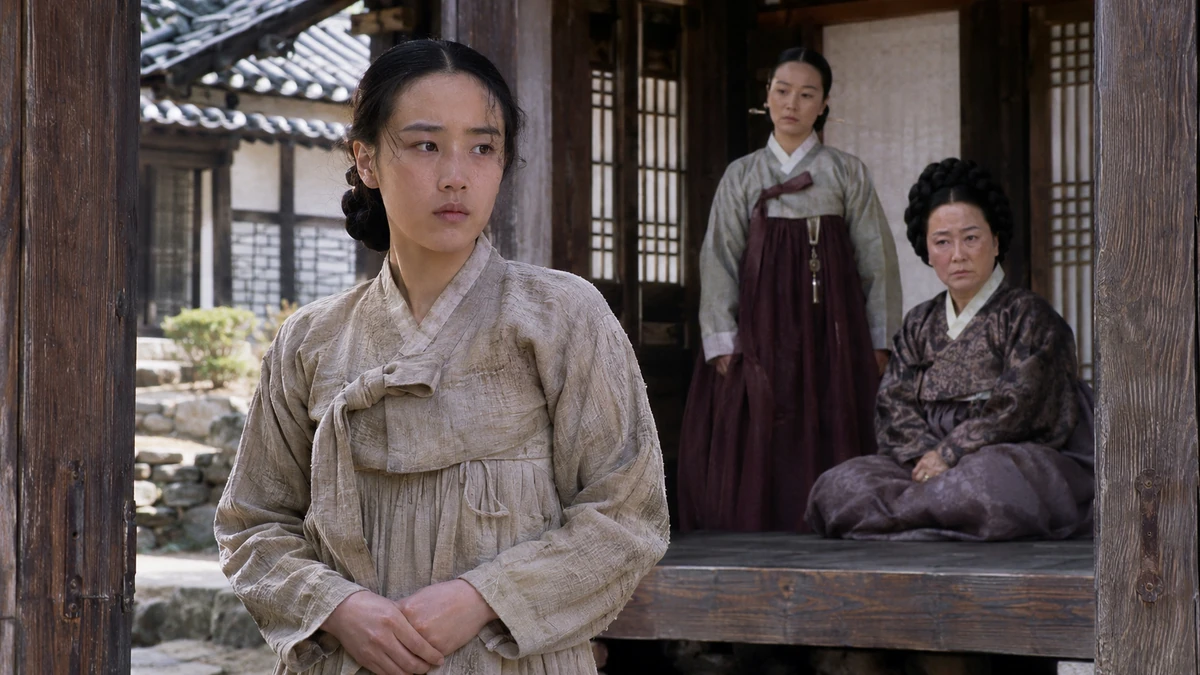
South Korean director Im Kwon-taek’s 1986 historical drama “The Surrogate Womb” follows Ok-nyeo, a young woman selected to produce a male heir for an elite family during Korea’s Joseon Dynasty.
When Shin Sang-gyu and his wife, Yun, fail to have a child, Sang-gyu’s mother and uncle decide to bring a surrogate childbearer into the household. They choose Ok-nyeo, whose mother, Pil-nyeo, previously served in the same role. The arrangement reflects the importance traditionally placed on continuing the male line of a prominent Korean clan.
Sang-gyu becomes emotionally attached to Ok-nyeo, provoking Yun’s jealousy. Ok-nyeo also falls in love with him, briefly losing sight of the limited and precarious position she occupies within the family.
After Ok-nyeo becomes pregnant, the household treats her with unusual deference. Pil-nyeo warns her daughter by recalling her own experience, but Ok-nyeo refuses to listen. When she gives birth to a son, the baby is immediately handed to Yun. Ok-nyeo is denied even a look at the child and ordered to leave that night.
Kang Soo-youn’s historic Venice victory
Kang Soo-youn, who played Ok-nyeo, won the best actress award at the 44th Venice Film Festival on Sept. 9, 1987, becoming the first Asian actor to receive the honor. Her performance was widely praised and helped establish the film as an important early international success for South Korean cinema.
The movie also won several honors at the 1987 Asian Film Festival, including awards for best picture, director, actress and supporting actress. Its early 1988 release in Taiwan became a major commercial success and has been described as one of the earliest Korean cultural exports there, years before the rise of the Korean Wave in the 1990s.
Production and later adaptations
Produced by Shin Han Films and adapted by screenwriter Song Gil-han, the 95-minute film opened in South Korea on March 21, 1987, with a rating barring younger viewers. Its cast also included Kim Hyoung-ja, Lee Gu-soon, Yoon Yang-ha and Kim Jung-ha. Traditional vocalist Ahn Sook-sun performed the theme’s wordless vocal music, while Won Gi-joo handled production design and Lee Hae-yoon designed the costumes.
The film later inspired the 1989 Malayalam-language movie “Dasharatham.” In South Korea, KBS2 revisited the story in a 1998 episode of the folklore anthology series “Hometown of Legends,” followed by another adaptation in 2009.
Comments
Post a Comment