Jeon Myeong-un: The Korean Independence Fighter Who Joined the 1908 Attack on U.S. Adviser Durham White Stevens
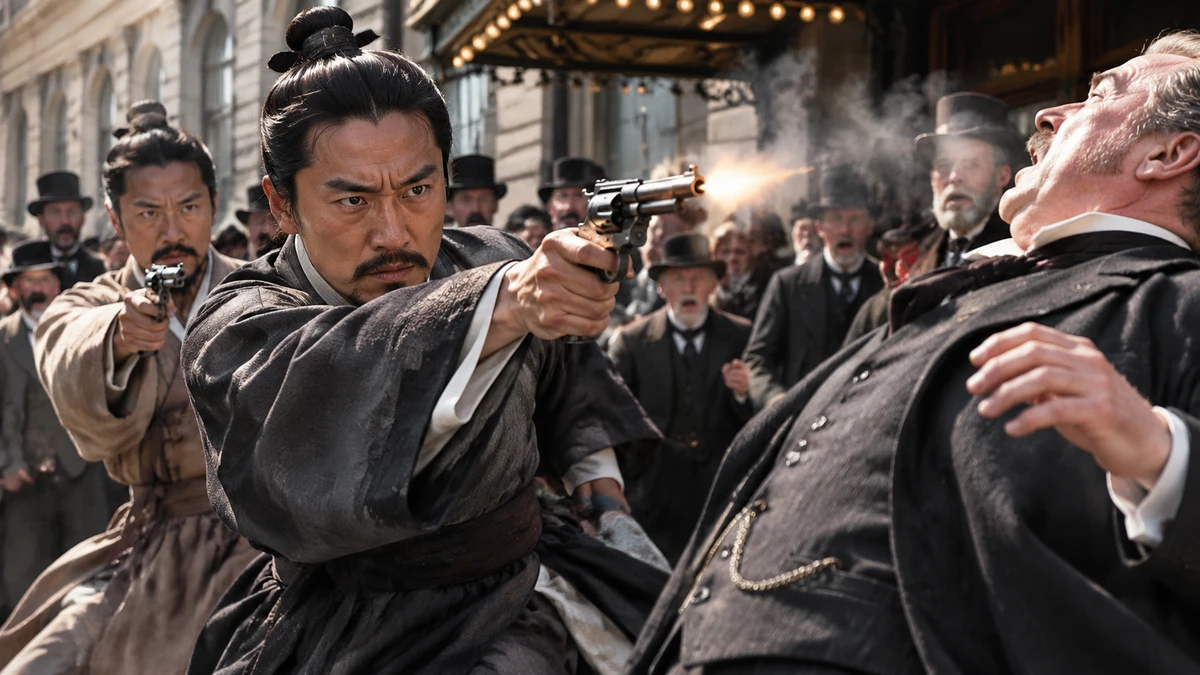
Image to help understand the article
Jeon Myeong-un (June 25, 1884-Nov. 19, 1947) was a Korean independence activist who opposed Japanese rule while living in the United States during the final years of the Korean Empire. He is remembered for his role in the 1908 attack on Durham White Stevens, an American who had served as a foreign affairs adviser to the Korean imperial government and supported Japan's growing control over Korea. Jeon acted alongside fellow independence activist Jang In-hwan in an incident that became a significant episode in the Korean independence movement abroad.
From Seoul's independence movement to immigrant life in Hawaii
Born in Hanseong, the former name for Seoul, Jeon lost both parents at an early age and grew up in his older brother's household. In 1898, he watched the Manmin Gongdonghoe, or All-People's Joint Association, a public gathering organized by the Independence Club. The experience convinced him that modern education was important. He subsequently attended Hanseong School for two years.
Jeon later decided to pursue education in the United States and moved to Hawaii in 1905, according to the Encyclopedia of Korean Culture. He worked on a plantation to earn money for his studies. In 1906, he relocated to San Francisco, where he supported himself through manual labor at railroad construction sites and in Alaska's fishing industry. His opposition to Japanese rule also drew him into the Korean independence movement.
The 1908 attack on Durham White Stevens
In the United States, Jeon joined the Korean National Association's predecessor organization, the Public Association, a Korean immigrant group involved in anti-Japanese activism. Founded by figures including Ahn Chang-ho, the organization also had a youth group in which Jeon participated.
The event that established Jeon's place in Korean independence history took place on March 23, 1908, in Oakland, California. Stevens, who had served as a foreign affairs adviser to the Korean Empire, had assisted Japan during the process leading to the 1905 Eulsa Treaty, which deprived Korea of its diplomatic sovereignty. During a visit to the United States, Stevens defended Japanese control of Korea, arguing that it benefited the Korean people. His reported statement, "Japan's rule over Korea is beneficial to Korea," provoked anger among Korean immigrants.
The Public Association and the Daedong Bogukhoe, another Korean organization, formed a four-member delegation to confront Stevens. Their protest failed to change his position, and an earlier confrontation ended with Stevens being beaten. Jeon subsequently decided to attack him.
At 9:30 a.m. on March 23, Jeon waited at the Oakland waterfront for Stevens to arrive. Carrying a pistol and a photograph of his intended target, he attempted to shoot Stevens as he stepped off a ship. The weapon failed to fire. Jeon then struck Stevens in the face with the pistol grip, triggering a physical struggle.
Jang In-hwan, who had separately been waiting at the scene with the intention of attacking Stevens, fired his own pistol. During the shooting, a stray bullet passed through Jeon's shoulder, leaving him injured. Stevens suffered serious wounds and died on March 25. Police arrested both Jeon and Jang as suspects in the attack.
The two men faced separate legal proceedings. Investigators found insufficient evidence that Jeon had conspired with Jang, and he was acquitted and released on June 27, 1908. Korean immigrants raised money to hire attorney Nathan Coplan to represent him. Rhee Syngman declined to provide interpretation, saying his Christian beliefs prevented him from assisting in the defense of a murder suspect. Korean student Shin Heung-woo instead served as interpreter.
A new identity and an uncertain life in America
While Jang's trial continued, Jeon feared for his safety. Following his lawyer's advice, he adopted the name Mark Fields and left for Vladivostok in Siberia in December 1908. Ahn Jung-geun, another Korean independence activist, had gone into exile there in 1907 and was preparing his plan to assassinate Japanese statesman Ito Hirobumi. The Encyclopedia of Korean Culture describes Jeon's participation in the Stevens attack as having a direct influence on Ahn's later action.
Jeon returned to Los Angeles in July 1909, married and had one son and two daughters. His wife died in 1929. Despite his involvement in the independence movement, his later years were marked by financial hardship. At one point, he placed his children in an orphanage because he could not provide for them. He eventually operated a laundry in Los Angeles to support himself. His only son died, while his two daughters, Jeon Gyeong-suk and Jeon Gyeong-yong, were recorded as living in the United States.
A Korean independence legacy on American soil
Jeon lived to see Korea regain its independence in 1945, but died of heart disease in Los Angeles on Nov. 19, 1947. He was buried at a Catholic cemetery in Whittier, California. In 1962, the South Korean government posthumously awarded him the Order of Merit for National Foundation, Presidential Medal, in recognition of his contributions to the independence movement.
His story links the Korean struggle against Japanese colonial expansion with the immigrant communities that organized and pursued political activism in the United States. The Oakland attack, the legal proceedings that followed and Jeon's subsequent life in California illustrate how the independence movement extended beyond the Korean Peninsula, involving activists who continued their efforts while building lives abroad.
Comments
Post a Comment