Image to help understand the article
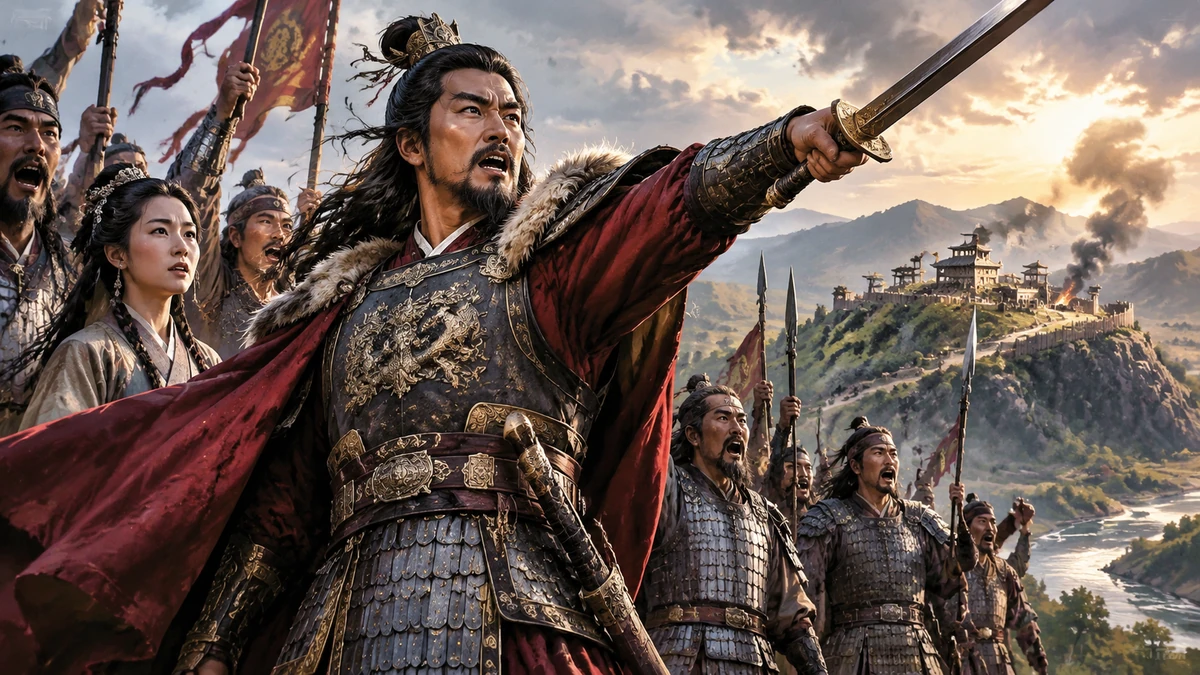
Jumong, remembered by the posthumous title King Dongmyeong, founded Goguryeo in 37 B.C. after fleeing political persecution in the ancient kingdom of Buyeo, according to traditional Korean historical accounts. He established his new kingdom at Jolbon, in what is now part of the historical territory of Northeast Asia, and ruled until his death in 19 B.C. His story, combining political ambition, legendary birth and military conquest, became one of the foundational narratives of early Korean history.
Who Was King Dongmyeong?
Jumong was the founding monarch of Goguryeo, one of the ancient kingdoms that shaped the history of the Korean Peninsula. His family name is traditionally recorded as Go, although accounts also connect his original lineage to the surname Hae through his legendary father, Haemosu. He is known by several names in historical literature, including Chumo, Jungmo, Jung hae, Sanghae and Domo. The historical work Samguk Yusa refers to him as Emperor Dongmyeong.
After his death, Jumong and his mother, Lady Yuhwa, were worshipped as founding ancestral deities of Goguryeo. His birth year remains disputed: the Samguk Sagi places it in 58 B.C., while the Samguk Yusa gives 48 B.C. Both works, along with the epic Dongmyeongwangpyeon, preserve versions of his extraordinary birth story.
The Legend of the Child Born From an Egg
Traditional accounts identify Haemosu as Jumong's father. The name's first syllable, Hae, means sun and is associated with heavenly ancestry in Korean mythology. The figure of Haemosu has consequently been interpreted as a personification of Goguryeo's belief in its divine origins.
According to the legend, Haemosu descended from heaven in a five-dragon chariot and encountered Yuhwa, one of the three daughters of the river god Habaek, while she was playing with her sisters near a deep pool. Habaek was furious about the encounter. After Haemosu ascended to heaven alone, Yuhwa was banished.
King Geumwa of Eastern Buyeo later found Yuhwa near the Ubalsu River and brought her into his palace out of sympathy. Sunlight repeatedly fell upon her, and she eventually became pregnant and gave birth to an enormous egg. Geumwa considered the egg an ominous sign and ordered it thrown into a pigsty. The pigs refused to eat it. Cattle and horses avoided it when it was left beside a road, while birds sheltered it when it was placed in an open field. Even an attempt to smash it with an ax failed.
Geumwa eventually returned the egg to Yuhwa. She kept it warm until a baby boy emerged. The child demonstrated extraordinary archery skills from an early age, reportedly making his own bow and arrows at seven and hitting every target. His name, Jumong, is traditionally explained as meaning a skilled archer in the language of Buyeo.
The story closely resembles the foundation legend of Dongmyeong, the traditional founder of Buyeo. However, historians generally distinguish Buyeo's Dongmyeong from Jumong, the founder of Goguryeo.
Escape From Buyeo and the Miraculous River Crossing
Jumong's exceptional abilities made him a target of jealousy among the sons of King Geumwa, particularly Prince Daeso. The king's seven sons reportedly feared Jumong's growing influence and repeatedly sought opportunities to kill him. Recognizing the danger, his mother advised him to leave Eastern Buyeo.
Jumong escaped with three companions, Oi, Mari and Hyeopbo, heading south until they reached the Eomri River. With pursuers closing in and the river blocking their escape, he appealed for help, declaring himself a grandson of the Heavenly Emperor and a maternal grandson of the river god.
In the legend, turtles and fish rose to the surface and formed a temporary bridge, allowing Jumong and his companions to cross safely. Once they reached the opposite bank, the animals disappeared, leaving the pursuing soldiers unable to follow. The miraculous crossing became known as Eobyeolseonggyo, or the Bridge Formed by Fish and Turtles.
Founding Goguryeo and Expanding Its Territory
After reaching Jolbon, Jumong settled in the region and married the second daughter of its ruler. Other versions of the story identify the woman as Soseono, daughter of Yeontabal. Through marriage and the gradual expansion of his political influence, Jumong strengthened his position. In 37 B.C., he succeeded the ruler of Jolbon Buyeo and established Goguryeo.
Although later records identify him as a member of the Go family, some accounts suggest that his original surname was Hae, following his father Haemosu. The historical explanation offered for the change is that the Gyerubu branch of the Go clan consolidated power during the reign of King Taejo, leading to the adoption of the Go surname for the kingdom's founding ancestor as a way to reinforce dynastic legitimacy.
Jumong then began a series of military campaigns intended to secure the new kingdom and expand its territory. He first subdued Malgal tribal communities along the frontier to prevent threats to Goguryeo's borders. In 36 B.C., he defeated King Songyang of Biryu in an archery contest, prompting the local ruler to surrender. Jumong renamed the territory Damul, a Goguryeo term meaning the recovery of former lands, and appointed Songyang as its local ruler.
Construction of Jolbon's fortress and royal palace was completed in 34 B.C., strengthening the kingdom's standing. In 33 B.C., Jumong dispatched generals Oi and Bunno to conquer Haengin, a small kingdom in the southeastern area of Mount Taebaek, identified in the account with the region southeast of Mount Baekdu. In 28 B.C., he sent Buwiyeom to conquer Northern Okjeo. His mother, Yuhwa, who had remained in Buyeo, died in the eighth lunar month of 24 B.C.
A Succession Dispute and the Origins of Baekje
The succession to Goguryeo's throne became another important part of the founding narrative. According to the Samguk Sagi, Jumong and his wife at Jolbon had two sons, Biryu and Onjo. But when Yuri, a son from Jumong's earlier relationship with Lady Ye, arrived from Northern Buyeo, Jumong welcomed him and designated him crown prince.
Fearing that their prospects under Yuri's succession would be uncertain, Biryu and Onjo eventually traveled south in search of territory where they could establish their own kingdom. Their departure is traditionally associated with the origins of Baekje, another of the three major ancient Korean kingdoms.
Other historical accounts offer a different version of the family relationships. In one account preserved in Chinese historical records, Soseono had already married Utae, a son of Northern Buyeo's King Haeburu, and had two sons, Biryu and Onjo, before meeting Jumong. After Utae's death, she married Jumong, who had fled to Jolbon, and became his queen. When Yuri arrived and became the favored heir, Biryu proposed that the brothers establish a separate kingdom. They subsequently traveled south with their mother and founded a state at Michuhol.
Another version suggests that Soseono had Biryu with Utae and later had Onjo with Jumong after remarrying him. These differing accounts illustrate the uncertainty surrounding the family history of Goguryeo's founding generation.
Death and the Historical Debate Over His Legacy
Jumong died in the ninth lunar month of 19 B.C. His tomb was originally established at Yongsan, near Jolbon, and he received the posthumous title King Dongmyeong. Historians believe the tomb may later have been relocated to Pyongyang when Goguryeo moved its capital there.
His identity and historical significance remain subjects of scholarly debate. Chinese historical texts, including Lunheng and Weilüe, identify Dongmyeong as the founder of Buyeo. Because the accounts of Dongmyeong's founding of Buyeo closely resemble the story of Jumong's establishment of Goguryeo, some scholars have proposed that the two figures may originally have been one legendary founder whose story became associated with different kingdoms over time. Under this interpretation, the title King Dongmyeong may have been attached to Jumong through the later merging of the two traditions.
Japanese historical records offer another connection. The Shoku Nihongi identifies Domo, an ancestor of the Baekje royal lineage, as a figure born through the influence of sunlight upon the daughter of the river god Habaek, a birth narrative closely resembling Jumong's legend.
The date of Goguryeo's founding is also disputed. Some Chinese and North Korean historians have argued for a founding date around 200 B.C., citing a passage in the Samguk Sagi from the reign of King Bojang that describes the Go family's kingdom as having existed for 900 years. Other interpretations suggest that the passage includes the history of Jolbon Buyeo before Jumong's arrival. In this account, Jumong fled Eastern Buyeo, established marriage ties with the aristocracy of Jolbon Buyeo and eventually became its ruler, founding Goguryeo in the process.
Whether understood as a historical monarch, a legendary hero or a figure shaped by overlapping foundation traditions, Jumong occupies a central place in the traditional account of Goguryeo's origins and the early history of the Korean Peninsula.
Comments
Post a Comment