Image to help understand the article
Kimchi dishes can differ sharply by preparation
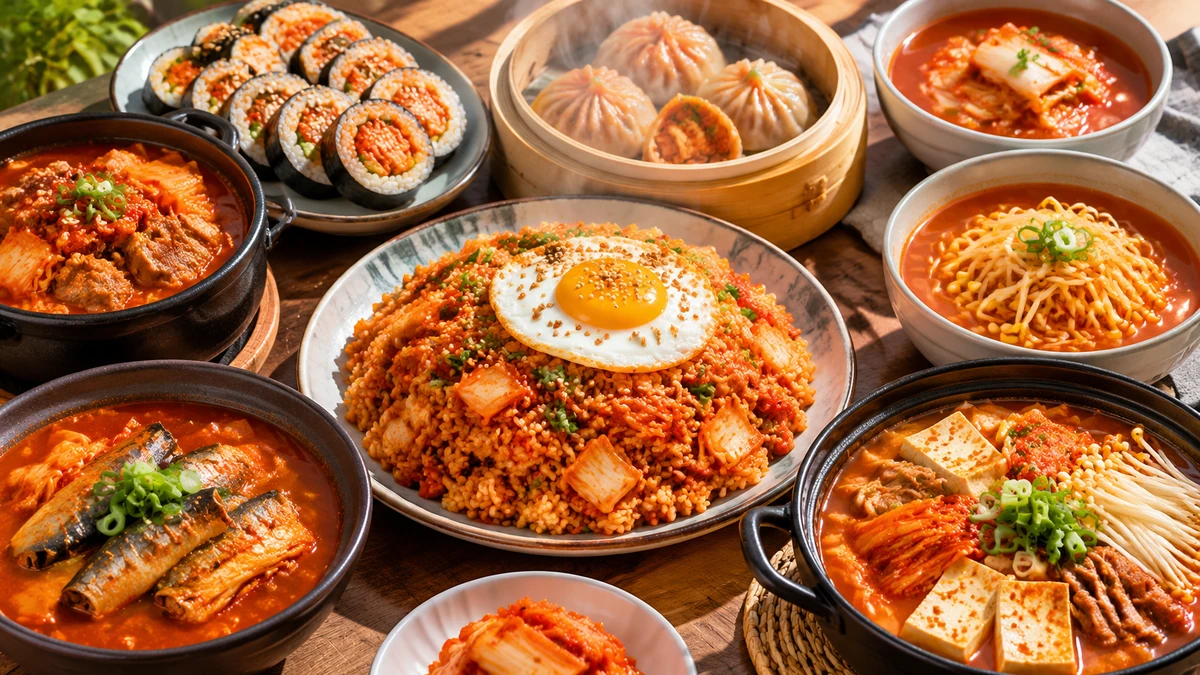
Kimchi is a familiar Korean staple, but its nutritional profile can change substantially depending on how it is served. Data from South Korea’s Ministry of Food and Drug Safety nutrition database compares eight kimchi-based dishes, with all figures measured per 100 grams: kimchi gimbap, kimchi fried rice, kimchi dumplings, kimchi soup, bean sprout kimchi soup, kimchi hot pot, saury kimchi stew and pork kimchi stew.
Kimchi fried rice had the highest calorie count at 167 calories per 100 grams, followed by kimchi dumplings at 152 calories and kimchi gimbap at 130 calories. Among the soup and stew dishes, saury kimchi stew had 89 calories, kimchi hot pot 73, pork kimchi stew 45 and kimchi soup 23. Bean sprout kimchi soup was lowest at 12 calories.
Kimchi fried rice also leads in sodium and fat
Kimchi fried rice had the highest sodium content, at 470 milligrams per 100 grams. Kimchi dumplings contained 393 milligrams, followed by kimchi gimbap at 349 milligrams. The lowest sodium levels were found in pork kimchi stew at 207 milligrams and kimchi soup at 208 milligrams.
The rankings do not always match calorie levels. Bean sprout kimchi soup had the fewest calories, at 12 per 100 grams, but contained 230 milligrams of sodium — more than kimchi soup and pork kimchi stew.
Kimchi fried rice also stood out for fat and sugar. It contained 9.18 grams of fat and 13.89 grams of sugar per 100 grams. The other seven dishes each contained less than 1 gram of sugar per 100 grams. Kimchi gimbap had the highest carbohydrate content, at 19.17 grams.
Kimchi dumplings provide the most protein
Kimchi dumplings had the highest protein content among the eight dishes, with 10.24 grams per 100 grams. Saury kimchi stew followed with 7.14 grams, while kimchi fried rice contained 5.32 grams. Kimchi gimbap had 4.3 grams, pork kimchi stew 4.25 grams, kimchi hot pot 3.12 grams, kimchi soup 1.34 grams and bean sprout kimchi soup 0.82 grams.
For people comparing dishes by a specific nutritional priority, the database shows different choices depending on the goal. Bean sprout kimchi soup, kimchi soup and pork kimchi stew were among the lower-calorie options, while kimchi fried rice and kimchi dumplings were higher. Pork kimchi stew and kimchi soup had the lowest sodium levels, while kimchi fried rice had the highest. Kimchi dumplings and saury kimchi stew had the most protein.
What about the two kimchi stews?
Among the two stews compared, pork kimchi stew had fewer calories: 45 per 100 grams versus 89 for saury kimchi stew. Saury kimchi stew, however, contained more protein, at 7.14 grams compared with 4.25 grams for the pork version.
The comparison also shows why calories alone do not tell the whole nutritional story. The lowest-calorie dish, bean sprout kimchi soup, was not the lowest in sodium. According to the same database, pork kimchi stew had the lowest sodium content among the eight dishes, at 207 milligrams per 100 grams.
Comments
Post a Comment