Image to help understand the article
Big Tech rallies after Democratic election gains
Shares of major U.S. technology companies surged on the 4th after Democrats won control of both chambers of Congress in the midterm elections, as investors calculated that tighter restrictions on data center construction could ease the industry’s costly race to build artificial intelligence infrastructure.
Amazon rose as much as 7.4%, reaching its highest level in three months. Apple, which has spent comparatively less on AI infrastructure, gained about 7% to a record high. Meta, Alphabet and Microsoft advanced between 2% and 6.3%.
If those gains held, the five companies would add an estimated $750 billion or more in combined market value in a single day. Investors also welcomed reduced political uncertainty, betting that Democratic control of the House and Senate would make it harder for the Trump administration to pursue abrupt policy changes.
Possible restrictions ease spending concerns
Big Tech stocks had faced pressure over whether enormous investments in AI infrastructure would generate sufficient returns. The leading companies plan more than $740 billion in combined capital spending this year, up sharply from about $400 billion last year. Recent earnings reports have renewed concerns that spending on data centers and AI chips could weaken cash flow.
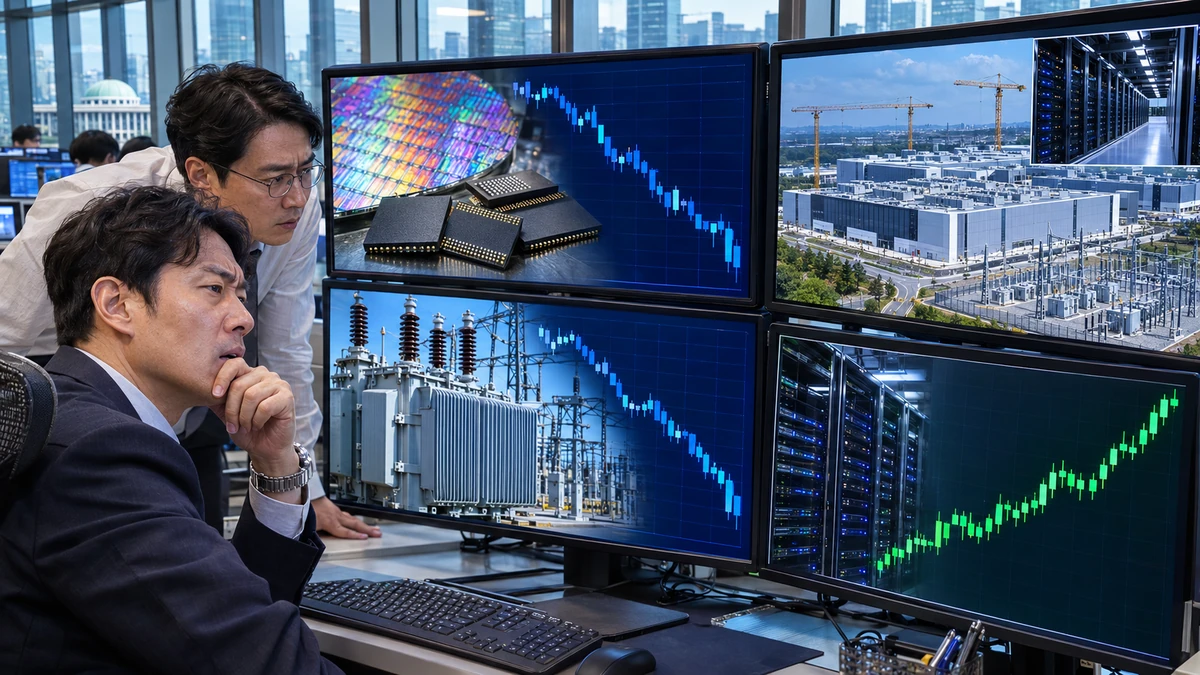
The Democratic victories prompted expectations that approvals for new data centers could slow. For established technology companies that already own extensive facilities, fewer new projects could make existing computing capacity more valuable while moderating the need for additional spending.
Art Hogan, chief market strategist at B. Riley Wealth, said new data center construction could slow or encounter more obstacles after the election. Because major technology companies already operate data centers, he said, less overbuilding could increase the value of their existing assets and reduce their capital burdens.
Data centers become a local election issue
Democratic gubernatorial candidates who promised tougher oversight of new facilities won in states with significant data center development, including Texas, Georgia and Ohio. During the campaign, residents raised concerns about electricity and water consumption, noise and rising utility bills.
In Texas, a major hub for U.S. data center construction, Gov.-elect Gina Hinojosa called for pausing new projects until protections for residents are established. Candidates in Georgia and Ohio proposed requiring developers to shoulder more costs or meet stricter permitting standards.
Voters also acted directly. At least 38 U.S. communities approved ballot measures banning or restricting data center development, including temporary construction pauses and limits on facilities that consume large amounts of electricity. Opposition has not been confined to Democratic-leaning areas, increasing pressure on both parties to reconsider related policies.
Korean suppliers fall on fears of slower U.S. development
Companies focused on building new data centers suffered in U.S. trading. Applied Digital and IREN fell between 6% and 13% during the session. AI cloud companies CoreWeave and Nebius could also be sensitive to regulatory changes because they are borrowing heavily to construct facilities. Delayed permits or reduced tax incentives could increase their costs and postpone the delivery of computing capacity to customers.
Those concerns spread to South Korea, where investors sold shares of semiconductor and electrical equipment companies tied to the data center expansion. Samsung Electronics dropped 5.73%, while memory chipmaker SK Hynix fell 8.17%. Electrical equipment manufacturers LS Electric and HD Hyundai Electric declined 11.15% and 8.55%, respectively.
The election results do not mean data center construction will stop nationwide. President Donald Trump remains in office, limiting the prospects for sweeping federal legislation, while state and local permitting decisions may have a more immediate effect. It remains unclear how many projects could be delayed.
Restrictions could eventually weigh on Big Tech as well. Amazon, Microsoft, Google and Meta rely on new data centers to expand AI computing services and support future revenue growth. The rally therefore reflected investor optimism that the pace of excessive AI spending could cool, rather than a conclusion that tighter regulation would be uniformly beneficial.
Comments
Post a Comment