Image to help understand the article
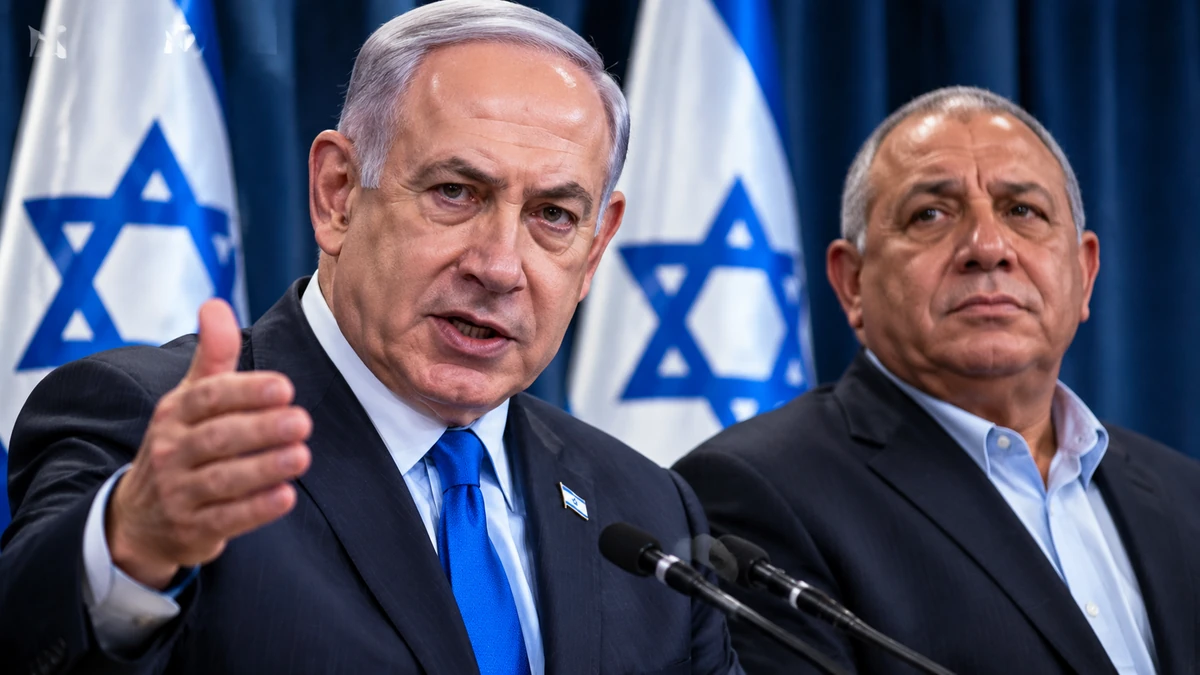
Israeli caretaker Prime Minister Benjamin Netanyahu renewed his call for opposition leader Gadi Eisenkot to form a unity government, arguing that the country’s security challenges require political cooperation.
In a video statement issued on the 14th, Netanyahu said a meeting with Eisenkot two days earlier had strengthened his belief that a national unity government was essential to protect Israel. Netanyahu said he briefed Eisenkot, at the opposition leader’s request, on security and diplomatic issues facing the country.
Netanyahu claimed such a government could eliminate the threat from Iran and said it should include parties that recognize Israel as the nation-state of the Jewish people — language that effectively excludes Arab parties.
Coalition Deadline Raises Prospect of Another Election
Eisenkot, leader of the Yashar party, received a formal mandate from President Isaac Herzog on the 8th to try to form the next government. He has up to 42 days to negotiate a coalition. If those talks fail, Israel could face another election early next year, potentially giving Netanyahu an opportunity for a political comeback.
Netanyahu’s Likud party remained the largest party in last month’s election but did not secure a majority. Eisenkot received the mandate to form a government with support that included Arab parties.
Eisenkot had sharply criticized Netanyahu a day before the video statement, calling the prime minister’s attacks on Arab parties “racist” and distancing himself from Netanyahu. AFP reported that a unity government between the two leaders appeared unlikely. An agreement with Netanyahu could also undermine Eisenkot’s effort to present the next government as a clear change in leadership.
Netanyahu has framed his proposal around confronting Iran’s nuclear threat and strengthening national security. The appeal could also help him retain political influence and emphasize an issue that has long been central to his public standing. By ruling out Arab parties, he may seek to draw centrist and right-wing politicians away from the anti-Netanyahu bloc.
Israeli Strike Targets Hamas Commander
Separately, the Israeli military said on the 15th that it had targeted a senior Hamas commander in an airstrike. A Hamas source told Reuters that Samir Abu Younis, a senior commander in the group’s armed wing, was killed in Khan Younis in the southern Gaza Strip.
Abu Younis, 53, had been a member of Hamas’ Qassam Brigades since 1991 and commanded its forces in the southern city of Rafah.
Comments
Post a Comment