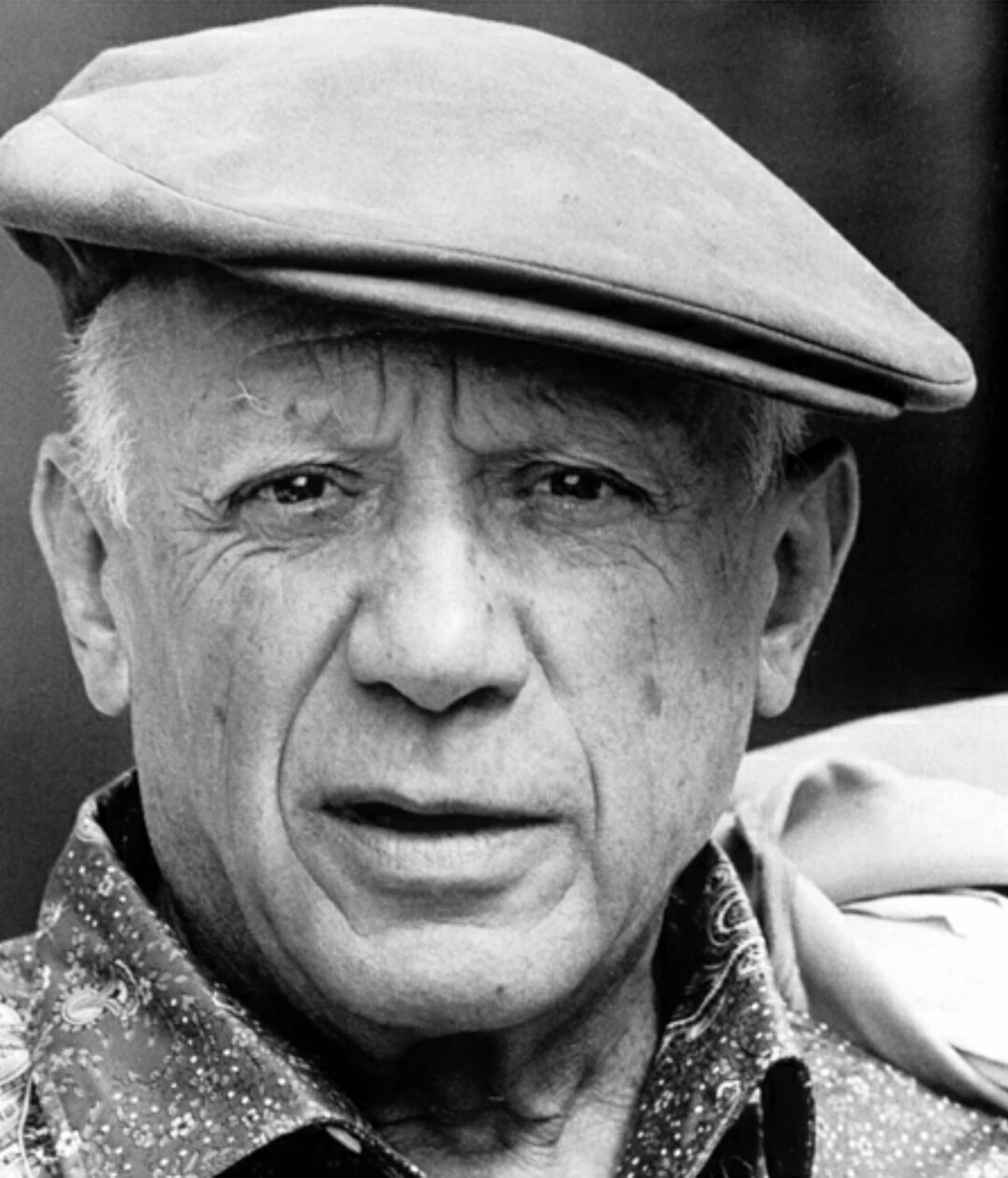
Image to help understand the article
Pablo Picasso, the Spanish-born painter and sculptor who helped establish Cubism, became one of the most influential artists of the 20th century. Over a career spanning more than 76 years, from his teenage beginnings to his death in 1973, he transformed painting and sculpture while experimenting with collage, printmaking, ceramics, book illustration and theatrical design. His best-known works include Les Demoiselles d'Avignon (1907), a landmark in the development of modern art, and Guernica (1937), his powerful antiwar painting.
From a Spanish childhood to the Paris art scene
Picasso was born Oct. 25, 1881, in Málaga, in Spain's southern Andalusia region. His father, José Ruiz y Blasco, was a traditional academic painter who began teaching him drawing and oil painting when he was 7. Picasso showed exceptional ability early, holding his first exhibition in A Coruña at age 13. His family later moved to Barcelona, where he entered the city's art school after passing an advanced admissions examination.
At 16, Picasso enrolled at Madrid's Royal Academy of Fine Arts of San Fernando, but quickly abandoned its formal classes. Instead, he spent time studying the works of Spanish masters at the Prado Museum, particularly Diego Velázquez, Francisco Goya, Francisco de Zurbarán and El Greco. The latter's elongated figures, intense colors and expressive faces would influence aspects of Picasso's later work.
He returned to Barcelona in 1899 and became part of the city's modernist artistic circles. In 1900, he traveled to Paris for the first time, entering an international art scene that would become central to his career. The early years were financially difficult. Picasso shared a small room with poet and journalist Max Jacob, who helped him learn French and literature. The two worked opposite schedules, and the young artist was so poor that he sometimes burned his own paintings to heat their room.
The Blue and Rose periods
Picasso's early career is commonly divided into distinct artistic periods. The Blue Period, from 1901 to 1904, featured predominantly blue and blue-green tones. Its subjects frequently included impoverished people, beggars, sex workers and struggling mothers with children. The period was shaped partly by his travels in Spain and the suicide of his close friend Carles Casagemas, whose death deeply affected him.
From 1904 to 1906, Picasso entered his Rose Period, adopting warmer orange and pink colors. Circus performers, acrobats and clowns became recurring subjects. The harlequin, often depicted in a distinctive checked costume, emerged as a symbolic figure associated with the artist himself.
During this period, Picasso attracted the attention of American collectors Leo and Gertrude Stein. Gertrude became an important patron, purchasing his paintings and displaying them in her Paris home, where artists and intellectuals gathered. Picasso also met Henri Matisse, beginning a lifelong friendship and artistic rivalry. Their contrasting approaches would help define debates about modern painting.
Les Demoiselles d'Avignon and the birth of Cubism
In 1907, Picasso painted Les Demoiselles d'Avignon, a work that marked a decisive break with conventional representation and helped establish the foundations of Cubism. His African-influenced period, generally dated from 1907 to 1909, included other experimental works such as Nude with Raised Arms (1907) and Three Women (1908).
Picasso subsequently developed Cubism with French painter Georges Braque. In Analytical Cubism, the two artists broke objects into geometric forms and examined them from multiple perspectives, often using muted browns and other subdued colors. Their paintings from this period were sometimes so similar that distinguishing between their individual contributions could be difficult.
They later moved toward Synthetic Cubism, incorporating cut-out pieces of wallpaper, newspaper and other materials directly into compositions. This experimentation helped establish collage as an important modern artistic technique. Between 1915 and 1917, Picasso also produced highly simplified geometric studies of everyday objects, including pipes, guitars and drinking glasses. The works later became associated with a style known as Crystal Cubism.
War, personal upheaval and changing artistic directions
Picasso's growing reputation brought financial success, but his personal life underwent repeated changes. After separating from Fernande Olivier, he became involved with Marcelle Humbert, also known as Eva Gouel, and incorporated declarations of affection for her into several Cubist works. Her death from illness in 1915, at age 30, devastated him.
When World War I began in August 1914, Picasso was living in Avignon. Several of his artistic associates, including Braque and André Derain, were mobilized, while poet Guillaume Apollinaire joined the artillery. Picasso, unlike his French colleagues, was able to continue painting throughout the war, although his work became darker in tone. After art dealer Daniel-Henry Kahnweiler left France, Picasso's work was taken on by Léonce Rosenberg.
In the final years of the war, Picasso began collaborating with Sergei Diaghilev's Ballets Russes. He designed the production of Parade, a ballet with music by Erik Satie. In the summer of 1918, he married Olga Khokhlova, a dancer with the company. Their son, Paulo, was born later. Through Khokhlova, Picasso entered more affluent social circles, although differences between her preference for conventional social etiquette and his bohemian lifestyle became a source of tension.
Picasso's artistic development continued beyond Cubism. In the late 1910s and early 1920s, he explored Neoclassical styles before producing paintings with strong Surrealist characteristics in the mid-1920s. His later work frequently combined elements from different periods rather than adhering to a single artistic movement.
Guernica, politics and a lasting legacy
Among Picasso's most celebrated works, Guernica (1937) stands out as an antiwar statement, alongside Les Demoiselles d'Avignon as one of the defining paintings of his career. His political commitments were also explicit: Picasso described himself as both a pacifist and a communist. He remained a member of the Spanish Communist Party and the French Communist Party until his death.
Although born in Spain, Picasso spent most of his adult life in France. He died April 8, 1973, at his home in Mougins, in southern France, from pulmonary edema. His legacy extends beyond painting to sculpture, collage, ceramics, printmaking, illustration and stage design. His partnership with Braque in developing Cubism fundamentally changed how artists represented objects and space, making Picasso a central figure in the history of modern art.
Comments
Post a Comment