Picasso’s ‘Guernica’: How a 1937 Masterpiece Turned the Horrors of War Into an Enduring Anti-Fascist Statement
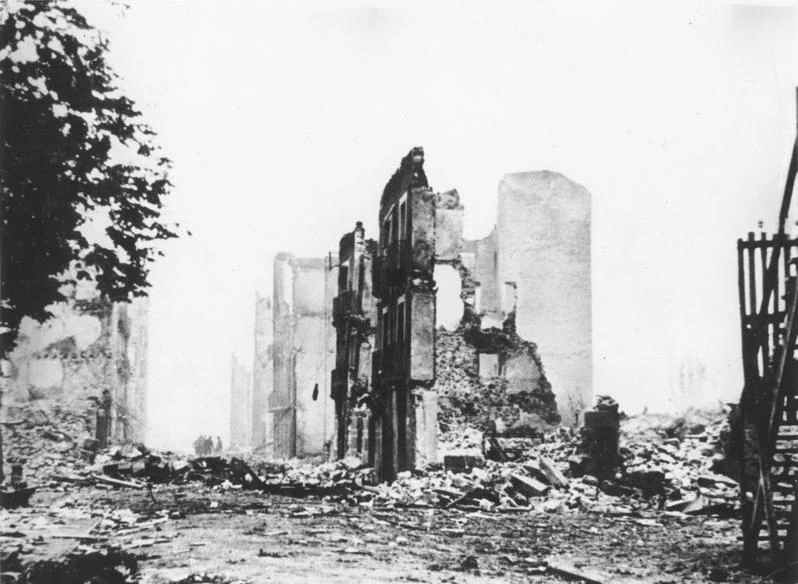
Image to help understand the article
A painting born from the destruction of a Spanish town
Pablo Picasso’s Guernica, one of the most recognizable antiwar paintings of the 20th century, was created in response to the bombing of a small town in northern Spain during the Spanish Civil War. Completed in Paris in 1937, the monumental oil painting transformed the suffering of civilians into a powerful statement against fascist violence.
The work measures 3.49 meters (11.45 feet) high and 7.76 meters (25.46 feet) wide. Picasso used a restricted palette of black, white and gray, giving the scene the stark visual quality of a photographic record of destruction. Screaming women, a dying horse, a wide-eyed bull, a dead child, a fallen soldier and burning buildings fill the composition.
Today, Guernica is permanently displayed at the Reina Sofía Museum in Madrid. Its journey from Paris to New York and eventually back to Spain reflects the political struggles that shaped the country's modern history.
The bombing that changed Picasso’s plans
The Spanish Republican government originally commissioned Picasso to create a large painting for its pavilion at the 1937 Paris International Exposition. At the time, the artist was living on Rue des Grands-Augustins in Paris and had not returned to Spain since 1934. His initial sketches focused on an artist's studio rather than war.
That changed on April 26, 1937, when German aircraft bombed Guernica, a town in Spain's Basque region. The attack took place during the Spanish Civil War, when Republican forces — including communists, socialists and anarchists — fought the Nationalists led by Gen. Francisco Franco, who sought to establish a fascist dictatorship.
Germany's Condor Legion, sent by Adolf Hitler to support Franco, carried out the bombing with assistance from fascist Italy. German aircraft under the command of Col. Wolfram von Richthofen attacked the town for approximately two hours. His records described an objective of disrupting Republican forces and preventing their retreat. When smoke made roads, bridges and surrounding areas difficult to identify, bombs were dropped on the town center.
The bombing destroyed water pipes and homes, while incendiary weapons spread flames through wooden buildings. The attack occurred on a Monday market day, when women and children were gathered in the town. Many men had left to fight for the Republican side. Roads were blocked by rubble, and a bridge leading out of town was destroyed, making escape difficult.
Guernica was about 10 kilometers from the front line and stood on a route toward Bilbao. Its munitions factory on the outskirts was left undamaged, prompting criticism that the operation was intended to terrorize civilians rather than destroy a military installation.
Poet Juan Larrea urged Picasso to make the bombing the subject of his commissioned work. On May 1, Picasso read a witness report by British journalist George Steer and abandoned his original concept. He began preliminary drawings based on the attack. Steer's reporting helped bring the destruction of Guernica to international attention and influenced the artist's decision.
How Picasso created the monumental work
Photographer Dora Maar played a central role in the painting's development. She found a large studio near Notre-Dame Cathedral on Rue des Grands-Augustins, in a building that had previously served as the headquarters of an organization associated with anti-fascist speeches. Maar documented Picasso's work through an exclusive series of photographs and introduced him to techniques for creating images without a camera.
Art historians have highlighted Maar's influence on the painting's visual and political direction. Researcher Antoine Roman has argued that her photographic work encouraged Picasso to experiment with a new kind of politically engaged art. Art historian John Richardson also suggested that her photographs helped inspire the painting's immediate, black-and-white appearance. At Picasso's request, Maar even painted part of the dying horse herself.
American painter John Ferren helped prepare the enormous canvas. Picasso chose a specially formulated matte household paint to minimize reflections from the surface. The decision helped preserve the work's subdued visual character.
Picasso normally restricted access to his studio, but he allowed influential visitors to observe the creation of Guernica. He believed that publicizing the process could support the anti-fascist movement. The painting took 35 days to complete and was finished on June 4, 1937.
A political statement at the Paris International Exposition
Guernica was unveiled in July 1937 at the Spanish pavilion of the Paris International Exposition. While the exposition emphasized technology and industrial progress, the Republican government's pavilion presented a different message: Spain was fighting for its political survival.
The painting was displayed alongside a poem by Paul Éluard, a work by Joan Miró and Alexander Calder's Mercury Fountain. Together, the exhibits presented the Spanish conflict through art and cultural expression rather than technological achievement.
From European exhibitions to the Museum of Modern Art in New York
After its Paris debut, Guernica traveled through several European cities. Between January and April 1938, it was exhibited in Oslo, Copenhagen, Stockholm and Gothenburg. From late September, it appeared in London before moving to Leeds and Liverpool, eventually reaching Manchester in early 1939.
The touring exhibitions helped raise money for Spanish war relief. After Franco's victory, the painting was sent to the United States to support fundraising for Spanish refugees. Picasso insisted that it should not return to Spain until freedom and democracy had been established there.
At Picasso's request, the Museum of Modern Art in New York became the painting's custodian. The work subsequently toured the United States and Europe before concerns about its preservation led to it remaining at the New York museum. Its political significance continued beyond the Spanish conflict: during the Vietnam War, antiwar gatherings were held in the room where the painting was displayed.
Picasso died in 1973, and Franco died in 1975. Spain adopted a new constitution in 1978, becoming a democratic constitutional monarchy. The return of Guernica nevertheless involved negotiations. The Museum of Modern Art was reluctant to surrender one of its most important works, while questions arose over whether the new monarchy fulfilled Picasso's conditions concerning a republic.
After negotiations, the painting arrived in Madrid in 1981. It was initially displayed at the Casón del Buen Retiro, under the administration of the Prado Museum. In 1992, it moved to the Reina Sofía Museum, where it remains on permanent display.
Reading the symbols inside ‘Guernica’
Picasso organized the composition like a vast interior divided into three sections, resembling a triptych. At the center, a wounded horse collapses beneath a bright electric bulb, while a woman holding an oil lamp reaches into the scene. On the left, a bull stands over a mother holding her dead child. On the right, a woman screams as flames consume a building around her.
The figures are arranged through overlapping triangular shapes. The largest central triangle uses the body of a fallen soldier as its base and the lamp-bearing woman's light as its apex. This geometric structure brings together the painting's fragmented figures and scenes of suffering.
The bull's wide-open eyes and the mother's anguished expression frame one of the painting's most disturbing images: a woman holding a lifeless child. The child's eyes have no visible pupils. Art theorist Rudolf Arnheim interpreted the woman and child as representations of innocent and defenseless human beings.
The horse, positioned at the center, has a large wound in its side, resembling an injury from a spear or lance. Its head twists backward, and its pointed tongue emerges from an open mouth. The tongues of the bull and the grieving mother also become dagger-like shapes, reinforcing the atmosphere of screaming and pain.
Below the horse lies a dismembered soldier. His severed right hand grips a broken sword, from which a flower grows. The open palm of his left hand carries a mark resembling the stigmata associated with the suffering of Christ. Above the horse, an electric bulb resembles an all-seeing eye, casting a harsh light across the scene.
Other figures reinforce the painting's claustrophobic atmosphere. A frightened woman pushes her head and arms through a window while holding an illuminated lamp toward the bulb. Beneath her, another woman staggers toward the center, staring upward in shock. At the far right, a woman raises both arms while trapped between flames spreading above and below her. Her open mouth and backward-tilted head echo the posture of the grieving mother on the opposite side.
A nearly hidden dove appears on a cracked wall between the bull and the horse. Its body blends into the background, leaving mainly its outline visible. The bird's lowered wing and raised head with an open beak have traditionally been interpreted as symbols of shattered peace. Another interpretation suggests that the dove represents music among the forms of art destroyed by military violence.
Through these interconnected images, Picasso avoided presenting the bombing as a conventional military scene. Instead, he portrayed its human consequences through distorted bodies, anguished expressions, broken objects and flames. The painting's continued presence in Madrid, after decades of international exhibition and political dispute, underscores its place as both a major work of modern art and a lasting record of civilian suffering during war.
Comments
Post a Comment