Propolis Supplements: South Korea Sets Daily Intake Limits and Safety Guidelines for Two Approved Ingredients
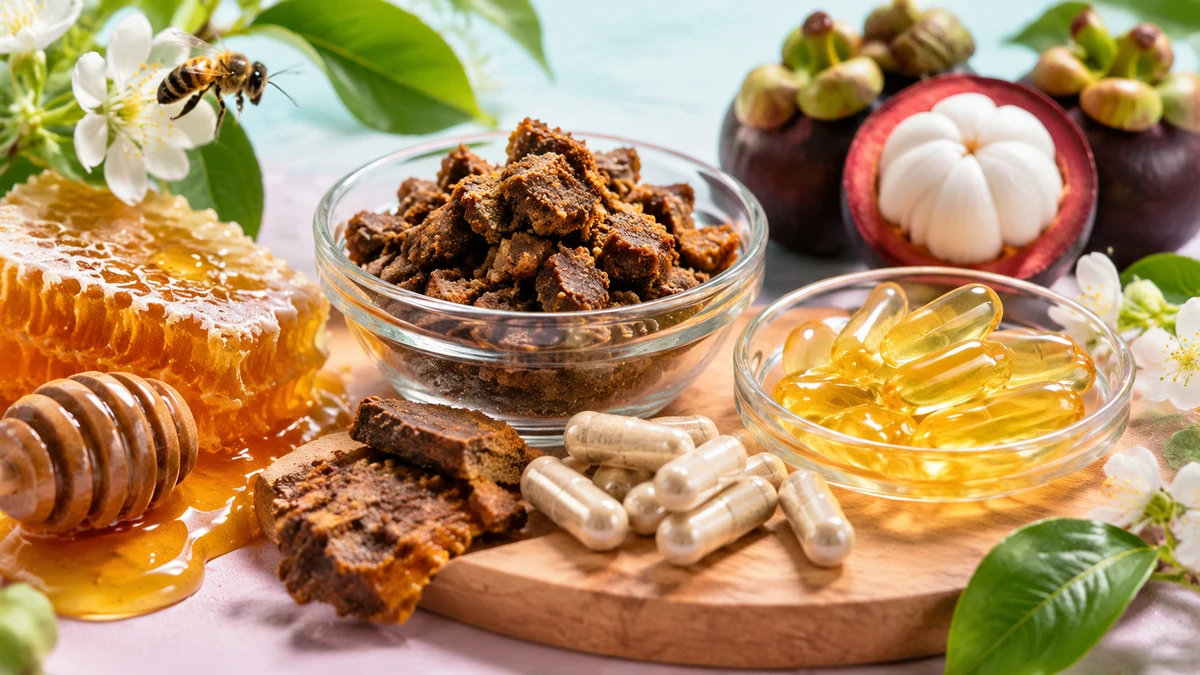
Image to help understand the article
South Korea's Ministry of Food and Drug Safety has recognized two propolis-based ingredients for use in functional health supplements, establishing separate daily intake recommendations and safety precautions for each. The approved ingredients are propolis extract and a combination of propolis and mangosteen peel, with recommended daily amounts of 20-40 milligrams and 388 milligrams, respectively.
What Is Propolis?
Propolis, also known as bee glue, is a resin-like substance that honeybees produce by combining plant materials collected from buds, sap flows and other botanical sources with their own saliva and beeswax. Bees use it to seal small openings in their hives, generally filling gaps of about 9 millimeters or less.
Its color varies depending on the plants from which the material is collected, although dark brown is the most common. Propolis becomes sticky at temperatures above 19 degrees Celsius (66 degrees Fahrenheit) and hard and brittle at lower temperatures. According to Cleveland Clinic, it contains beeswax, resins, oils and more than 500 compounds, including polyphenols.
South Korea's regulatory standards define propolis extract as an extract, concentrate or dried product obtained from propolis after removing its wax. Approved production methods include extraction with water, ethanol or a water-ethanol mixture, as well as supercritical carbon dioxide extraction. Diethylene glycol is prohibited as an extraction solvent. The ingredient must contain at least 10 milligrams of total flavonoids per gram, along with identifiable p-coumaric acid and cinnamic acid.
Propolis is sold in several forms, including capsules, tablets and liquid extracts. It is also used in sprays, lozenges, chewing gum, cough products, lip balms, cosmetics, lotions and topical ointments, according to Memorial Sloan Kettering Cancer Center and Cleveland Clinic.
Two Ingredients Recognized by South Korea's Health Regulator
South Korea's Ministry of Food and Drug Safety recognizes two distinct propolis-based ingredients, each with a different permitted functional claim.
Propolis extract: Recognized for its potential to help provide antioxidant benefits and support antibacterial activity in the mouth. The oral antibacterial claim applies only to products that come into direct contact with the oral cavity and is not subject to the daily intake standard.
Propolis-mangosteen peel complex: Registered under approval No. 2025-13 and recognized for its potential to help improve gum condition.
The two ingredients should not be treated as interchangeable. Their recognized functions and daily intake recommendations differ.
Daily Intake Recommendations and Precautions
The ministry has established a daily intake range of 20-40 milligrams for propolis extract and 388 milligrams per day for the propolis-mangosteen peel complex.
For propolis extract, people with a known propolis allergy should exercise caution. Anyone experiencing an adverse reaction should stop taking the product and consult a health care professional.
For the propolis-mangosteen peel complex, the ministry advises infants, children, pregnant women and breastfeeding women to avoid consumption. People with specific health conditions, including allergies, should exercise caution. Consumers who experience adverse reactions should discontinue use and seek professional advice. Those taking medications such as anticoagulants or antiplatelet drugs should consult a health care professional before use.
Potential Allergies, Drug Interactions and Other Risks
International medical institutions have issued additional warnings about propolis. Memorial Sloan Kettering Cancer Center advises against using propolis products for people who have previously experienced bee stings or are allergic to honey, ragweed or chrysanthemums. It also warns that combining propolis with warfarin, a blood-thinning medication, may increase the time required for blood to clot.
Reported adverse effects include photosensitivity, swollen lips, skin rashes, eyelid dermatitis, fungal infections, severe throat infections, lung-related problems associated with inhalation, acute kidney failure and elevated liver enzyme levels.
Cleveland Clinic recommends that people with asthma, eczema, seasonal allergies or bleeding disorders, as well as pregnant women, consult a doctor before taking propolis. Potential interactions have also been identified with warfarin and medications metabolized by CYP450 enzymes, including statins, immunosuppressants, antidepressants and beta blockers.
Propolis may also interact with supplements that affect blood clotting, such as garlic, ginger and ginkgo. Cleveland Clinic advises stopping propolis at least two weeks before surgery.
Product quality is another consideration. Research examining some propolis products has detected heavy metals, including lead, cadmium and chromium, as well as contaminants such as insect fragments, mites and rodent hair.
What Consumers Should Know
South Korea's regulatory guidance makes clear that propolis extract and the propolis-mangosteen peel complex are separate functional ingredients with different approved uses, intake levels and precautions. In particular, the 388-milligram daily recommendation for the combined ingredient should not be confused with the 20-40-milligram range for propolis extract.
Consumers who are pregnant, breastfeeding, have allergies or underlying medical conditions, or take prescription medications should seek professional advice before using these supplements. People taking blood-thinning medication should be especially cautious.
The information is based on public data and regulatory standards from South Korea's Ministry of Food and Drug Safety, along with safety information from Memorial Sloan Kettering Cancer Center and Cleveland Clinic. Dietary supplements are not medicines and should not be considered substitutes for medical treatment.
Comments
Post a Comment