Queen Seondeok: Korea’s First Woman Monarch Who Built Cheomseongdae and Hwangnyongsa’s Nine-Story Pagoda
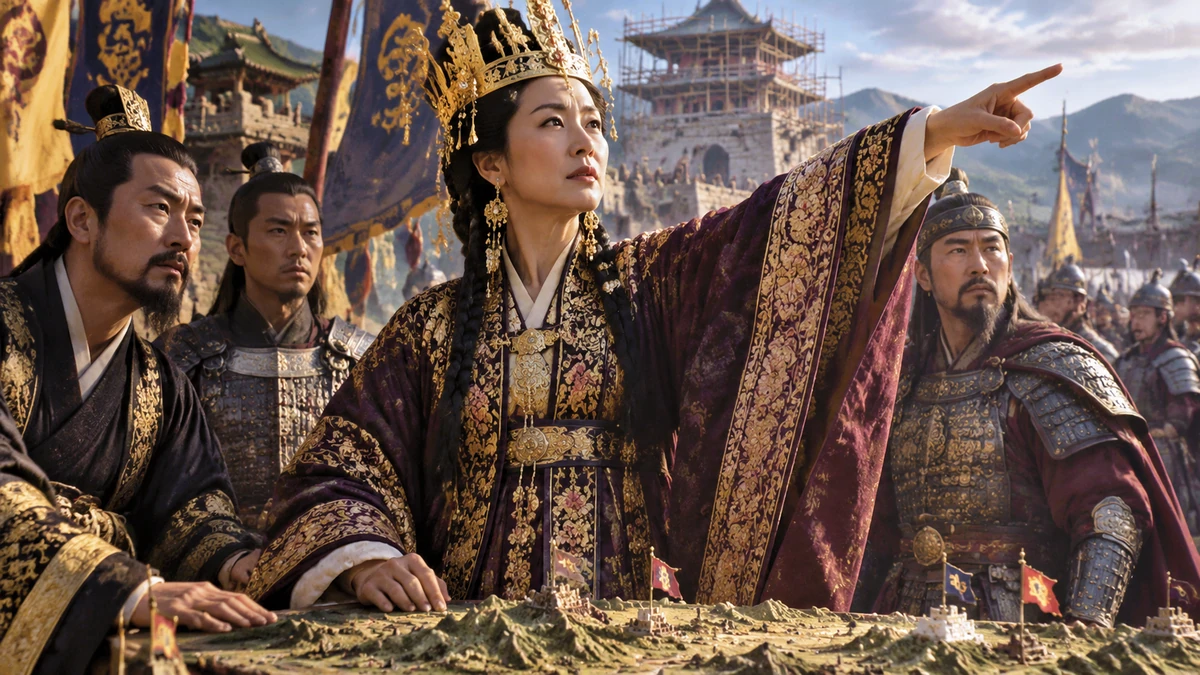
Image to help understand the article
Queen Seondeok, the first woman to rule in Korean history, reigned over the ancient kingdom of Silla from 632 to February 647. Her 15-year reign unfolded during a period of mounting military pressure from neighboring kingdoms, but she also oversaw major cultural and religious projects, strengthened diplomatic ties with Tang China and elevated military leaders Kim Chun-chu and Kim Yu-sin, whose careers helped lay the groundwork for the eventual unification of the Korean Peninsula.
How Seondeok Became Silla’s First Queen
Born Deokman, Seondeok was the daughter of King Jinpyeong and Queen Maya. Historical records do not establish her birth date, although scholars estimate that she was around 50 when she took the throne. Her accession followed a succession crisis: King Jinpyeong had no legitimate male heir, while tensions among political factions threatened the stability of the court.
The Hwarang-style aristocratic political order was not the mechanism behind her selection. Instead, Silla’s Hwa-baek Council, an assembly of senior nobles, endorsed Deokman as monarch. She received the honorific title Seongjo Hwanggo, recognizing her as a sovereign who continued the lineage of her ancestors and parents. The historical text Samguk Yusa explains that the male members of the royal Seonggol bone-rank lineage had been exhausted, allowing a woman to become king.
In 632, her first year on the throne, Seondeok entrusted senior official Eulje with overseeing government affairs. She also dispatched officials to assist vulnerable people, including orphans and elderly residents living alone, and sent an envoy to Tang China.
Science, Buddhism and a Monumental Pagoda
Seondeok pursued policies aimed at improving people's livelihoods while using Buddhism and monumental construction to strengthen the kingdom. In 633, she personally performed a royal ancestral ritual and reduced taxes in provincial districts.
One of her most enduring achievements was Cheomseongdae, an astronomical observatory built to support agricultural planning. It is recognized as the oldest surviving astronomical observatory in East Asia. Her government also sponsored Buddhist temples, including Bunhwangsa and Yeongmyosa. Bunhwangsa was completed in 634.
Her most ambitious religious and national project was the nine-story wooden pagoda at Hwangnyongsa Temple. The Buddhist monk Jajang reportedly proposed its construction in 643, according to Samguk Yusa, while Samguk Sagi dates the proposal to 645. The queen commissioned Kim Yong-chun to bring 200 craftsmen from neighboring Baekje to help build it.
The pagoda reportedly stood about 80 meters (262 feet) tall. Its nine stories symbolized Silla's ambition to defeat and subdue nine neighboring enemies, with the names of the targeted countries incorporated into the project's symbolism. The structure represented both Buddhist devotion and the kingdom's determination to protect itself.
War on Two Fronts and the Search for Allies
Military pressure intensified throughout Seondeok's reign. Baekje attacked Silla's western frontier in 633, while another Baekje force led by General Uso entered the Yeogeungeok Valley in 636. Silla commanders Alcheon and Piltan defeated the invading troops. Goguryeo attacked Chiljung Fortress in 638 but was also repelled by Alcheon.
The situation deteriorated sharply in 642. Baekje's King Uija launched an offensive that captured more than 40 Silla fortresses in the west and threatened Danghangseong, an important diplomatic connection to Tang China. In August, Baekje forces also captured Daeya Fortress, killing senior official Pumseok, the son-in-law of Kim Chun-chu.
Facing a worsening military crisis, Seondeok sent Kim Chun-chu to Goguryeo to negotiate an alliance. But King Bojang demanded the return of territory north of Jukryeong Pass that Silla had previously taken. When Kim refused, Goguryeo detained him. Seondeok responded by sending Kim Yu-sin's forces toward the northern Han River region, prompting Goguryeo to release the envoy. The alliance negotiations nevertheless failed.
In September 643, Seondeok again appealed to Tang China for military assistance, but Emperor Taizong rejected the request. A year later, Taizong urged Goguryeo to stop its attacks, but military leader Yeon Gaesomun refused, demanding the return of 500 ri of territory that Goguryeo claimed Silla had seized during its earlier wars against China's Sui dynasty.
Silla continued fighting. In September 644, Kim Yu-sin led an army that captured seven Baekje fortresses. When Tang invaded Goguryeo in May 645, Silla sent 30,000 troops to assist. Baekje took advantage of Silla's military commitment elsewhere and captured seven of its fortresses.
Three Prophecies Attributed to the Queen
The Samguk Yusa preserves three stories about Seondeok's supposed ability to foresee events. They have become an enduring part of her historical legacy, although they are recorded as traditional accounts rather than independently established predictions.
In 632, Tang Emperor Taizong sent the queen a painting of peonies in red, purple and white, together with seeds. Seondeok reportedly predicted that the flowers would have no fragrance because the painting showed no butterflies. After planting the seeds, her attendants found that the flowers indeed lacked a scent. She later explained that the image had mocked her unmarried status by depicting flowers without butterflies.
Another story concerns frogs that reportedly croaked continuously for three or four days at a pond near Yeongmyosa in the winter of 635. Seondeok interpreted the noise as a warning of enemy soldiers. She ordered Alcheon and Piltan to lead 2,000 troops to Yeogeungeok Valley, where they found and defeated an ambush force led by Baekje General Uso. Samguk Sagi dates the military episode to May 636 rather than 635.
In the third account, the queen told her officials to bury her south of Mount Nangsan, in a place she identified as the Trayastrimsa Heaven of Buddhist cosmology. After her death, she was buried there. In 679, during the reign of King Munmu, the temple Sacheonwangsa was built below her tomb, reflecting the Buddhist belief that the Trayastrimsa Heaven lies above the Heaven of the Four Heavenly Kings.
Rebellion and the Queen’s Death
Seondeok's final year was marked by a revolt within the aristocracy. In January 647, senior official Bidam and his ally Yeomjong launched an uprising under the claim that a woman could not govern the country effectively. The queen established her position at Wolseong, the royal fortress, and sent Kim Yu-sin to suppress the rebellion.
Seondeok died on Jan. 8, 647, while the uprising was still underway. She was given the posthumous name Seondeok and buried south of Mount Nangsan, in accordance with her earlier instructions.
A Legacy Divided by Historical Interpretation
Assessments of Seondeok have changed over time. Contemporary Silla observers regarded her reign as the beginning of the achievements that would eventually lead to the kingdom's unification of the Korean Peninsula. Her diplomatic outreach to Tang, promotion of Buddhism, cultural projects and support for Kim Chun-chu and Kim Yu-sin are often cited as important foundations for that later achievement.
Premodern Confucian historians were considerably more critical. Kim Busik, the author of Samguk Sagi, argued that women were inherently inferior to men and that placing a woman on the throne violated the proper social order. Later scholar An Jeong-bok similarly criticized female succession and condemned the expansion of Buddhist temples from a Confucian perspective.
Modern historians tend to view the period from King Jinpyeong through Queen Jindeok, Seondeok's successor, as a major turning point for Silla. The kingdom had lost some of the military advantages it enjoyed under King Jinheung and faced increasingly severe attacks from Goguryeo and Baekje. Seondeok sought to address the crisis through closer relations with Tang China, Buddhist patronage and the promotion of capable military leaders.
Her reign also remains subject to criticism. Some historians argue that military setbacks and expensive temple construction placed additional pressure on Silla's resources. Historian Ju Bo-don has suggested that Seondeok's accession resulted from a compromise between rival aristocratic factions, leaving little room for structural political reform. In his interpretation, Baekje's major offensive in 642 disrupted the existing political balance, helping set the stage for Bidam's rebellion in 647.
Seondeok's legacy therefore extends beyond the distinction of being Korea's first reigning queen. Her rule combined scientific and cultural achievements, Buddhist state-building, diplomatic maneuvering and the struggle to preserve a kingdom under sustained military pressure.
Comments
Post a Comment