Image to help understand the article
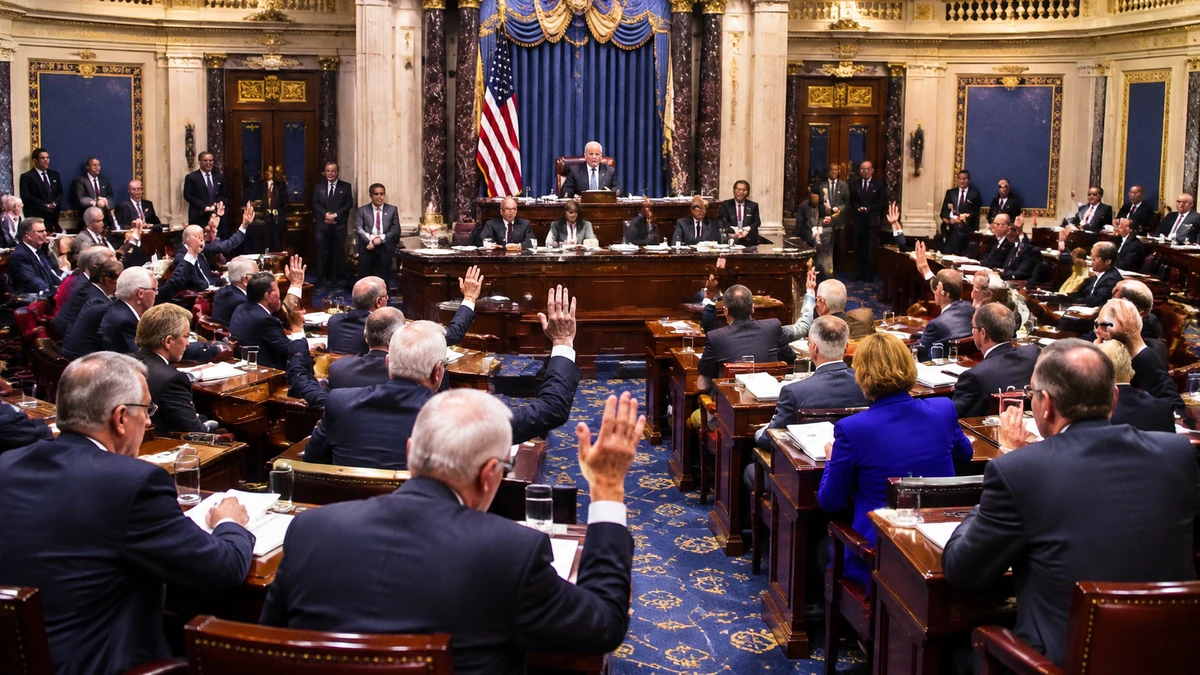
The U.S. Senate voted 73-25 on Nov. 9 to advance a bipartisan bill aimed at speeding approvals for major energy infrastructure projects while requiring large data centers to shoulder more of the costs of upgrading the electricity grid needed to serve them. The vote moves the American Affordability and Jobs Act (BAAJA) into debate, but does not guarantee its passage.
A push to accelerate energy infrastructure
The legislation would streamline approvals for projects including power plants, transmission lines and mines. It would also require large data center operators to pay a greater share of grid improvements necessary to supply their facilities.
The procedural vote marked Congress' first major legislative action following the Democrats' sweeping victory in the Nov. 3 midterm elections. However, the bill could undergo substantial changes during negotiations, and opposition from environmental groups and some Democratic lawmakers leaves its prospects uncertain.
Trump backs the bill as environmental concerns persist
President Donald Trump urged the Senate to pass the legislation in a Truth Social post the day before the vote, calling it a 'major victory for American energy independence and dominance.' He argued that the measure would ensure data centers secure their own electricity, pay for the associated costs and contribute to investment in surrounding communities. Trump also invoked competition with China, claiming the country would take data centers that the United States did not want and pay substantial sums for them.
The bill's bipartisan sponsors released revisions before the vote, including stronger environmental provisions and a requirement to consult with Indigenous communities. Democratic Sen. Sheldon Whitehouse of Rhode Island described the legislation as 'a floor, not a ceiling' for the country's climate and environmental goals. Sen. Martin Heinrich, a New Mexico Democrat, urged lawmakers to act, saying Americans could not afford to wait for lower electricity bills.
Environmental organizations, including the Sierra Club and National Wildlife Federation, oppose the measure. They argue that it could restrict environmental reviews and make it harder for local communities to challenge infrastructure projects. Environmental activist Bill McKibben told Reuters that it was deeply ironic for Congress' first move after an election in which opposition to data centers had been decisive to be legislation making those facilities easier to build.
Data centers emerge as a political flashpoint
Some Democrats elected on promises to curb data center development are wary of the bill, arguing that certain provisions could encourage further construction. They have called for delaying consideration until next year. Even if the Senate ultimately approves the measure, it faces a difficult path in the House. House Democratic leader Hakeem Jeffries, who is considered a leading contender to become the next speaker, has previously said the legislation lacks sufficient environmental safeguards and that House Democrats need to reach a consensus.
Within the Democratic Party, debate appears to be shifting toward making data center operators pay for their electricity consumption and environmental impact rather than imposing a blanket construction ban. Rep. Alexandria Ocasio-Cortez and Sen. Bernie Sanders have separately introduced legislation proposing a temporary halt to new data center construction.
The issue also featured prominently in Texas' gubernatorial election. Democrats won the governorship for the first time since 1990, and Gina Hinojosa, the governor-elect, has called for pausing data center projects until legal protections are established for residents affected by electricity costs and water consumption.
Texas has become a major destination for new data center projects, accounting for approximately 25% of planned U.S. data center capacity. Hinojosa's campaign position, however, does not automatically translate into an immediate construction freeze. The timing and substance of any legislation will determine whether the proposal becomes policy.
Comments
Post a Comment