Image to help understand the article
South Korean President Lee Jae Myung and Timor-Leste President Jose Ramos-Horta agreed Friday to establish a regular government-level consultation mechanism, marking a new step in relations between the two countries ahead of the 25th anniversary of diplomatic ties.
The agreement was reached during an expanded summit meeting and working luncheon at the Blue House in Seoul. The two leaders pledged to expand cooperation in intellectual property protection, combating transnational crime, climate change and development, while strengthening support for Timor-Leste's sustainable economic and social development.
Lee also said South Korea would provide multifaceted support for Timor-Leste's expanding role within ASEAN, the Association of Southeast Asian Nations.
Shared democratic histories shape summit
Lee highlighted the countries' shared experiences of overcoming historical hardship and defending independence, peace and democracy. He described the summit as an important turning point in transforming their historical connection into a partnership focused on the future.
He also recalled South Korea's Sangnoksu peacekeeping contingent, which contributed to peacekeeping and reconstruction efforts in Timor-Leste, describing its service as a symbol of the countries' special relationship.
Ramos-Horta praised South Korea as an exemplary case of national reconstruction and economic transformation, saying Timor-Leste had learned valuable lessons from its development. He thanked South Korea for its peacekeeping deployment, development assistance through the Korea International Cooperation Agency (KOICA), and contributions from volunteers and institutions.
Ramos-Horta plans Nobel Peace Prize nomination for South Korea's democratic movement
One of the most notable moments of the visit was Ramos-Horta's announcement that he intends to recommend South Korea's so-called "Light Revolution" for the Nobel Peace Prize. The term refers to the peaceful civic movement credited in Lee's remarks with defending South Korea's constitutional order during a major democratic crisis.
Ramos-Horta, who received the 1996 Nobel Peace Prize for his contribution to advancing human rights in Timor-Leste, said the movement deserved international recognition. He emphasized the role of ordinary South Korean citizens in resisting threats to democracy and said he would actively submit a recommendation to the Nobel Committee.
Ramos-Horta also cited South Korea's continuing democratic struggles following Kim Dae-jung's 1997 presidential election victory and described Lee's inauguration last year as an inspiring democratic moment.
Lee welcomed the proposed nomination, noting that Ramos-Horta had previously recommended former South Korean President Kim Dae-jung for the Nobel Peace Prize in 1999. Kim received the award in 2000. Lee said the two countries' journeys toward independence, peace and democracy had significant similarities.
Parliamentary ties and development assistance
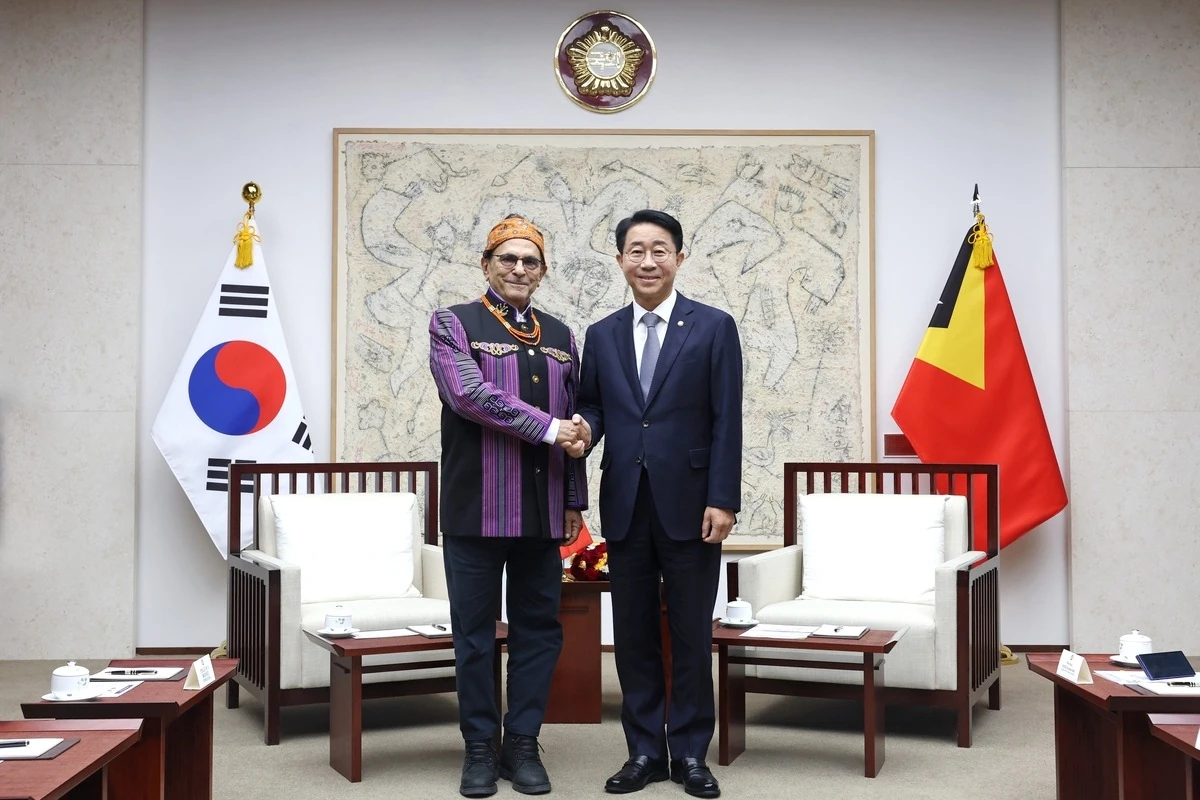
Ramos-Horta also met National Assembly Speaker Cho Jung-sik to discuss expanding bilateral cooperation and exchanges between the countries' legislatures. Cho said he hoped the visit would strengthen collaboration in diplomacy, security and the economy, as well as parliamentary relations.
Cho identified education, training, health care, medicine and agriculture as areas where South Korea was already pursuing development cooperation with Timor-Leste. He pledged support from the National Assembly for expanding official development assistance projects that benefit the Timorese people.
During the parliamentary visit, Ramos-Horta received the National Assembly's Internet Peace Award in recognition of his contributions to world peace and human rights. He recalled his friendship with Kim Dae-jung and his successful 1999 Nobel nomination, adding that he planned to prepare a recommendation letter for South Korea's Light Revolution.
A new chapter ahead of the 25th anniversary
South Korea and Timor-Leste established diplomatic relations in 2002 and will mark their 25th anniversary next year. Ramos-Horta's visit is the first time a Timorese president has traveled to South Korea for bilateral summit talks since diplomatic relations began.
The agreement to establish regular government consultations provides a framework for expanding cooperation as Timor-Leste enters a new phase of regional engagement following its recent accession to ASEAN.
Comments
Post a Comment