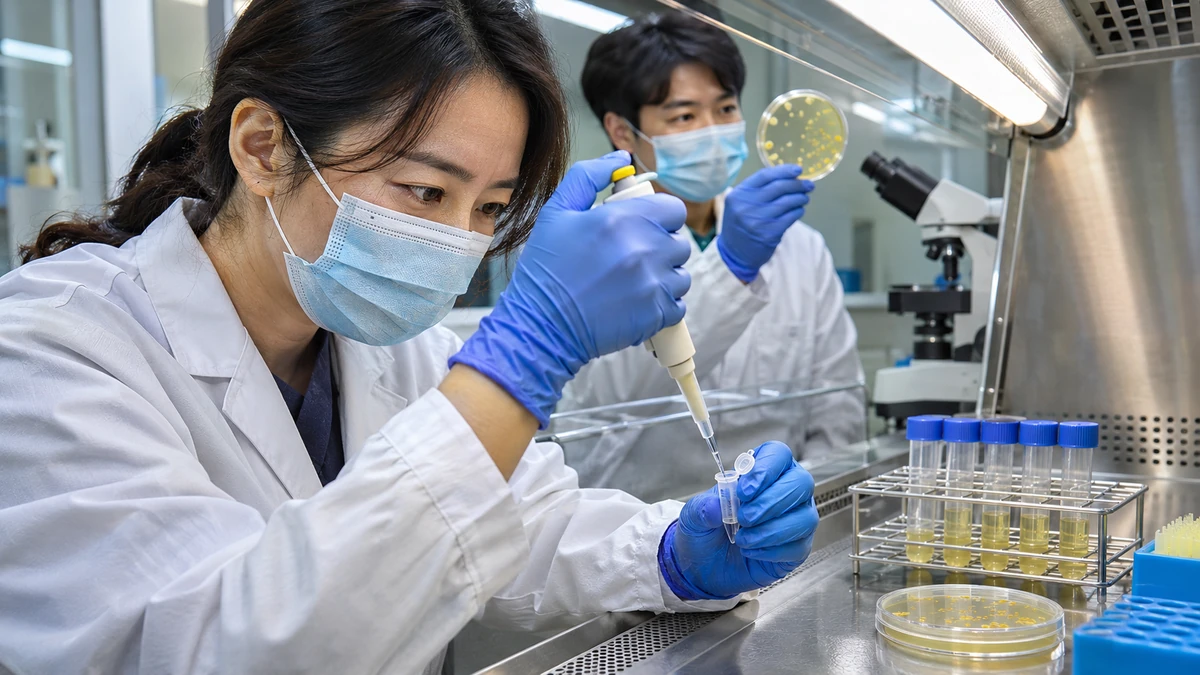
Image to help understand the article
Case detected in southern port city
South Korean health authorities have confirmed a cholera patient in Changwon, a port city in South Gyeongsang province, in what is believed to be the country’s first locally acquired case in 10 years.
The Korea Disease Control and Prevention Agency said the patient had not traveled abroad during the previous two months, leading investigators to suspect the infection occurred within South Korea. Officials are conducting an epidemiological investigation to identify the source and monitoring people who had contact with the patient.
The patient went to a hospital emergency room Nov. 6 after developing vomiting and diarrhea. The hospital provided treatment to relieve the symptoms, then reported a suspected cholera case and submitted samples for testing Nov. 9.
An initial test reported Nov. 16 was negative. The South Gyeongsang provincial public health laboratory later retested a remaining sample collected before the patient received antibiotics and confirmed a positive result Nov. 18. The national disease control agency made the final confirmation early Nov. 19, identifying a toxin-producing strain of Vibrio cholerae O1, Ogawa type.
The patient’s symptoms resolved, and the patient was discharged Nov. 17. However, isolation precautions will remain in place until two consecutive follow-up tests are negative. Authorities cautioned that details could change as the investigation continues.
Cholera has become rare in South Korea
South Korea’s last known locally acquired cholera cases were recorded in 2016, when three people were infected in cases linked to a suspected seafood source. One imported case was also reported that year.
Most cases reported since 2003 have been contracted overseas. Five imported cases were recorded in 2017, two in 2018 and one in 2019. South Korea reported no cholera patients from 2020 through 2025 and no cholera deaths from 2010 through 2025.
The country experienced larger outbreaks in earlier decades. The El Tor strain infected 145 people in 1980, 113 in 1991 and 68 in 1995. An outbreak centered in the southeastern Gyeongsang region spread nationwide in 2001, producing 162 patients, including 142 confirmed cases.
How cholera spreads and is treated
Cholera is an acute diarrheal illness caused by infection with toxin-producing Vibrio cholerae O1 or O139. South Korea classifies it as a legally monitored infectious disease requiring prompt reporting and public health controls.
The bacteria usually spread through contaminated food, including seafood, or unsafe groundwater and drinking water. In rare cases, infection can occur through direct contact with the stool or vomit of an infected person. Symptoms can appear within several hours to five days.
The disease is marked by the sudden onset of severe watery diarrhea, sometimes described as resembling rice water, often without abdominal pain or fever. Vomiting may also occur. Severe cases can cause dehydration and a dangerous loss of blood volume.
Many infected people have no symptoms, while an estimated 5% to 10% develop severe illness. Treatment focuses on rapidly replacing fluids and electrolytes by mouth or intravenously. Antibiotics are generally recommended only for patients with severe dehydration. With proper fluid treatment, the fatality rate is below 1%, but it can reach 50% without treatment.
South Korean rules generally require cholera patients to receive hospital treatment. Isolation can end after symptoms resolve, antibiotic treatment is completed and two cultures taken at least 24 hours apart — beginning at least 48 hours after treatment — are negative. Until then, patients cannot prepare food or provide nursing, caregiving or child care. People who shared food or water with a patient are monitored for illness for five days after their last possible exposure.
Authorities monitor coastal waters
Cholera bacteria occur naturally in marine environments, although only some strains produce the toxins that cause disease in humans. Since 2005, South Korea has monitored seawater and other coastal samples for cholera and other disease-causing Vibrio bacteria.
Nonpathogenic cholera bacteria have been detected regularly, but authorities said the surveillance system has not identified toxin-producing cholera bacteria. This year’s monitoring covers 106 sites, including seawater and wastewater locations, mudflats, aquarium water and seafood sampling points.
Water temperature is a focus of the surveillance effort. According to the National Institute of Fisheries Science, South Korea’s average sea-surface temperature in 2025 was 21.27 degrees Celsius, or about 70.3 Fahrenheit, the second-highest level on record after 2024. A regional surveillance report found that cholera bacteria were isolated more often from June through October, when air and water temperatures were higher, and that detection tended to rise with water temperature.
Prevention guidance
South Korea designates 36 countries as cholera quarantine management areas, including countries in Asia and Africa as well as Haiti. Vaccination is recommended for people traveling to areas experiencing cholera outbreaks, and some countries require proof of vaccination.
The disease control agency urged the public to wash hands with soap under running water for at least 30 seconds, cook food thoroughly and drink safe water, such as boiled water. Fruits and vegetables should be washed with clean water or peeled, and separate cutting boards should be used for fish, meat and vegetables.
People with diarrhea should not prepare food for others. Health officials also advised anyone who develops persistent or repeated watery diarrhea after overseas travel or eating seafood to seek medical care. Medical institutions were asked to test and report suspected cholera cases promptly.
Comments
Post a Comment