Image to help understand the article
South Korea has identified and fixed 202 cybersecurity vulnerabilities across private-sector and public-sector online services in a five-month pilot program involving 698 ethical hackers, the government announced Monday. Authorities said they plan to establish a permanent vulnerability reporting and remediation system in 2027.
A New Approach to Cybersecurity
The initiative, known as the Vulnerability Disclosure Policy (VDP) and Coordinated Vulnerability Disclosure (CVD) program, allows authorized security researchers to identify weaknesses within clearly defined testing boundaries and report them to the affected organizations. Companies and government agencies then verify the findings, address the vulnerabilities and disclose information through an established process.
The program was launched in May following a series of major cybersecurity incidents in South Korea last year. The government subsequently introduced a comprehensive information security strategy in October 2025 and a national roadmap for vulnerability reporting and disclosure in February 2026.
Unlike conventional, one-time penetration tests or security assessments focused on individual products, the pilot tested vulnerabilities in online services that were actively operating. The government described it as the country's first trial of a system designed to identify and fix weaknesses in real-world services on an ongoing basis.
202 Valid Vulnerabilities Identified
Seven private companies participated, representing the telecommunications, gaming, financial and cybersecurity industries. They included LG Uplus, Nexon, NC, Toss Payments, Samsung Life Insurance, ESTsecurity and INCA Internet.
Eight public-sector services also took part, covering areas such as public safety, health care, electricity and transportation. Participants included the Ministry of the Interior and Safety's National Safety 24 platform, the Health Insurance Review and Assessment Service, the Korea Disease Control and Prevention Agency's vaccination information service, Korea Electric Power Corp.'s online platform and the Bank of Korea's economic statistics system.
Active vulnerability testing took place from June 29 to July 24. Researchers submitted 1,343 reports during the approximately four-week period. After verification, 202 were classified as valid security vulnerabilities. All participating companies and institutions completed the necessary patches and other corrective measures.
Safeguards and Remaining Concerns
Researchers were required to complete ethics training and sign security pledges before beginning their work. They also had to follow the testing boundaries and rules established by each participating organization. Additional safeguards were designed to prevent personal information leaks and service disruptions.
The government reported no service outages attributable to the researchers' testing activities during the pilot, suggesting that external security testing can be conducted without interrupting normal operations.
However, a survey of 52 ethical hackers and the seven participating companies highlighted obstacles to making the system permanent. About 81% of the hackers supported a framework allowing continuous testing without obtaining separate advance consent for each activity, provided researchers followed clearly established rules. None of the seven companies opposed the proposal.
Researchers nevertheless identified the risk of legal punishment while discovering or reporting vulnerabilities as a major concern. Companies pointed to potential service disruptions and the burden of independently analyzing and verifying incoming reports. All seven businesses said they needed assistance from specialized organizations during the verification and remediation process.
Permanent Reporting System Planned for 2027
South Korean authorities plan to use the pilot's findings to establish a permanent vulnerability reporting and remediation framework beginning in 2027. The government said it would examine existing systems in the United States and European Union while developing clearer legal protections for ethical hackers and predictable procedures for participating organizations.
Further measures under consideration include expert assistance with vulnerability analysis and verification, as well as procedures for responsible disclosure after security flaws have been corrected.
Deputy Prime Minister and Science and ICT Minister Bae Kyung-hoon said cooperation with private-sector specialists and voluntary participation would be increasingly important as AI-powered cyber threats become more sophisticated and persistent.
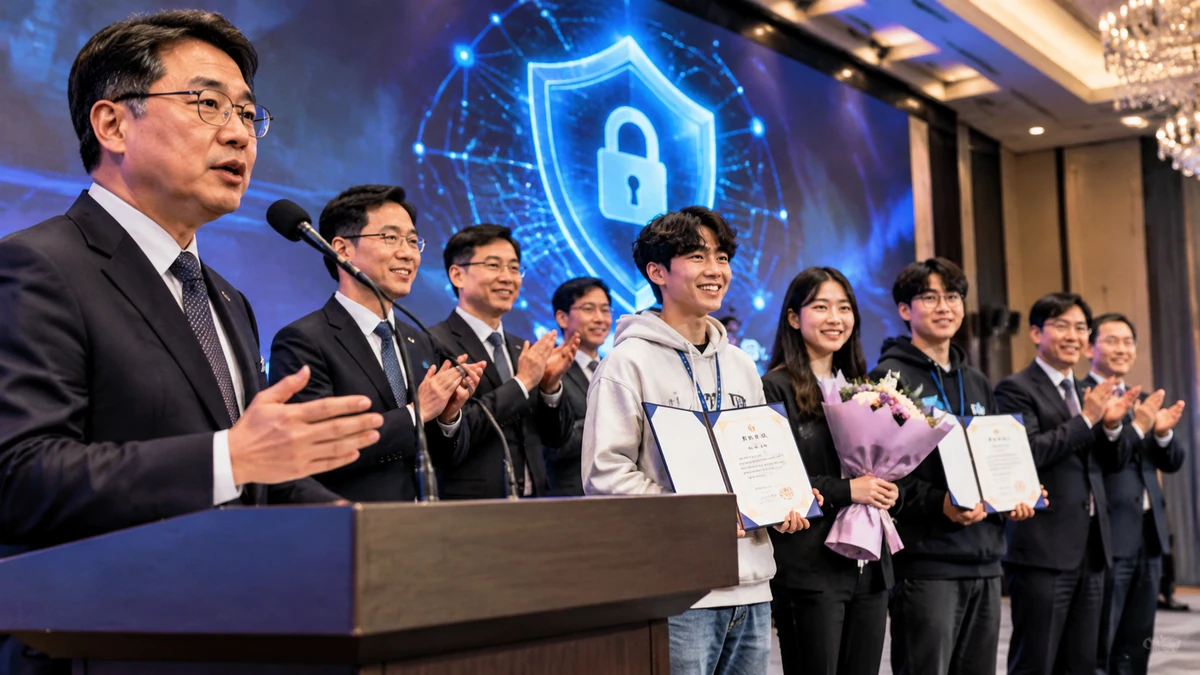
At a ceremony in Seoul on Nov. 23, 16 ethical hackers who discovered particularly significant vulnerabilities received awards from the Ministry of Science and ICT and the National Intelligence Service. The total prize money was 20 million won.
Comments
Post a Comment