Image to help understand the article
South Korea's Health and Welfare Ministry has approved a comprehensive revision of its bundled payment system for seven groups of medical conditions, including appendectomies, marking the first major overhaul in six years. The changes, approved Nov. 27, will take effect in January 2027 and are designed to reduce patients' out-of-pocket expenses while improving compensation for hospitals and essential medical services.
Seven condition groups covered by revised payments
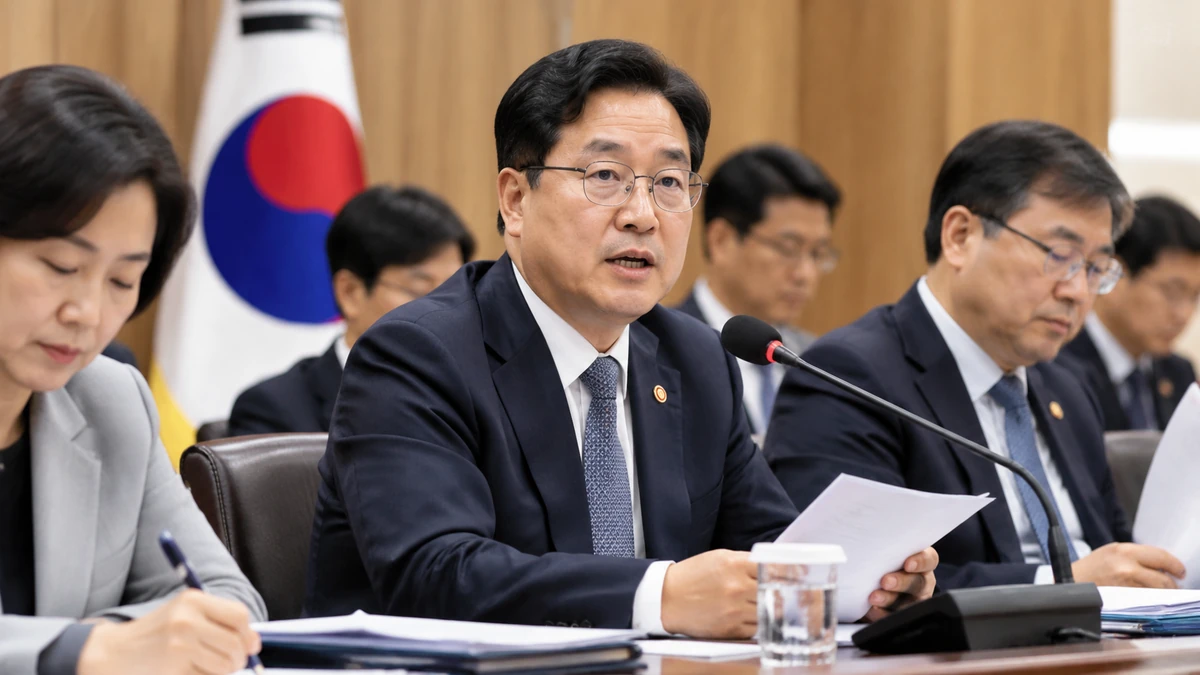
The decision was made at the 21st meeting of the Health Insurance Policy Deliberation Committee of 2026, which began at 2 p.m. The committee was chaired by Lee Hyung-hoon, second vice minister of health and welfare.
Alongside the bundled payment revision, the committee approved changes to reimbursement for telemedicine and updated coverage criteria for manual therapy.
South Korea's bundled payment system, known domestically as the diagnosis-related group (DRG) payment system, pays hospitals a predetermined amount for treating patients admitted with specified conditions rather than assigning a separate price to every medical procedure. The approach is intended to encourage appropriate treatment and strengthen financial protection for patients.
The seven groups cover lens procedures in ophthalmology; tonsil and adenoid removal in otolaryngology; appendectomies, inguinal and femoral hernia operations, and anal surgery in general surgery; and uterine and uterine-adnexal operations and cesarean deliveries in obstetrics and gynecology.
The revised rates reflect changes in medical costs and treatment practices since the previous comprehensive revision in 2020. The ministry estimates that the changes will require an additional 113.2 billion won ($1,132 hundred million won, or 113.2 billion won) annually. The plan also raises reimbursement for childbirth, surgery and medical procedures, as well as services provided at night and on public holidays. It introduces new higher payment rates favoring medical providers in regional areas as part of a broader health insurance payment reform aimed at strengthening essential medical services outside major urban centers. The revision also incorporates a high-risk childbirth surcharge for cesarean deliveries approved by the committee in October.
Patient payments for surgical materials fall sharply
One of the most significant changes concerns surgical cutting devices and anti-adhesion agents, products used to reduce the formation of scar tissue and internal adhesions after surgery. Previously, patients paid 80% of the cost of these materials separately. Under the revised system, the materials will be included in the bundled payment, reducing the patient's share to 20%.
Cutting devices are used in appendectomies and operations involving the uterus and its appendages. Anti-adhesion agents are used in uterine and uterine-adnexal surgery and cesarean deliveries. The ministry listed prices of approximately 650,000 to 780,000 won for cutting devices and 14,000 to 510,000 won for anti-adhesion agents used after surgery.
The ministry illustrated the savings with several examples. For laparoscopic appendectomy, a patient currently pays 700,000 won toward a bundled payment of 3.5 million won, plus another 520,000 won for surgical materials priced at 650,000 won. The total comes to 1.22 million won. After the revision, the bundled payment will rise to 4.35 million won, but the patient's share will fall to 870,000 won, a reduction of 350,000 won.
For laparoscopic hysterectomy, the patient's payment will decrease from 1.69 million won to 1.22 million won, saving 470,000 won. In a cesarean delivery involving a single baby, the 160,000 won previously charged for surgical materials will fall to zero.
The ministry cautioned that these figures concern changes in the bundled payment and covered surgical materials. They do not mean that all medical expenses will disappear. Actual patient costs may vary depending on the condition group and the treatment provided.
The ministry plans to review and revise reimbursement rates regularly from 2028 onward, with additional adjustments whenever necessary. It said, "This revision of bundled payments for the seven disease groups is meaningful because it establishes an appropriate compensation system, strengthens essential regional medical services and expands health insurance coverage."
Telemedicine to move from pilot program to permanent system
South Korea temporarily allowed telemedicine during the COVID-19 pandemic. Since June 2023, remote consultations have operated under a pilot program. A revised Medical Service Act is scheduled to take effect Dec. 24, 2026, formally establishing telemedicine as part of the country's health care system.
The government plans to end the pilot program and introduce permanent reimbursement rates in line with the law's implementation.
Under the new payment structure, the uniform 30% telemedicine surcharge used during the pilot will be eliminated. Instead, reimbursement will follow the additional-payment framework used for in-person consultations, including surcharges for nighttime, public holiday, Saturday and pediatric services. Multiple surcharges may be applied together.
The existing coverage limit will remain unchanged: one patient can receive covered telemedicine services from the same medical institution up to twice a month. The permanent reimbursement rates are expected to take effect in January 2027 following revisions to the relevant government notice before the end of 2026.
The ministry said, "Following the revision of the law, we will ensure that the public can use telemedicine safely and conveniently."
More manual therapy sessions allowed in specific cases
The committee also approved revised health insurance coverage criteria for manual therapy, which was reclassified as a managed-benefit service on July 1, 2026. Following consultations with medical professionals and feedback from health care providers, the ministry revised the rules governing the number of covered sessions.
The standard allowance remains 15 sessions per year. However, if a patient undergoes new surgery or suffers a fracture requiring additional treatment, the annual allowance can be recalculated. Patients with clear medical findings of joint contracture or stiffness may receive up to nine additional sessions at the physician's discretion.
For children under 6 diagnosed with torticollis, a condition in which an infant or young child's head tilts to one side while the chin points toward the other, the annual allowance will increase to a maximum of 48 sessions.
Patients with paralysis or similar conditions that make moving or walking difficult may have manual therapy billed together with functional rehabilitation treatment.
The price will remain at 43,850 won, the previously established rate, regardless of changes to the conversion index used to calculate reimbursement in 2027. The same price will apply across all categories of medical institutions. The revised coverage criteria are also expected to take effect in January 2027 after a government notice is updated before the end of 2026.
Comments
Post a Comment