Image to help understand the article
South Korean health authorities have strengthened monitoring for possible human infections after highly pathogenic avian influenza was confirmed at a poultry farm in Yeoncheon County, near the border with North Korea.
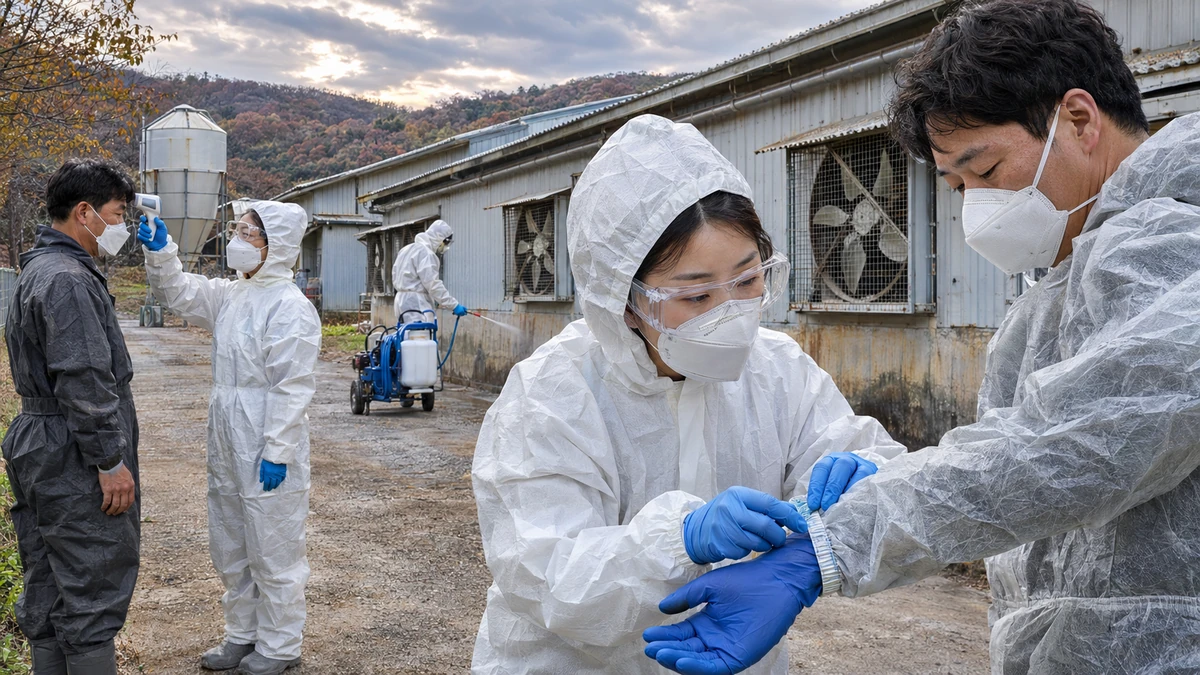
The Korea Disease Control and Prevention Agency sent a response team to the farm after the virus was identified Nov. 4 and birds were culled. The agency said it was working with local officials to protect farmworkers and people involved in the culling operation.
The virus had previously been detected during the 2026-27 season in wild birds and in a leopard cat, a small wild feline native to Asia. The Yeoncheon outbreak was the season’s first confirmed case among poultry.
Workers Monitored for 10 Days
Health officials checked whether workers were wearing personal protective equipment and had received seasonal flu vaccinations. Those considered at high risk will be monitored for 10 days after exposure, the maximum incubation period cited by the agency.
No human case of avian influenza has been reported in South Korea, and no farmworker connected to the latest outbreak has shown suspected symptoms, officials said.
Authorities instructed exposed workers to contact a public health center if they develop fever, muscle aches, coughing or other respiratory symptoms within 10 days of the culling operation. They also warned workers to watch for eye redness, conjunctivitis or discomfort because human cases overseas have sometimes involved only mild eye symptoms and no respiratory illness.
Human Infection Considered Unlikely for Public
Avian influenza is an acute respiratory infection caused primarily by influenza A viruses. People can become infected through contact with sick poultry, wild birds or other animals, as well as contaminated waste, secretions, animal products or surfaces.
Human-to-human transmission is considered extremely rare, although health authorities warn that viral mutations could make transmission easier. Symptoms can include fever, coughing, sore throat and muscle pain, along with eye inflammation or pain. The agency said the fatality rate associated with reported H5N1 infections is about 48%.
For the general public, South Korean officials said the risk remains low because most people are unlikely to encounter infected farms or wild birds. There is no commercially available vaccine in the country to prevent human infection, though antiviral drugs can be used for treatment.
The government advises people not to touch sick wild birds, poultry, stray cats, animal carcasses or droppings. It also recommends frequent hand-washing, avoiding touching the eyes, nose and mouth with unwashed hands, thoroughly cooking poultry and consuming only pasteurized or sterilized dairy products.
Travel Screening Includes Parts of the United States
South Korea also uses enhanced screening for travelers arriving from areas where human infections have occurred. For the fourth quarter of 2026, its designated monitoring areas include parts of Michigan and Washington state, as well as Bangladesh, Brazil, Cambodia and several regions of China.
Travelers who have visited those areas receive text messages advising them about infection risks. Those who develop fever, coughing or other suspected symptoms after returning to South Korea are instructed to call the national health hotline at 1339 or contact a public health center. Medical providers can review patients’ overseas travel histories through government health information systems.
KDCA Commissioner Lim Seung-kwan said human infections have not been reported in South Korea but continue to occur abroad. He urged people to avoid animals suspected of infection and to use protective equipment when contact cannot be avoided.
Comments
Post a Comment