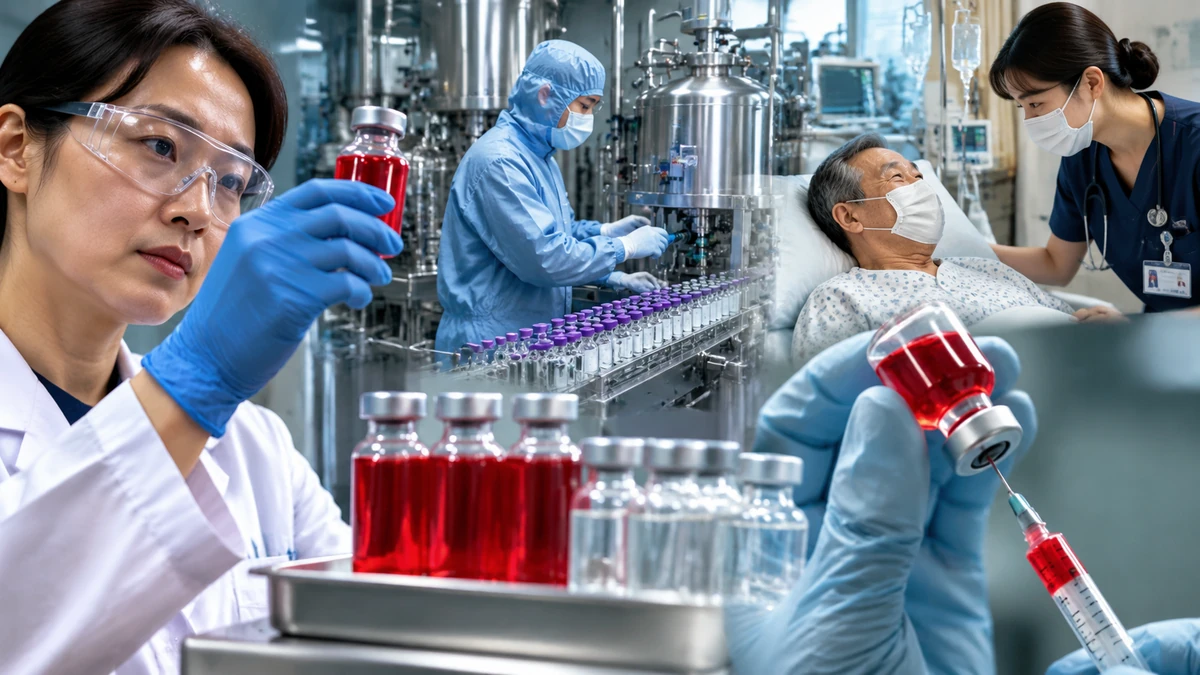
Image to help understand the article
South Korea will arrange domestic production of three essential medicines used to treat liver cancer, leukemia and severe bacterial infections, aiming to deliver the drugs to hospitals before the end of 2026. The Ministry of Food and Drug Safety announced the initiative Nov. 12, saying the move is intended to reduce supply disruptions affecting treatments that have previously depended on emergency imports or faced shortages.
The initiative covers two cancer drugs — doxorubicin and daunorubicin — and the antibiotic daptomycin. On the same day, an amendment to South Korea's Pharmaceutical Affairs Act took effect, establishing a formal legal basis for the government to commission domestic manufacturers to produce essential medicines and reimburse associated costs.
Domestic manufacturing to replace reliance on emergency imports
Doxorubicin and daptomycin injections have traditionally been imported from overseas on an emergency basis when hospitals requested them, through cooperation between the ministry and the Korea Orphan and Essential Drug Center. Arranging domestic production is expected to make their supply more reliable.
Daunorubicin was added to the program after its supply was recently discontinued. The ministry identified it as a priority because timely access is particularly important for patients with rapidly progressing blood cancers, including acute leukemia in children.
The three medicines will be manufactured by South Korean pharmaceutical companies using existing domestic production capabilities. The government expects all three products to reach medical institutions by the end of the year, helping prevent interruptions in treatment for seriously ill patients.
Three drugs and their manufacturers
Boryung will produce doxorubicin as Adriamycin Lyophilized Injection 50 mg. The chemotherapy drug is used in transarterial chemoembolization, a procedure for treating hepatocellular carcinoma, the most common form of primary liver cancer. The treatment delivers chemotherapy directly into an artery supplying the tumor before blocking the blood vessels feeding it.
Korea United Pharm will manufacture daunorubicin under the name Daunosin Injection 20 mg. The drug is used to treat acute myeloid leukemia and other blood cancers. Its approved indications also include acute lymphoblastic leukemia.
Gunil BioPharm will produce daptomycin as Dapto Gun Injection 350 mg. The antibiotic is essential for treating serious bacterial infections, including bloodstream infections caused by methicillin-resistant Staphylococcus aureus (MRSA), a drug-resistant bacterium that can cause life-threatening illness.
Record number of new products added in 2026
The three newly commissioned products bring the number of medicines added to South Korea's domestic contract-manufacturing program in 2026 to four. The fourth, dacarbazine injection, was added during the first half of the year, making 2026 the program's largest year for new additions since it began in 2016.
Korea United Pharm manufactures dacarbazine as DTI Injection 200 mg. The medicine is required for standard treatment of malignant melanoma and Hodgkin lymphoma and is also used for soft-tissue sarcomas, including leiomyosarcoma.
Under the program, the government identifies essential medicines that have experienced supply interruptions or face a significant risk of shortages and commissions private pharmaceutical companies to manufacture them domestically. Manufacturers receive reimbursement for production costs, while the Korea Orphan and Essential Drug Center commits to purchasing the entire manufactured supply and distributing it to medical providers.
Including the latest additions, eight pharmaceutical companies now produce 11 medicines designated as South Korea's national essential drugs. Earlier participants include Yuhan Corp., Taiguk Pharmaceutical, Korea CTC Bio, Huons and Jeil Pharmaceutical, which have supplied medicines for conditions ranging from tuberculosis and infections to heart rhythm disorders, childbirth-related bleeding, cancer and epilepsy.
New law gives government procurement program a legal foundation
The amended Article 83-6 of South Korea's Pharmaceutical Affairs Act, revised May 26, 2026, took effect Nov. 12. It authorizes the food and drug safety minister to request domestic production of national essential medicines that are difficult to supply reliably and to provide payment for the associated manufacturing costs.
The program had previously operated through administrative measures rather than an explicit statutory provision. The new legislation gives the government a formal legal framework to combine private-sector manufacturing capacity with public purchasing and distribution responsibilities.
The Ministry of Food and Drug Safety said it would continue working with medical professionals, pharmaceutical companies and relevant government agencies to identify potential shortages early and expand support for domestic production. Its stated goal is to ensure patients can receive essential medicines when they need them and minimize gaps in critical treatment.
Comments
Post a Comment