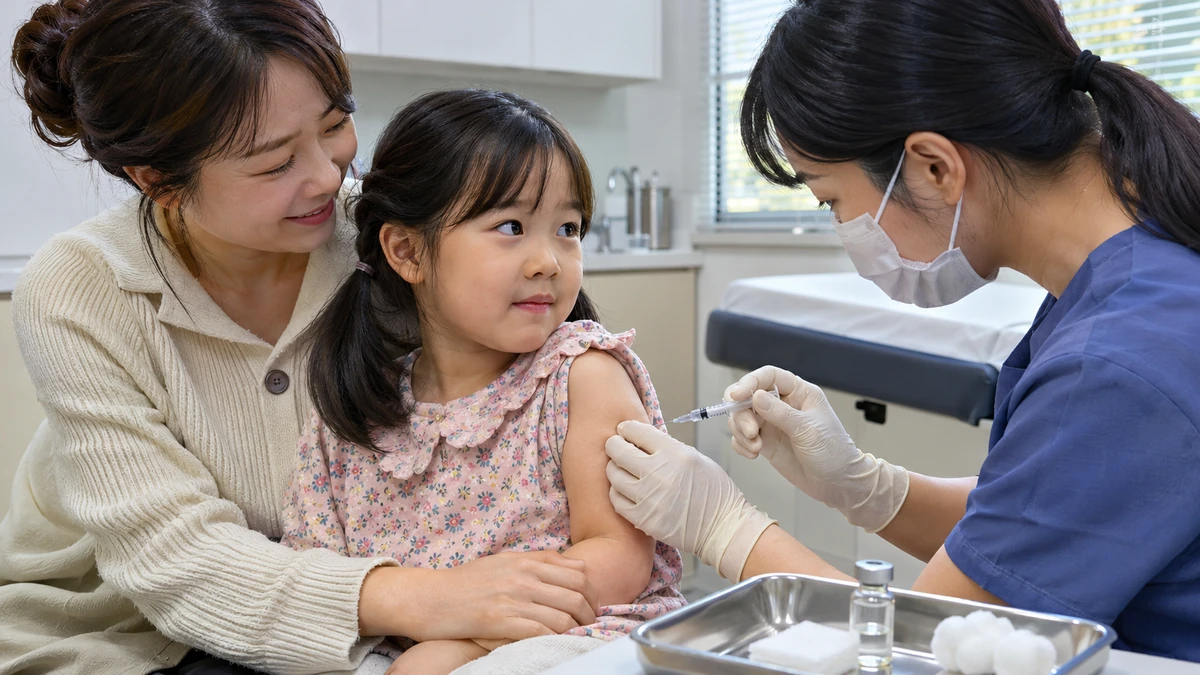
Image to help understand the article
Vaccinations begin Nov. 11
South Korea will begin providing government-sponsored COVID-19 vaccinations Nov. 11 to high-risk children ages 6 months through 11 years, the Korea Disease Control and Prevention Agency said. The vaccination program will remain available through April 30, 2027.
The campaign will use Moderna’s XFG vaccine for infants and children. South Korea currently has no COVID-19 vaccine authorized or approved domestically for children under 12, prompting the Ministry of Food and Drug Safety to authorize an emergency import on Oct. 28. Because of that limited authorization, only children classified as high risk will be eligible.
Who is eligible
Eligible children include those with weakened immune systems and those hospitalized or living in facilities considered especially vulnerable to infectious diseases. Those facilities include long-term care hospitals, nursing facilities, mental health institutions and residential facilities for people with disabilities or those experiencing homelessness. Eligibility by age will be determined as of the vaccination date.
For children ages 6 months through 4 years, qualifying conditions include severe immune suppression, certain cancers and cancer treatments, organ or stem cell transplants, CAR-T cell therapy, HIV infection and serious immune deficiency disorders. Children receiving high-dose steroids or immunosuppressive treatment may also qualify.
Young children with chronic lung, heart, liver or kidney disease, neuromuscular conditions, severe cerebral palsy or Down syndrome may also be eligible. The criteria include disabilities that require frequent assistance with daily activities.
For children 5 and older, eligibility includes treatment for tumors or blood cancers, the use of immunosuppressive drugs after an organ transplant, certain stem cell transplant cases and CAR-T cell therapy. Children with primary immune deficiencies, including DiGeorge syndrome and Wiskott-Aldrich syndrome, may also qualify, as may those receiving high-dose corticosteroids or other immune-suppressing medications. A doctor may recommend vaccination for children with comparable medical risks even if their condition is not specifically listed.
Doses depend on vaccination history
Children may receive up to two doses, depending on their previous COVID-19 vaccinations. Those who have not completed an initial series must do so first. Children who have completed the initial series generally receive one annual dose, while immunocompromised children may receive two doses each year.
Children who have never received a COVID-19 vaccine should receive two doses four to eight weeks apart. Those who previously received one dose need one additional dose to complete the initial series. The minimum interval varies depending on whether the previous vaccine was made by Pfizer or Moderna. Families should consult medical staff to determine the appropriate number of doses and schedule.
Children are considered to have completed an initial series if they received two Moderna doses, two pediatric Pfizer doses or three Pfizer doses formulated for infants and young children. Subsequent vaccinations should be given at least three months later.
What families should bring
Participating medical facilities can be found through South Korea’s National Immunization Program website at nip.kdca.go.kr. Parents and guardians should bring documents showing that a child qualifies, such as a medical certificate, doctor’s statement or proof of residence in an eligible facility. Documentation may be waived if the doctor administering the vaccine determines that the child is immunocompromised.
After vaccination, children should remain at the medical facility for 20 to 30 minutes so staff can monitor them for adverse reactions. Health officials also recommend adequate rest after returning home.
Older adults also urged to participate
South Korea’s seasonal COVID-19 vaccination campaign for adults 65 and older is already underway. As of 6 p.m. Nov. 4, about 3.91 million people in that age group had been vaccinated for the 2026-27 season, representing 34.2% of the country’s population 65 and older.
KDCA Commissioner Lim Seung-kwan urged parents and guardians to have eligible children vaccinated to reduce their risk of severe illness during the winter. He also encouraged older adults, immunocompromised people and others at high risk to participate in the vaccination campaign.
Comments
Post a Comment