Image to help understand the article
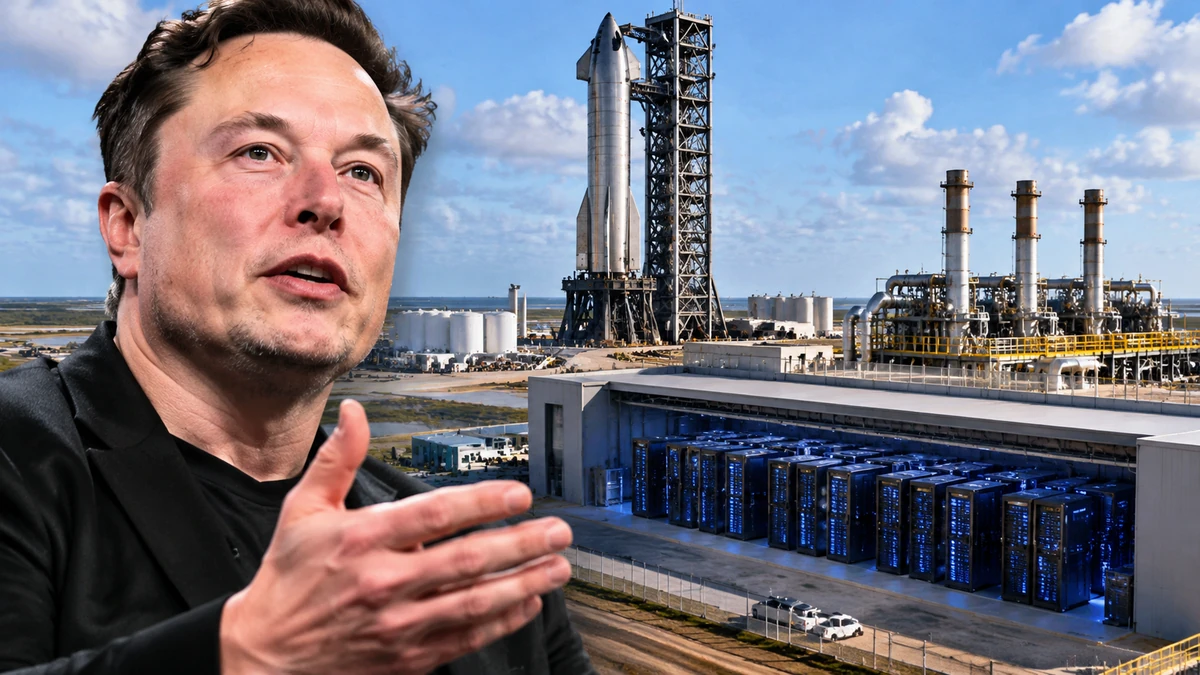
SpaceX is planning a $24 billion investment in an artificial intelligence data center and natural gas power plant at Starbase, its rocket launch facility in South Texas, as Elon Musk's company moves to expand its computing business while securing its own electricity supply.
The Starbase City Commission is scheduled to review a property tax incentive application and an accompanying economic development agreement at a public meeting Dec. 9. The proposed project would be built, owned and operated by SpaceX. However, the public notice does not specify the size or duration of the requested tax break, the power plant's final output or the data center's computing capacity. The $24 billion figure represents an initial capital investment estimate, and development could take place in multiple phases.
On-site power for a growing AI operation
The proposed facilities would occupy a 444-acre site, roughly 180 hectares, within Starbase, where SpaceX operates its Starship launch base and hundreds of employees live. A separate environmental permitting application outlines plans for 35 natural gas turbines with a combined generating capacity of 748 megawatts. That figure remains subject to regulatory review and could change.
Building its own power plant could help SpaceX avoid lengthy waits to connect to the Texas electricity grid. Across the United States, rapidly growing data center demand has created pressure on electricity infrastructure, with some projects facing waits of several years for grid connections.
SpaceX affiliate Lone Star Mineral Development has also proposed an approximately 8-mile natural gas pipeline, called Starpipe, to supply the Starbase site. The pipeline is targeted to begin operating in January 2027. It was initially associated with supplying gas to a facility producing liquid methane rocket fuel for Starship, but it remains unclear whether the pipeline will directly connect to the proposed power plant.
The project fits into a broader strategy of bringing energy production and transportation under company control. In September, SpaceX decided to build its own pipeline to supply natural gas to Starship operations in Florida and established a natural gas trading team to support its spaceflight fuel and electricity needs. The company is also planning an on-site gas power plant for a data center near Houston in partnership with Tesla.
AI growth meets local opposition
The proposed investment comes as SpaceX expands its AI computing business. The company rents computing capacity to outside customers, including Google and Anthropic. As of late September, its AI computing infrastructure had a stated capacity of 1.7 gigawatts.
SpaceX reported that third-quarter revenue increased 161% from a year earlier, while revenue in its Superintelligence division, which includes its AI business, rose more than ninefold.
But large data center developments are facing growing opposition across the United States. Residents have raised concerns about higher electricity bills, water consumption and environmental pressures. Data center regulation became a prominent issue in recent midterm elections, and opponents prevailed in 40 of 41 local ballot measures concerning data center development.
Texas could present an additional political challenge. Democratic candidates won the state's Senate and governor races in the election, and governor-elect Gina Hinojosa has pledged to pause new data center permits until stronger legal protections are established. Her proposal calls for delaying new approvals until the state Legislature can develop relevant legislation when it convenes in January. The position could complicate Musk's plans in the state.
Starbase prepares for another Starship test
The proposed data center and power plant would share a location with SpaceX's rocket operations. The company has scheduled the 15th Starship test flight for 4:45 p.m. Central time on Nov. 13, according to an announcement made Nov. 8.
The 124-meter rocket, with a reported engine thrust of 8,240 metric tons, is expected to reach an altitude of 275 kilometers and complete 14 orbits of Earth over approximately 22 hours. The mission is also intended to deploy 26 new Starlink satellites.
For the first time, SpaceX plans to attempt to recover both stages: the Super Heavy first-stage booster and the Starship spacecraft. Since the first launch in April 2023, the company has attempted three successful first-stage recoveries in four tries. It has not previously attempted to recover the second stage. The planned recovery method uses mechanical arms mounted on the launch tower, commonly nicknamed chopsticks, to catch the returning vehicles.
SpaceX has said that successfully recovering both stages would further increase confidence in Starship. The test will provide another demonstration of the launch system's development as the company simultaneously pursues a much larger industrial and computing footprint at its South Texas base.
Comments
Post a Comment