Image to help understand the article
Cutting back on salt does not have to mean sacrificing flavor. South Korea's Ministry of Food and Drug Safety has highlighted three low-sodium recipes that use alternative ingredients to deliver depth and aroma: grilled Spanish mackerel with seasoned soy sauce, grilled pork belly skewers and shrimp-and-mallow porridge.
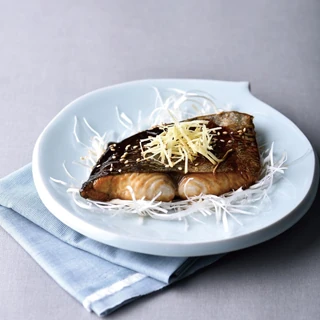
Grilled mackerel with coffee-infused seasoned soy sauce
This fish dish uses coffee to help mask the characteristic fishy smell of Spanish mackerel, while a specially prepared soy sauce containing fermented vegetable extract provides seasoning and depth. Each serving contains 220.9 calories, 30.2 grams of protein, 8.8 grams of fat and 570.8 milligrams of sodium, making it the highest-protein option among the three recipes.
Pork belly skewers seasoned without salt
Instead of salt, this grilled pork dish relies on black pepper, rosemary, garlic oil and green onions for its flavor. The aromatic ingredients help balance the richness of pork belly while reducing the need for conventional salty seasonings. Each serving contains 289.5 calories, 11.2 grams of protein, 23.4 grams of fat and just 59.8 milligrams of sodium, the lowest sodium level of the three dishes.
Shrimp and mallow porridge
The third recipe is a warm rice dish made with oats, dried shrimp, cocktail shrimp and mallow, a leafy green vegetable used in Korean cooking. It uses reduced-sodium doenjang, a traditional Korean fermented soybean paste, instead of regular soybean paste. Mallow is also rich in potassium, a mineral that helps the body regulate sodium balance. Each serving provides 201.3 calories, 34 grams of carbohydrates, 13.1 grams of protein, 1.4 grams of fat and 471.6 milligrams of sodium.
Together, the three recipes demonstrate different approaches to reducing sodium: building flavor with coffee and fermented vegetable ingredients, replacing salt with herbs and aromatics, and choosing reduced-sodium fermented soybean paste with potassium-rich greens.
Comments
Post a Comment