Image to help understand the article
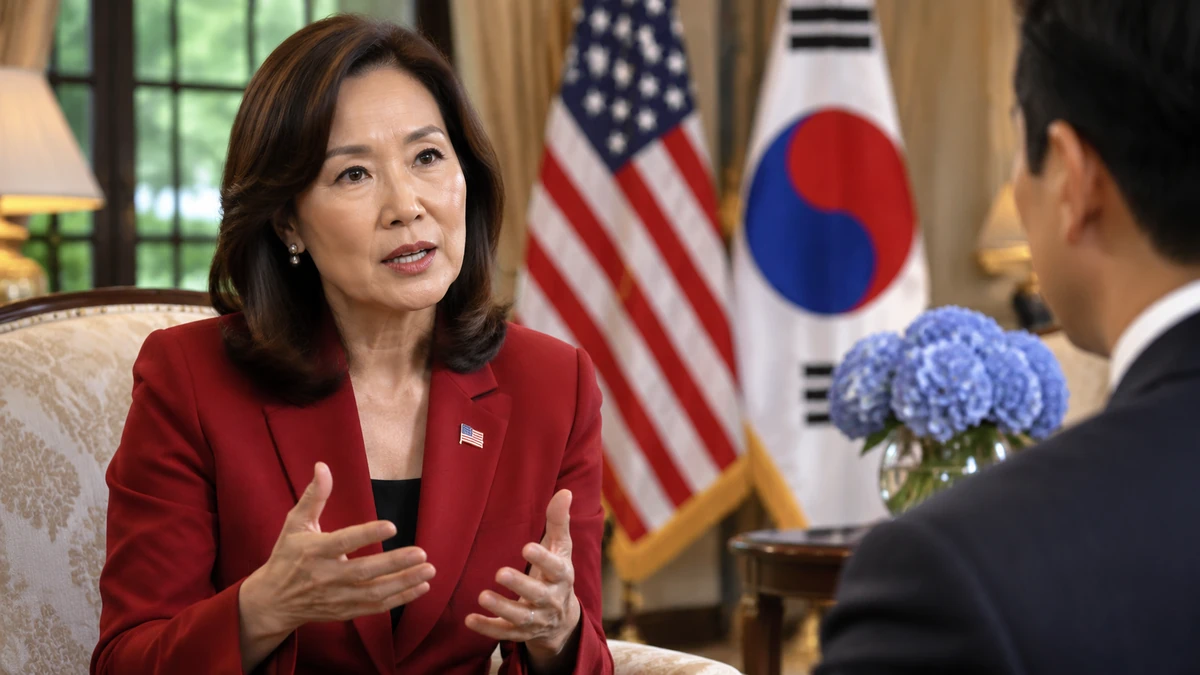
U.S. Ambassador to South Korea Michelle Steel emphasized trust, communication and shared economic opportunities as essential to the U.S.-South Korea alliance in a video interview marking her first 100 days in the post.
Released on Nov. 9 by the U.S. Embassy in Seoul, the interview was filmed at Habib House, the ambassador's official residence in central Seoul. Nicholas Namba, the embassy's minister counselor for public affairs, interviewed Steel.
Trust and security for the next generation
Asked what she would tell young South Koreans about why the alliance still matters, Steel said its importance lies in knowing that the two countries can rely on each other at critical moments.
She said the alliance must provide the security that allows future generations to plan for their lives. Both countries, she added, have a responsibility to fulfill their commitments, handle sensitive discussions responsibly and protect the trust underpinning their partnership.
Steel described her first 100 days as an opportunity to hear directly from South Koreans about their hopes, concerns and views of the bilateral relationship. She identified three priorities: modernizing the alliance, expanding economic opportunities and working with South Korea to address regional challenges. None, she said, could be achieved without trust and communication.
Shipbuilding and batteries as shared economic opportunities
Addressing questions about what South Korean investment in the United States means for South Koreans, Steel pointed to shipbuilding and batteries as examples of potential benefits for both countries.
She said cooperation with South Korean companies could strengthen the competitiveness of U.S. shipyards while creating business opportunities for Korean partners, describing the arrangement as beneficial to both sides.
Steel also highlighted investments by South Korean battery manufacturers LG Energy Solution and Samsung SDI. She said their U.S. operations help supply power to American data centers while creating jobs on both sides of the Pacific. She stressed the importance of explaining these connections clearly and showing South Koreans the concrete benefits of investment in the United States.
Nuclear cooperation and U.S.-South Korea-Japan coordination
On nuclear energy cooperation, including small modular reactors (SMRs), Steel said the two countries bring complementary strengths. South Korea has expertise in construction and heavy industry, while the United States has strengths in reactor design, related services and nuclear waste management.
Combining American innovation with South Korean nuclear engineering and construction experience could open new opportunities in the U.S. and regional markets, she said.
Steel also described cooperation among the United States, South Korea and Japan as valuable because each country brings different capabilities. Better information sharing and coordination, she said, can help the three partners respond to supply disruptions and address shared security challenges.
Comments
Post a Comment