Yi Gyubo: The Goryeo Poet Who Established Korea’s Epic Literary Tradition With the Legend of King Dongmyeong
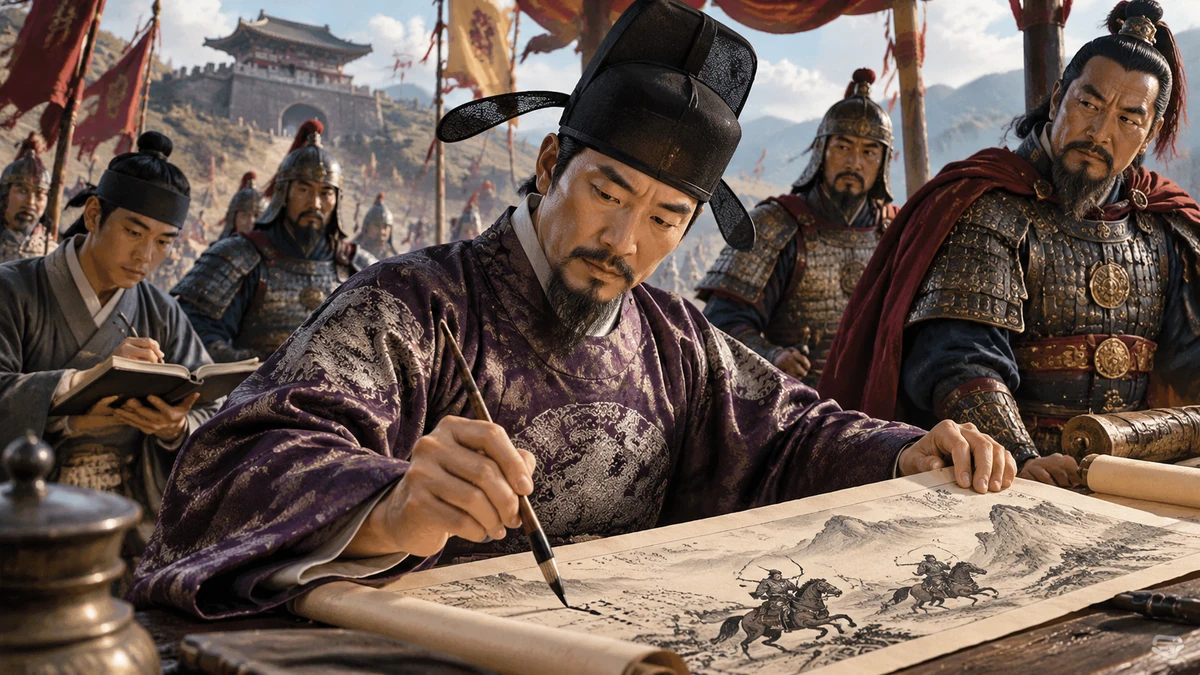
Image to help understand the article
A literary prodigy whose career began with repeated setbacks
Yi Gyubo (1168-1241) was one of the most prominent literary figures of Korea’s Goryeo Dynasty. Best known for his epic poem Dongmyeongwangpyeon, which recounts the founding of the ancient kingdom of Goguryeo, he is widely regarded as a pioneer of Korea’s national epic poetry tradition. His collected works, Dongguk Isanggukjip, preserve more than 1,000 pieces, including poems, essays, official documents and other literary writings that remain important sources for understanding Goryeo-era literature.
Born in 1168 in what is now Yeoju, Gyeonggi province, Yi demonstrated exceptional intellectual ability from an early age. By about age 9, he had studied a broad range of Chinese classical literature, philosophy and Buddhist texts. At 14, he impressed established writers by composing poetry rapidly during a summer study program designed to prepare students for the civil service examinations.
His literary talent did not translate into immediate professional success. Yi looked down on examination writing that prioritized rigid formulas over originality and repeatedly failed the national examination. He eventually passed the state examination in 1189, ranking first in the examination he had attempted for the fourth time. He passed a second examination the following year, but still struggled to secure a government appointment.
Retreat to the mountains and the creation of a national epic
At 25, frustrated by his inability to obtain a government position, Yi withdrew to Mount Cheonma near Gaegyeong, the Goryeo capital. He devoted himself to writing and adopted the literary name Baegun Geosa, meaning roughly the Hermit of White Clouds, reflecting his admiration for a life of freedom from artificial constraints.
The political environment provided the backdrop for a major shift in his writing. Goryeo was experiencing corruption and administrative dysfunction under military rule, while peasant uprisings had continued in the southern regions for more than a decade. These conditions helped deepen Yi’s interest in society and the fate of the state.
During this period, he wrote Dongmyeongwangpyeon, an epic poem depicting the founding of Goguryeo by its legendary first king, Dongmyeong, also known as Jumong. The work presented Goguryeo’s founding as a heroic national story at a time when political instability and movements seeking to revive the former kingdoms of Baekje and Silla challenged Goryeo’s legitimacy.
By emphasizing Goryeo’s historical connection to Goguryeo, the poem is understood as an effort to strengthen collective identity and unity among Goryeo's people. Its influence extended into later Korean literature, including Yi Seung-hyu’s Jewang Ungi and the early Joseon-era Yongbieocheonga, a work celebrating the achievements of the dynasty’s founding monarch, King Taejo Yi Seong-gye. For this reason, Dongmyeongwangpyeon is considered a foundational work in Korea’s national epic tradition.
A literary career shaped by military rulers
Despite passing the examinations, Yi remained without a government post for years. In 1197, he wrote directly to influential figures in the administration of military ruler Choe Chung-heon, asking for an opportunity to serve. He argued that other literary figures had received appointments while he remained overlooked despite decades of study.
His first position finally came at age 32, after he composed a poem praising Choe Chung-heon at a literary gathering hosted by the military leader. Appointed to a relatively junior administrative post in Jeonju, Yi encountered difficult working conditions, workplace hostility and limited compensation. He was dismissed after about 16 months following criticism from colleagues.
In 1202, Yi volunteered to accompany government forces suppressing a peasant uprising around Gyeongju and Mount Unmunsan. He served as a writer, producing ceremonial texts, proclamations and reports for military superiors. Despite his service, he received no reward and began questioning the practical value of his literary abilities.
A breakthrough came in 1207, when his essay Mojeonggi impressed Choe Chung-heon. Yi was appointed to an official literary post and subsequently advanced through government positions. In 1215, he became an official responsible for advising the monarch and preparing state documents.
His advancement was interrupted by political disputes. In 1217, after criticizing a decision by Choe Chung-heon, he was falsely accused by a subordinate, suspended and eventually removed from office. The experience deeply affected Yi, who believed government officials should uphold the traditional responsibilities of the state.
His fortunes improved under Choe Yi, the successor to Choe Chung-heon. After receiving Choe Yi’s protection in 1219, Yi was assigned to Gyeyang, in the area of present-day Incheon. Following Choe Chung-heon's death in 1220, Yi returned to the capital and became closely aligned with the new military ruler.
Over the following decade, Yi consolidated his position as a senior official. He supervised civil service examinations and helped shape the literary culture of the government. However, he was exiled to Wido in 1230 after becoming entangled in a political incident. Released eight months later, he continued producing diplomatic documents, including important communications to the Mongol Empire intended to support peace negotiations and preserve the Choe regime.
Yi returned to government service in 1232 and retired in 1237 with the senior rank of Su Taebo Munhasirang Pyeongjangsa. In his later years, he taught students at an academy on Ganghwa Island, where the Goryeo court had relocated. He died in September 1241, before the publication of his collected works, which Choe Yi had reportedly been trying to arrange. He was posthumously given the honorific name Munsun.
Originality, literary experimentation and a contested legacy
Yi also made an important contribution to debates about literary style. He opposed the established writer Yi In-ro’s emphasis on borrowing celebrated expressions from classical literature, a practice known as yongsa-ron. Instead, Yi Gyubo advocated sinui-ron, the principle that writers should develop original ideas and distinctive forms of expression.
His works reflected that commitment to experimentation. Mi-in-won was a palindrome poem designed to retain meaning when read in either direction. Gukseonsaengjeon used an alcoholic drink as its central character, addressing it with an honorific title usually reserved for a person of high standing. The work belongs to the personification narrative tradition, which is regarded as an important bridge between older Korean storytelling and later narrative literature.
Other surviving works include Baegun Soseol, Yeongjeongjungwol, Sibyeok and Gongjak. Yi also designed the Saryunjeong, an unusual lightweight pavilion mounted on four wheels, demonstrating an inventive streak that extended beyond writing.
His personality and interests earned him the nickname Samhokho Seonsaeng, referring to his intense fondness for three pursuits: poetry, the traditional Korean string instrument geomungo and alcohol.
His political legacy, however, remains controversial. Some historical assessments describe him as an educated and conscientious official who avoided personal involvement in corruption, while also characterizing him as cautious, career-minded and concerned with protecting his own position. His willingness to serve the powerful Choe military family led critics to portray him as an opportunist who accommodated authoritarian rulers. Yet within the royal court, he was also praised for his integrity and courage, earning the title Injungnyong, or a dragon among men.
That tension between literary innovation and political accommodation remains central to assessments of Yi Gyubo. His writings offer an important record of Goryeo society, while Dongmyeongwangpyeon secured his place in the development of Korean historical and national literature.
Comments
Post a Comment