From marketing gimmick to public safety issue
South Korea is taking a closer look at a type of crowd that, until recently, might have been dismissed as little more than enthusiastic shopping traffic: the lines outside pop-up stores, celebrity signings and fan events that have become a defining feature of urban life in Seoul and other major cities.
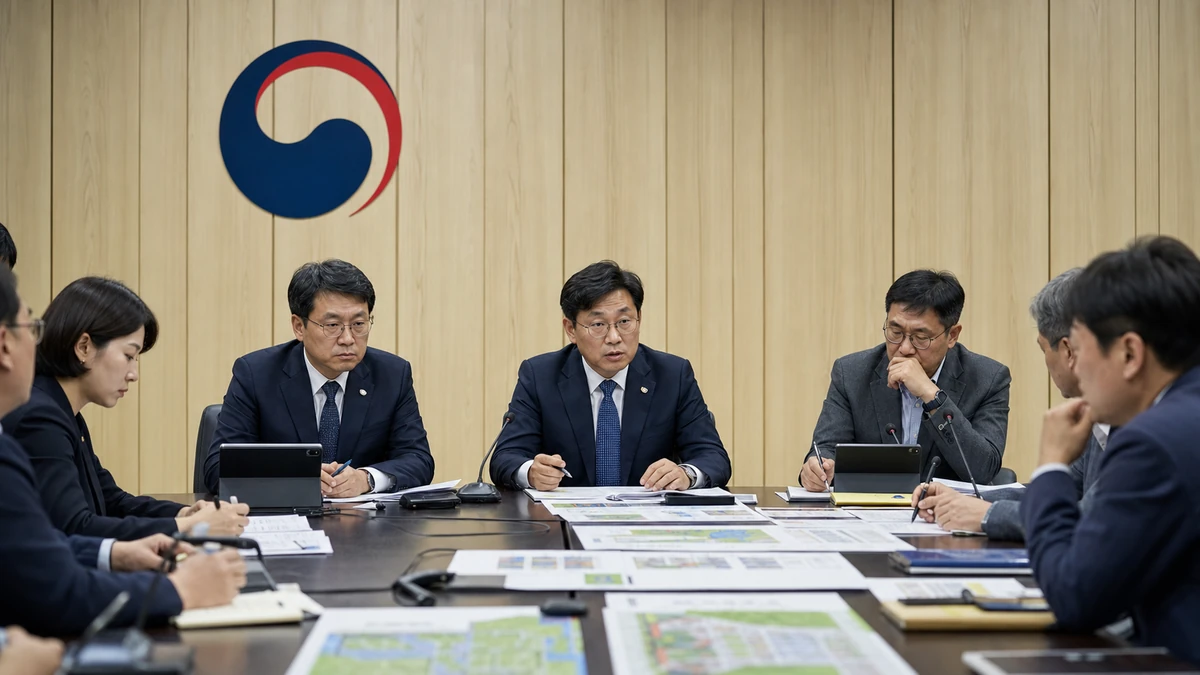
The country’s Ministry of the Interior and Safety said it convened a policy council this week with government agencies and private-sector experts to discuss blind spots in crowd safety management, with special attention to pop-up stores and autograph sessions. The meeting itself did not announce a specific new rule or timetable. But the discussion reflects something larger: in South Korea, events once treated as promotional side shows are now being recognized as gatherings capable of producing real public safety risks.
For Americans, the easiest comparison might be a mix of a sneaker drop, a Comic-Con-style fan appearance, a limited-run brand activation and a record-store signing all packed into one small space. Now imagine that event taking place not in a convention hall built for heavy foot traffic, but inside a department store annex, on a narrow commercial street, or in a temporary storefront designed more for social media photos than for crowd flow. That is increasingly the reality in South Korea, where fandom, retail and tourism overlap in ways that can turn a modest-looking event into a dense, fast-forming crowd.
Officials said the meeting was intended to examine gaps exposed this year in the management of so-called mass gatherings, a term that in the Korean policy context can extend well beyond stadium concerts and major festivals. It can also include commercial and street-level events where large numbers of people gather at the same time in a limited area. That distinction matters. A crowd does not need fireworks, a ticketed arena or a parade route to become dangerous. It only needs concentrated demand, limited space and poor control over how people enter, wait, move and disperse.
The ministry’s move suggests that South Korea’s understanding of what counts as a crowd-management challenge is broadening alongside the rapid growth of K-culture as an on-the-ground urban experience. In a country where fandom often operates at high speed and high intensity, even a short-lived appearance by a celebrity, creator or trending brand can pull hundreds of people into a small area in minutes.
Why pop-up culture in Korea is different
To understand why the government is paying attention, it helps to understand what a pop-up store means in South Korea today. In the United States, a pop-up can still mean a temporary retail concept, often tied to a holiday campaign or a buzzy brand collaboration. In South Korea, especially in Seoul’s trend-setting neighborhoods and major shopping districts, the pop-up has evolved into something bigger: part retail, part exhibition, part fan ritual and part tourist attraction.
These spaces are often built for experience as much as commerce. Visitors may come to buy limited-edition merchandise, but they also come to take photos, post them online, collect proof that they were there and share in a moment that feels exclusive because it is short-lived. Some are themed around K-pop groups, beauty brands, streaming dramas, animated characters or fashion labels. Others revolve around a celebrity endorsement or a new cultural release. The point is not only to purchase something. It is to participate.
That helps explain why crowd behavior around these events can differ from what city officials might expect from a standard retail opening. People do not simply arrive, browse and leave. They queue early. They cluster around entrances. They wait for timed access. They stop to take pictures. They gather when a celebrity appearance is rumored or confirmed. They linger in nearby sidewalks and shared spaces. And because many of these events are promoted heavily online, demand can spike suddenly, sometimes within hours.
Autograph sessions, often referred to in Korea as fan signings, add another layer. To an American audience, the phrase might suggest a relatively orderly line at a bookstore or a sports memorabilia convention. In South Korea, fan signings tied to idols, actors, creators or brands can operate as compressed, high-emotion encounters. They are often highly choreographed but still intensely personal for attendees, who may have invested substantial time and money for a brief face-to-face interaction. The result is not just a crowd but a crowd with strong emotional energy and a powerful incentive to get as close as possible, as quickly as possible.
That combination has made pop-up stores and signings central to Korea’s contemporary urban culture. They are no longer fringe happenings. They are a visible part of how young consumers, fans and tourists experience the city. And once a form of gathering becomes a normal part of city life, the question is no longer whether it is culturally significant. The question is whether the systems around it have kept up.
The 1,000-person rule and the problem of density
Current Korean law generally requires events expected to draw a peak crowd of 1,000 people or more at one moment to file a safety management plan. That threshold is intended to ensure that organizers and authorities examine issues such as entrance and exit routes, emergency response and the movement of attendees before a large event gets underway.
On paper, that sounds straightforward. In practice, the new generation of urban fan events does not always fit neatly into the framework.
The issue is not simply how many people attend over the life of an event. It is where they gather, when they gather and how tightly they are packed in a specific location at a specific time. A pop-up store may appear smaller than a concert or festival in total scale, but it can create dangerous bottlenecks if hundreds of people converge on one doorway, one photo zone or one checkout area in a short window. A fan signing may not look enormous from the outside, yet the surrounding lines, waiting zones and spillover sidewalks may create pressure points that matter more than total attendance.
That is why officials framed the issue in terms of blind spots. A rule built around a broad numerical threshold can miss the risks posed by shorter-duration, higher-density events. In other words, an event can feel manageable when measured by overall size but still become hazardous because of how the crowd behaves in real time.
Americans have seen versions of this logic before. Public safety planning for New Year’s Eve in Times Square differs from planning for a surprise product drop at a mall, but both rely on the same underlying principle: density can matter more than raw head count. If too many people try to occupy or move through the same small space at once, risk rises quickly. Crowd experts often focus not just on attendance but on pinch points, flow interruption, sightline problems and the ability of people to leave safely if conditions change.
That appears to be the direction of the Korean discussion as well. Rather than treating safety oversight as something reserved only for obviously massive events, officials are signaling that crowd management may need to account for the modern realities of consumer culture, influencer culture and fandom culture. Those realities include short-lived surges, social media-driven turnout and events staged in spaces that were never designed for large bursts of pedestrian pressure.
A lesson shaped by recent Korean history
Any discussion of crowd safety in South Korea carries weight because the country has spent the past several years confronting the consequences of inadequate planning around dense urban gatherings. While the ministry’s latest meeting focused on policy blind spots rather than a specific incident, the broader public sensitivity around crowd management has changed dramatically in recent years.
That shift helps explain why even commercial events are now being viewed through a public safety lens. In the past, the main targets of official crowd management might have been obvious: sports events, concerts, fireworks festivals or large civic celebrations. But South Korea’s urban culture has changed. So has the nature of the crowds.
Today, some of the most intense concentrations of people may form around experiences that look casual from the outside. A limited-edition cosmetics launch. A K-pop group’s merchandise release. A character-themed cafe promotion. A viral fashion brand installation. These are not side notes to Korean city life. They are part of the way the country’s cultural economy operates.
And that economy is substantial. K-pop, Korean television, beauty products and fashion are not simply entertainment exports; they are drivers of tourism, foot traffic and neighborhood commerce. People travel across Seoul, and in some cases across the country or from overseas, to attend events that may last only a few days or even a few hours. When that kind of attention is directed into a small commercial footprint, city officials can no longer assume the risk belongs solely to the organizer or the property owner.
That is likely one reason the ministry brought together not only public agencies but also private experts. Crowd safety for these events cannot be solved by government alone, because many of the gatherings are planned and run by private companies. A safe event may require coordination among brand marketers, venue managers, local district offices, police, private security firms, traffic authorities and emergency responders. If any link in that chain underestimates turnout or fails to share information, the system weakens.
In that sense, the policy conversation is about more than event permits. It is about whether South Korea’s institutions are adapting to a society in which popularity can materialize physically, on the street, almost instantly.
When fandom becomes urban infrastructure
One of the most striking things about South Korea’s pop-up and signing culture is how deeply it blurs categories that Americans often keep separate. Shopping is not just shopping. Promotion is not just promotion. Fan activity is not confined to concert venues. Instead, commerce, entertainment, identity and tourism all meet in the same physical place.
That can be hard to grasp without seeing it firsthand. In Seoul neighborhoods known for youth culture and retail experimentation, a temporary store can become an attraction in the same way a museum exhibit or festival installation might. Fans may organize their days around it. Nearby cafes and shops may benefit from the spillover. Tourists may add it to their itinerary. Social media posts turn the site into a destination, and the destination reinforces the online buzz.
In practical terms, that means fandom is shaping the use of public and semi-public space. Sidewalks, plazas, department store corridors and commercial alleys become extensions of the event itself. A line outside the venue is not separate from the event; it is part of the experience. So are the photos taken at the facade, the waiting groups on adjacent blocks and the crowds checking whether they can still get in. The whole surrounding streetscape can become operationally relevant.
For American readers, a useful comparison might be the way major sneaker launches once transformed blocks around flagship stores in New York or Los Angeles, or how San Diego’s Gaslamp Quarter changes during Comic-Con when branded experiences spill beyond the convention center. But Korea’s version is often more frequent, more integrated into everyday retail districts and more closely tied to a highly organized fan culture.
That fan culture also helps explain why these events can generate unusual patterns of movement. Attendees are not just customers. They may be members of fandom communities accustomed to tracking limited releases, following official announcements in real time and adjusting plans instantly when information changes. If a brand posts that a celebrity will arrive at a certain hour, or that limited goods are running low, crowd behavior can shift within minutes. Traditional event planning models, especially those designed around static schedules and dedicated venues, may not be enough.
In effect, the city itself becomes part of the event infrastructure. Once that happens, safety planning has to expand beyond the storefront door.
What better planning could look like
The ministry did not spell out a final policy package, and it is important not to overstate what was decided. The official takeaway so far is limited: the government gathered public and private stakeholders to discuss how to address crowd-management blind spots, and current law still uses the 1,000-person peak threshold as a key trigger for safety plan reporting.
Still, the issues raised point toward the kinds of changes officials and organizers may increasingly consider. Those could include more careful forecasting of when crowds are most likely to surge, rather than relying only on total attendance estimates. They could involve stronger coordination with local authorities before high-interest pop-ups and signings open. They might also require more attention to queue design, timed entry, surrounding pedestrian routes, emergency access lanes and how information is communicated to attendees in real time.
Another likely area of focus is the role of private operators. Because many of these events are created by brands, entertainment companies and venue managers, any new approach will probably depend on clearer expectations for what organizers must prepare before an event begins. That may include not just security staffing, but contingency planning for sudden overcrowding, weather disruptions, celebrity arrival surges or unexpected spillover into adjacent businesses and streets.
There is also the matter of aftercare, an often overlooked piece of crowd safety. The event does not end when the signing concludes or the store closes its doors. People still have to disperse. Transit stations may receive a rush. Ride-hailing pickup points may clog. Nearby sidewalks may remain crowded as attendees sort purchases, take final photos or wait for friends. A robust safety plan treats departure as part of the event, not as an afterthought.
These are not uniquely Korean concerns. Cities around the world are wrestling with how to regulate experiences that sit at the crossroads of entertainment, commerce and digital hype. But South Korea is a particularly important case because of how central K-culture has become to global youth trends. The systems it develops for handling fan-centered urban events could become a model others watch closely.
A warning and an opportunity for global cities
There is a broader lesson here for international audiences. South Korea’s cultural influence is often discussed in terms of exported media: hit songs, beauty products, streaming dramas and fashion trends. But the Korean Wave is also an export of experience. It changes how people move through neighborhoods, how brands design physical spaces and how fandom is performed in public.
That makes this week’s policy discussion more than a bureaucratic footnote. It reflects a recognition that cultural success brings logistical obligations. A popular event is not automatically a well-managed one. In fact, popularity can be the very factor that exposes weak planning.
The underlying question South Korea seems to be asking is one many cities will eventually face: How do you preserve the energy, spontaneity and economic value of fan-driven events without allowing them to outgrow the safety systems around them? It is a familiar tension in American cities, too. People want authenticity and excitement, not the sterile feeling of overregulation. But they also expect that if hundreds or thousands gather in a limited space, someone has thought through what happens if things go wrong.
For organizers, crowd size may look like proof of success. For visitors, success is simpler. It means being able to attend, enjoy the experience and get home safely. If the event feels orderly, if lines are understandable, if exits are clear and if the space never tips into anxiety, people remember the brand or artist more fondly. If the environment feels chaotic or unsafe, the excitement can sour quickly.
That is why South Korea’s discussion matters. It signals that the country’s officials are treating safety not as an annoying add-on to cultural buzz, but as one of the conditions that makes that buzz sustainable. Pop-up stores and fan signings are likely to remain a major feature of Korean urban life, especially as K-pop, K-beauty and Korean entertainment continue to attract global audiences. The challenge now is to build rules and habits that match the way people actually gather today, not the way policymakers once assumed they would.
If South Korea succeeds, it may offer a useful blueprint for other global cities navigating the same transformation: a world where culture does not just travel through screens, but turns sidewalks, storefronts and neighborhoods into live stages for collective enthusiasm.
Comments
Post a Comment