Jeju Cracks Down on Boating Under the Influence as Summer Tourists Crowd South Korea’s Resort Island
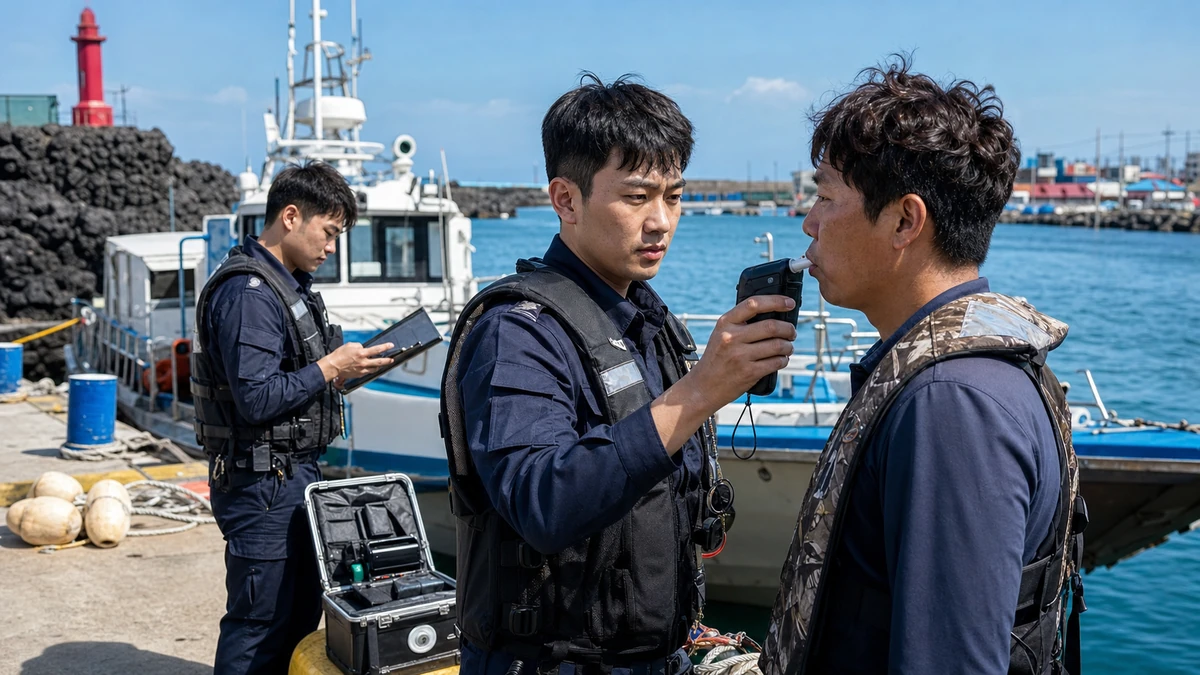
A summer safety push on one of South Korea’s busiest island destinations
As South Korea prepares for the height of the summer travel season, maritime police on Jeju Island say they will carry out a two-month special crackdown on boating under the influence, a move aimed at preventing accidents before beaches, marinas and ferry docks fill with vacationers.
The Jeju Coast Guard said the enforcement campaign will run from July 1 through Aug. 31, covering the peak summer holiday period when the island’s waters become especially busy with fishing boats, chartered recreational vessels, passenger boats, ferries and personal watercraft. The agency announced the measure June 22, saying the goal is to stop intoxicated operation at sea before it leads to injuries or worse.
For American readers, Jeju is often described as South Korea’s answer to Hawaii, though the comparison only goes so far. It is a volcanic island known for black lava rock, coastal cliffs, seafood, resort towns and a domestic tourism industry that surges in summer. Unlike a mainland beach city, however, Jeju’s identity is inseparable from the sea. The water is not just scenery. It is transportation, leisure, work and, for many visitors, the centerpiece of the trip.
That makes maritime safety unusually important. A summer afternoon in Jeju can involve sightseeing ferries, charter fishing trips, water sports and working vessels sharing the same coastal space. In that environment, officials say, alcohol-related operation is not simply a personal lapse in judgment. It can place passengers, nearby boaters and rescue crews at risk in conditions that are often less forgiving than a highway.
The announcement also reflects a broader reality in tourism management: destinations are judged not only by how beautiful they are, but by how safely they function when crowds arrive. For Jeju, which markets itself as one of South Korea’s premier vacation spots for both domestic and international travelers, safe marine operations are part of the tourism product itself.
Why Jeju is focusing on July and August
The timing of the crackdown is no accident. July and August are the core of the Korean summer vacation season, a period when schools are out, office workers take leave and travel to beaches and islands rises sharply. In South Korea, as in the United States around Memorial Day or the Fourth of July, summer brings a predictable spike in leisure travel. On Jeju, that means more people booking fishing excursions, boarding tour boats, renting watercraft and moving through ports that can quickly become congested.
Officials say the enforcement campaign is designed around that seasonal rhythm. The idea is straightforward: when marine traffic increases, the consequences of risky behavior can multiply. A single operator impaired by alcohol may be responsible not only for the vessel under their control, but also for passengers who have little ability to assess the operator’s condition or intervene once a trip begins.
The Jeju Coast Guard said it will focus on what Korea describes as “multi-use” or “multi-passenger” vessels, a broad category that includes boats commonly used by the public. In practical terms, that means fishing boats that carry customers, leisure craft, ferries and excursion boats, along with other vessels that put multiple people on the water at once. For travelers, these are exactly the kinds of services that turn up on vacation itineraries: a coastal ride, a fishing experience, an island transfer, a harbor tour.
Jeju’s tourism economy makes this especially important. Visitors often move quickly between activities, trying to fit beach time, seafood markets, scenic drives and marine experiences into a short trip. That compressed schedule can hide the amount of logistical discipline required to keep a destination running safely. The coast guard’s message is that enjoyment on the water depends on rules that many tourists never see.
In that sense, the campaign is not just about catching offenders. It is also about managing a seasonal environment in which crowds, excitement and vacation attitudes can lower people’s guard. U.S. authorities have long made similar arguments around holiday drunk-driving enforcement on roads and lakes. Jeju’s maritime police are applying that same public-safety logic to one of Korea’s most heavily traveled coastal regions.
The numbers are small, but the risks are not
According to the coast guard, Jeju recorded eight cases of drunk operation at sea from 2022 through 2025. Three of those cases occurred during the summer period from June through August. On paper, that may not sound like a large number, particularly to readers used to traffic safety statistics in much bigger jurisdictions. But maritime officials argue that raw totals alone do not tell the full story.
At sea, even one alcohol-related violation can have outsized consequences. Boats operate in an environment shaped by weather, wind, waves, current, visibility and the movements of other vessels. Distances can be deceptive. Reaction times can be slower. Emergency response is more complicated than dispatching a patrol car or an ambulance to a roadway accident. A mistake that might be survivable on land can become much more dangerous offshore, especially if passengers are not wearing life jackets, do not know the area or cannot swim well.
That is one reason boating under the influence tends to be treated seriously in many countries, including the United States. American agencies from the U.S. Coast Guard to state marine patrol units regularly warn that sun, heat, dehydration and motion can intensify the effects of alcohol on the water. Jeju’s campaign fits squarely within that broader safety philosophy. Authorities are essentially saying that a vacation atmosphere should not obscure the physics and unpredictability of the ocean.
The numbers also matter differently in a place like Jeju because the island’s marine activity mixes livelihoods and leisure. Some vessels are tied to work, especially fishing. Others are built around tourism and recreation. But they often operate in the same waters and around the same harbors. That means the impact of impaired operation can extend beyond a single pleasure trip. It can affect commercial traffic, rescue access and the broader order of a working waterfront.
From a public-policy perspective, the campaign represents a preventive approach rather than a reactive one. Instead of waiting for a major incident to force change, officials are using past enforcement data and seasonal patterns to justify a concentrated intervention during the busiest months. It is the kind of administrative move that rarely makes global headlines, yet often plays a meaningful role in whether a destination feels orderly and trustworthy during peak travel periods.
What enforcement will look like on the ground
The Jeju Coast Guard said the campaign will include not only direct enforcement but also preventive patrols and safety guidance before vessels depart. That detail is significant. It suggests authorities are trying to intervene at the dock, where problems may be easier to identify and stop, rather than relying solely on checks after a vessel is already underway.
For travelers, that may translate into a more visible official presence at ports and piers. Operators could face closer scrutiny before departure, and passengers may encounter more safety messaging in places where they board boats or sign up for marine activities. While the coast guard did not frame the effort as a burden on tourism, it clearly intends to send a signal to boat operators that summer business does not excuse relaxed standards.
That kind of pre-departure oversight carries practical and symbolic value. Practically, it allows officials to reduce risk before a vessel enters open water. Symbolically, it reinforces the idea that boating under the influence is not a harmless vacation indulgence but a serious offense with consequences for everyone on board and nearby.
Jeju Coast Guard Commissioner Ji Guk-hyeon said intoxicated operation threatens not only those aboard a vessel but users of other vessels as well, and pledged strong enforcement to help create a safer maritime environment. His remarks underscore how Korean authorities are framing the issue: less as an individual moral failing than as a public-danger offense affecting a shared transportation and leisure system.
That emphasis may resonate with American readers familiar with anti-drunk-driving campaigns on highways, where the message long ago shifted from personal choice to collective risk. The same argument applies at sea, where passengers often surrender control entirely once they board. A family booking a fishing trip or sightseeing cruise is placing trust in the operator and in the regulatory system that oversees that operator. The coast guard’s campaign is meant to shore up that trust at the very moment demand is highest.
A tourism story, not just a law enforcement story
Although the announcement came from a public-safety agency, it also speaks to how Jeju wants to present itself as a tourism destination. For years, the island has marketed its natural scenery, hiking routes, beaches, waterfalls and seafood culture to travelers from across Asia and beyond. In English-language travel coverage, Jeju often appears as a place of romantic coastlines, resort escapes and outdoor adventure. But destinations built around water live or die by the reliability of their invisible systems: transportation, rescue readiness, crowd management and operator oversight.
That is why this crackdown matters beyond the immediate question of enforcement. It signals that local authorities see safety infrastructure as part of the travel experience. A smooth ferry boarding process, a sober boat captain, clear dockside guidance and active patrol presence may not appear in tourism brochures, but they shape whether visitors feel confident enough to keep spending, exploring and recommending a place to others.
In Korea, where domestic tourism can be intensely seasonal and highly concentrated around holidays, managing those peaks is a central challenge. Jeju is not merely a scenic island; it is a national vacation engine. When demand rises, every layer of the system is tested. Summer marine safety, then, becomes a quality-control issue for the destination itself.
There is also a cultural dimension worth explaining for non-Korean readers. In South Korea, public agencies often emphasize visible, seasonal campaigns tied to specific risk periods, whether around traffic, fire prevention or holiday crowd management. These concentrated enforcement efforts are both practical and communicative. They are meant to change behavior in the short term while also signaling that the state is paying attention. Jeju’s special summer crackdown fits that pattern.
Rather than discouraging tourism, such campaigns are often presented as a way to protect it. The message is not “stay away from the water,” but “the water should be enjoyed within a system of order.” In a destination where much of the summer economy depends on marine access, that distinction matters.
What this means for foreign visitors to Jeju
For international travelers, especially those unfamiliar with Korean maritime enforcement, the coast guard’s announcement offers a useful reminder about what kind of destination Jeju is. This is not simply an island where tourists lounge near the ocean. It is a place where many vacation experiences involve actual use of the sea, whether through ferries, fishing charters, marine leisure craft or coastal transport.
Visitors from the United States and other English-speaking countries may not immediately recognize the range of vessels included in the campaign. Some of the targeted categories overlap with what Americans would think of as charter fishing boats, excursion boats, small passenger ferries and recreational watercraft. The common denominator is that these are shared-use vessels, often carrying tourists who have limited control over operations once underway.
That is why official oversight matters. Travelers can choose a destination, but they often cannot independently verify the condition of a vessel or the sobriety of its operator. The burden falls heavily on local regulators, port staff and law enforcement. Jeju’s special crackdown is, in effect, an assurance that these institutions intend to be more visible during the months when outsiders are most likely to rely on them.
It may also subtly influence traveler behavior. Vacationers who see patrols at docks or hear more safety announcements may be more likely to ask questions, follow boarding instructions and take routine precautions seriously. In many tourist settings, people treat safety briefings as background noise. On the water, especially in an unfamiliar country, those details can matter.
For foreign readers planning a trip, the most practical takeaway is simple: Jeju is reinforcing the idea that marine tourism works best when operators and passengers alike respect the rules. That includes choosing reputable services, listening to safety guidance and understanding that a beautiful coastal setting does not reduce the need for discipline. If anything, the popularity of the island makes discipline more necessary.
The broader lesson: vacations still depend on rules
There is a temptation, especially in summer travel coverage, to frame safety measures as the opposite of leisure. In reality, the two are often inseparable. The freedom associated with a beach vacation, a boat trip or a day on the water exists only because someone is maintaining standards in the background. Roads need traffic laws. Airlines need inspection regimes. Ferries and charter boats need sober operators and active oversight.
Jeju’s summer campaign is a reminder of that basic truth. The island’s appeal lies in its open horizons and coastal experiences, but open water is not the same as unregulated space. When authorities say they are stepping up patrols and pre-departure checks, they are not trying to drain the fun from a seasonal getaway. They are trying to preserve the conditions that make that getaway possible.
For American audiences, the analogy may be a busy holiday weekend at a lake town, beach marina or coastal resort where police increase DUI patrols, park rangers monitor boat ramps and officials push life-jacket messaging. The details differ, but the public-safety logic is familiar. Peak recreation periods bring more movement, more risk and more need for visible enforcement.
Jeju’s case also shows how mature tourism destinations increasingly treat safety as part of brand management. Travelers remember scenery, food and hospitality, but they also remember confusion, disorder and whether an experience felt secure. A destination that keeps its busiest systems functioning smoothly sends a powerful message about competence.
That may be the clearest takeaway from the coast guard’s announcement. Jeju is entering the summer season not only by showcasing its natural beauty, but by tightening the systems that support it. The island wants visitors in the water, on the docks and aboard its boats. It simply wants them there under conditions that reduce avoidable risk.
In the end, that is less a restriction than a promise: that the pleasures of summer travel, especially on an island defined by the sea, are worth protecting with rules strong enough to matter when crowds arrive.
Comments
Post a Comment