K-pop Idol-Turned-Actor Lee Jun-young to Begin South Korean Military Service, Marking a Familiar Pause in a Global Career
A career pause that carries special weight in South Korea
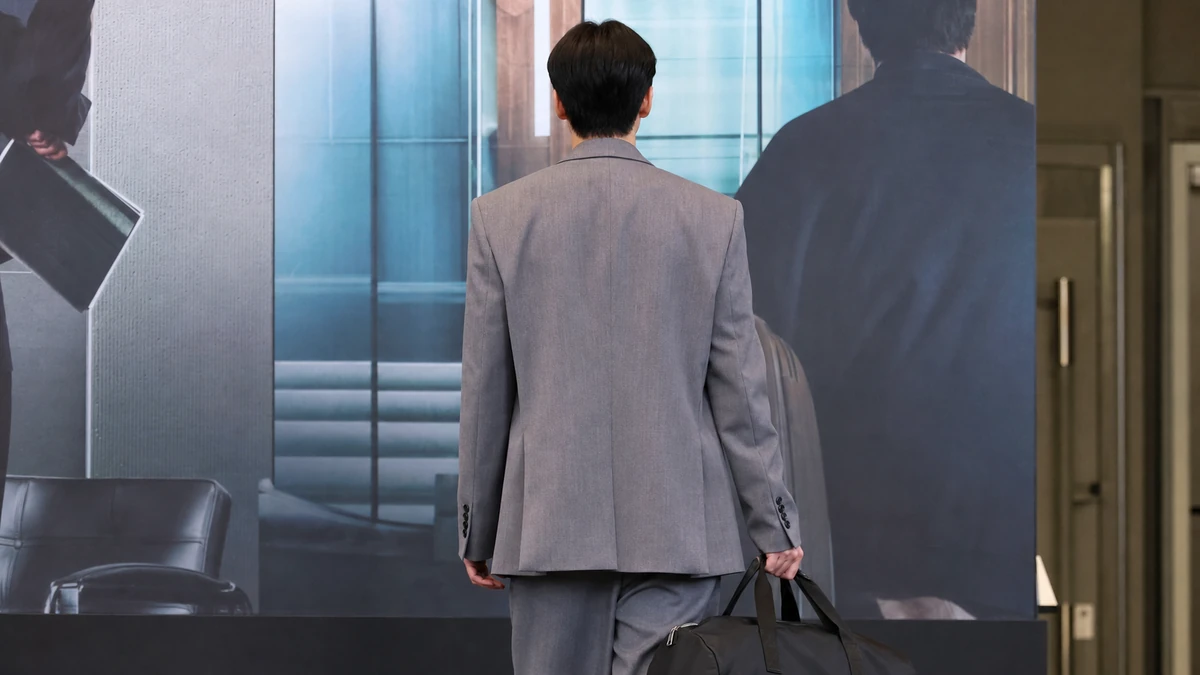
South Korean singer and actor Lee Jun-young, a performer whose career has stretched from K-pop stages to some of the country’s most widely watched dramas, is set to begin mandatory military service on July 21, according to his agency, Billions. The 29-year-old will quietly enter an Army training center without a public send-off, complete basic training and then continue his service after being assigned to a unit.
For many American readers, the headline may land differently than it would for fans in South Korea. In the United States, when a rising actor steps away from Hollywood or a pop star takes a hiatus, the pause is usually framed as a career decision, a health break or a strategic reset. In South Korea, for most able-bodied men, military service is not a branding choice. It is a legal obligation and a deeply social milestone, one that can interrupt even the hottest streak in entertainment.
That is what makes Lee’s announcement more than a scheduling update. It is a significant marker in a career that has unfolded in two of South Korea’s most influential cultural exports: K-pop and K-drama. To global fans, especially those who discovered him through streaming platforms rather than music shows in Seoul, the news signals a temporary absence. To South Korean audiences, it also fits into a familiar national rhythm, one in which public figures, including major celebrities, pause their careers to fulfill military duty before attempting a comeback.
Lee’s agency said there will be no separate public event at the enlistment site, a decision that has become increasingly common as agencies try to avoid overcrowding and safety concerns. In practical terms, it means no splashy farewell scene, no formal fan gathering and no carefully staged media moment. In symbolic terms, it underscores the tone surrounding this enlistment: restrained, orderly and personal rather than performative.
In an entertainment culture often built around visibility, that quiet approach stands out. It suggests that the focus is less on spectacle and more on the seriousness of the transition itself. For an artist who has built his reputation gradually, moving from idol performer to credible screen actor, the subdued entry feels consistent with the public image he has developed over time.
A handwritten message and the value of sounding like yourself
Lee addressed fans directly through social media, posting a handwritten letter in which he reflected on receiving his enlistment date. He wrote that the reality of having a date set had left him thinking more than usual, then added a line that has resonated with fans: he said he would go, stay healthy and return “in my own way,” or more naturally in English, as himself.
That phrase matters. Korean celebrities often communicate with fans in ways that blend formal duty, emotional reassurance and carefully measured sincerity. A handwritten note, in particular, carries a specific meaning in Korean fan culture. It signals effort, intimacy and a desire to speak in a personal voice rather than through a corporate statement. While an agency announcement gives the facts, a handwritten message is often where fans look for emotional truth.
For American audiences, the closest comparison may be the difference between a studio publicist issuing a statement and an actor sharing a direct note on Instagram in their own words. The content may be brief, but the medium tells readers something. It says: this is not just business; this is me trying to speak to you personally.
Lee’s wording also aligns with the image he has cultivated. He has not been defined by tabloid-level celebrity or the kind of constant internet frenzy that can surround some Korean stars. Instead, he has built a career through steady work, role by role, project by project. Saying he will return “as himself” does not sound like an oversized promise of transformation. It sounds like a pledge of consistency, the kind of line that can reassure a fan base built not only on excitement but on trust.
That emotional economy is central to how fandom works in South Korea and, increasingly, in the global Korean Wave. Fans are not only following chart positions or box office numbers. They are tracking an artist’s character, habits, work ethic and attitude. A short note about health and authenticity can matter as much as a new teaser trailer because it reinforces the bond that keeps audiences invested during a long absence.
From U-KISS to streaming-era actor
Lee first entered the entertainment industry in 2014 as a new member of U-KISS, one of the second-generation K-pop groups that helped expand Korean pop music beyond South Korea’s borders. For newer international fans, U-KISS may not carry the same immediate brand recognition as BTS, Blackpink or Twice. But in the earlier phases of the global K-pop boom, the group was part of a wave of acts that built loyal fan communities across Asia and beyond, often through touring, fan events and multilingual outreach before streaming fully reshaped the industry.
That background matters because it places Lee in an important generational lane. He is not simply an actor who once sang. He came out of the idol training system, one of the most demanding and distinctive pipelines in global entertainment. Idols are typically trained in singing, dancing, media presence and fan communication, often from a young age. The system can produce performers with unusual versatility, but it can also box them into expectations that are hard to escape.
Lee began his acting career in 2017 with the drama “Avengers Social Club,” then steadily expanded his screen resume. He later appeared in a range of projects including “D.P.,” “Imitation,” “Let Me Be Your Knight,” “Melo Movie,” “When Life Gives You Tangerines” and “Weak Hero Class 2.” The titles vary in tone and genre, and that diversity is part of the point. He has moved between youth stories, music-centered dramas and more serious, emotionally weighty material.
For viewers in the United States and other English-speaking markets, “D.P.” may be one of the most important reference points. The Netflix series, which examines abuse, hierarchy and desertion in South Korea’s military system, helped expose many international viewers to a side of Korean male life that is often discussed domestically but less understood abroad. An actor associated with a project like that then entering the military himself carries a layer of real-world resonance, even if his own service is a separate matter.
Lee’s career path also reflects a broader pattern in South Korean entertainment: the rise of the multi-position artist, someone who debuts in music, gains traction in television or film, and reaches global audiences through streaming platforms that blur old industry boundaries. An American comparison might be an artist who begins in a successful pop group and later becomes a respected prestige-TV actor, but the Korean version operates in a more tightly interconnected ecosystem where fan communities often follow every phase of that transition.
That crossover power is part of why his enlistment is meaningful beyond his core fan base. K-pop audiences may know him from his idol roots. Drama fans may know him from acting roles and not fully realize he came from a group background. In the age of Netflix, Viki and social media clips, those audiences increasingly overlap. Lee’s career sits right at that intersection.
Why military service is such a major entertainment story in South Korea
To understand why an enlistment announcement becomes headline news, it helps to understand South Korea’s system of mandatory military service. Because the country remains technically at war with North Korea, under an armistice rather than a formal peace treaty, military readiness carries powerful political and social meaning. Most South Korean men are required to serve, typically in their late teens, 20s or early 30s, though the timing can vary based on circumstances and current law.
For celebrities, the issue is especially sensitive because fame does not erase obligation. In fact, it can intensify scrutiny. Questions about timing, exemptions, fairness and public conduct have followed many high-profile entertainers over the years. A celebrity’s enlistment is therefore not treated as a private matter in the way it might be in the United States. It is both personal and public, individual and national.
That public dimension has shaped the careers of many Korean stars before Lee. Some have enlisted at the height of their popularity, effectively freezing momentum for a year and a half or more. Others have tried to time projects carefully so that television dramas, albums or films carry fans through the absence. Military service can interrupt overseas growth, delay promotional cycles and force agencies to rethink long-term strategy.
At the same time, completing service can become part of a celebrity’s narrative of maturity. In South Korea, fans and the industry often speak of artists returning “more solid” or “more grounded,” language that reflects more than public relations. Military service can function as a rite of passage, one that reshapes how male stars are perceived in adulthood.
That does not mean the process is romanticized. It is also disruptive, emotionally difficult and physically demanding. Fans count down months. Agencies adjust content schedules. Productions move forward without an actor who may have been in demand. But because it is so common, the culture around enlistment has developed its own rituals of patience and support. The expectation is not simply that fans will keep consuming content. It is that they will wait.
For overseas audiences who follow Korean entertainment casually, this can be one of the more surprising aspects of fandom. In much of the American entertainment industry, disappearing from public view for an extended period can be dangerous professionally. In K-pop and K-drama, absence due to military duty is often understood as an unavoidable chapter rather than a collapse in relevance. If anything, a loyal fan base can emerge even more emotionally connected after the artist returns.
The meaning of a quiet enlistment
Billions said Lee will enter the Army training center without a separate public event, and that decision reflects a broader change in how enlistments are handled. In past years, celebrity military departures could draw swarms of fans and reporters, creating scenes that mixed patriotism, grief, excitement and chaos. Agencies now more often choose quieter arrivals, both for security and to protect the dignity of what is, at bottom, a military intake process rather than an entertainment showcase.
That quieter model also speaks to the evolving relationship between stars and fandom in the social media era. Fans no longer need to be physically present to register support. Messages, fan art, hashtags and archived clips can circulate globally within minutes. For international fandoms especially, participation now happens online as much as on the ground.
There is also an unspoken etiquette at play. In Korean fan culture, support is not always about proximity. Sometimes it means giving space. Agencies frequently stress that a nonpublic enlistment is the safest option not only for the artist but also for other recruits and their families, who did not sign up to enter a media event while reporting for military duty.
Lee’s case fits that pattern. Rather than encouraging a crowd, the announcement directs attention back to the essentials: the date, the training center, the process after basic training. It strips away ceremonial excess and emphasizes that this is an obligation he is preparing to meet in a calm, orderly way.
That may also strengthen the emotional impact of his handwritten note. Without a heavily mediated send-off, the note becomes the main public expression of the moment. It is not crowded out by event footage or farewell pageantry. Fans are left with his words and the understanding that, for now, the next chapter will unfold largely out of sight.
A filmography that shows range, not just reinvention
One reason Lee’s enlistment has drawn attention is that his acting career has reached a point where the interruption feels consequential. He is no longer simply testing the waters outside idol life. He has accumulated enough work to be viewed as a serious actor with range, someone capable of moving across genres and tones without being trapped by his pop origins.
That matters in South Korea, where former idols often face skepticism when they transition into acting. The concern, fairly or not, is that a built-in fan base can create opportunities before craft catches up. Some idol-turned-actors break through quickly; others spend years battling the perception that they are famous first and performers second. The most effective way to overcome that skepticism is the oldest one in the business: keep working, take varied roles and let the body of work make the case.
Lee appears to have done exactly that. His recent and frequently cited projects suggest that casting directors and producers see him as more than a niche performer. His screen persona has not calcified around one easy archetype. Instead, his resume points to adaptability, which is often the quality that determines whether an actor sustains a long post-idol career.
For international viewers, that evolution also mirrors the way Korean content is consumed globally. Someone may first encounter Lee in a drama clip on TikTok, then discover a full series on Netflix, then learn that he began in a K-pop group and go back through older music performances on YouTube. Korean entertainment increasingly works as a connected ecosystem, not separate silos. Music drives viewers to dramas; dramas send viewers back to music.
That loop helps explain why an enlistment can feel larger than the absence of a single actor. It temporarily pauses one of those cross-platform journeys. New viewers may keep discovering old work, but there will be a gap in real-time activity. For a star in active expansion mode, that pause can feel especially significant.
What global fans are really watching now
At the most basic level, the news is simple: Lee Jun-young will begin active-duty Army service on July 21, enter quietly without a public event, undergo basic training and continue his service after receiving a unit assignment. But the emotional and cultural meaning travels much farther than the logistics.
For global fans, this is one of those moments that reveals how Korean entertainment runs on a calendar different from the American celebrity system. Success in South Korea often includes an interruption built into adulthood for male stars. Fans do not just cheer debuts and premieres; they also endure waiting periods that can last well over a year.
In Lee’s case, that pause comes at a moment when his career tells a distinctly 21st-century Korean Wave story. He debuted through K-pop, expanded through television and streaming, and built recognition across audiences that do not all consume Korean culture the same way. Some know him from idol fandom. Others know him only as an actor. Still others may be learning his name now through enlistment coverage and then working backward through his catalog.
His message to fans, brief as it was, lands because it does not try to outshine the moment. He did not frame enlistment as a grand drama or a promotional event. He framed it as something to be faced steadily and healthily, in a way that remains true to who he is. In a media environment often dominated by spectacle, that kind of restraint can itself be persuasive.
And that may be the most telling part of this story. Lee’s enlistment is not being remembered for a farewell concert or a viral stunt. It is being marked by a date, a quiet entrance and a simple promise to return as himself. For fans who have watched him move from U-KISS to a broader acting career, that may be exactly the message they wanted most.
In the months ahead, the usual rhythms of fandom will likely take over: old performances reshared online, drama scenes revisited, countdowns begun, messages of support translated across languages. That is how the Korean Wave often sustains itself during absence — not by stopping, but by circulating memory, anticipation and loyalty until the artist returns.
For American audiences used to nonstop celebrity visibility, that waiting can seem unusual. In South Korea, it is part of the story. And for Lee Jun-young, July 21 marks not an ending, but a nationally familiar intermission in a career that has already shown an ability to cross formats, audiences and expectations.
Comments
Post a Comment