BTS expands the emotional world of 'Normal' with a Korean version, multiple audio editions and a staggered video rollout
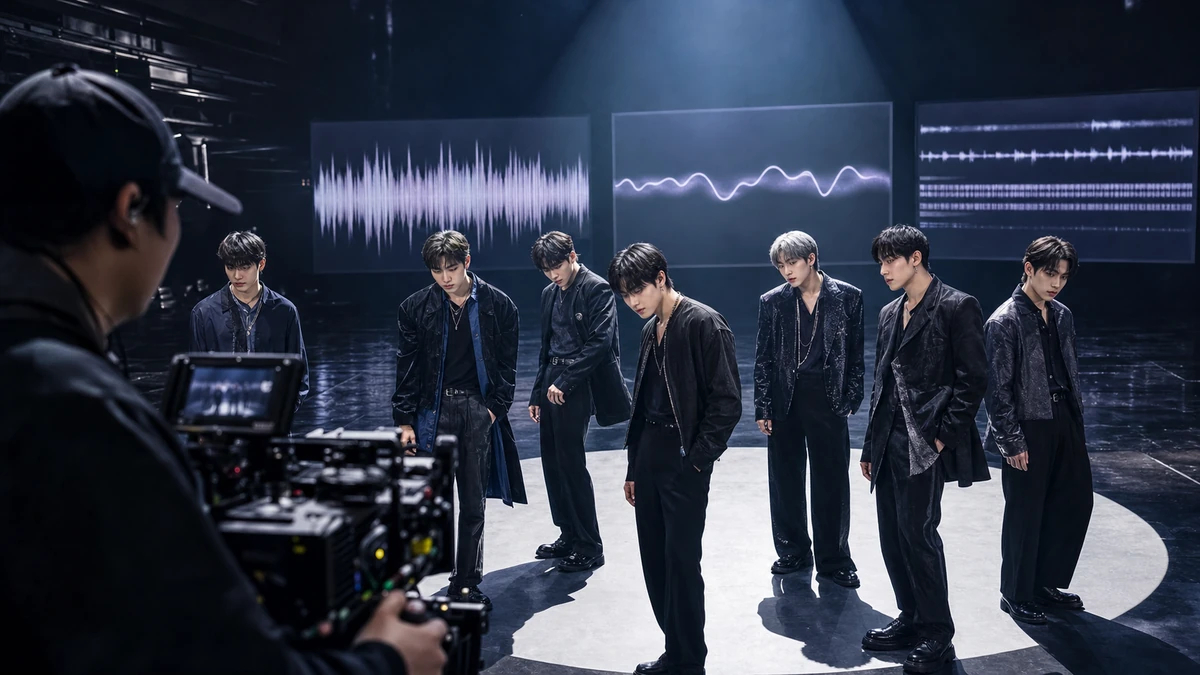
A new BTS release, but not in the usual way
BTS has released a new Korean-language version of “Normal,” a track from its fifth full-length album, “ARIRANG,” adding another layer to a song that was already drawing attention for its unusually subdued mood and its candid look at life after fame. According to South Korean media reports, the group unveiled the Korean version at 1 p.m. Friday in Seoul, along with a fresh set of audio options: an explicit version, a clean version and an instrumental edition. The move comes as the English-language original continues to circulate globally and after its music video premiered first on Spotify, with a broader rollout on YouTube and other platforms scheduled for later.
That release strategy matters because it shows how K-pop’s biggest acts increasingly think beyond the old model of dropping a song all at once in one format. Instead of simply translating a hit into another language, BTS and its label are treating “Normal” almost like a multi-platform project, one that can be experienced differently depending on language, streaming habits and even a listener’s tolerance for stronger wording. For an American audience used to album deluxe editions, alternate mixes and streaming-platform exclusives, the approach may feel familiar in some ways. But in BTS’s case, it also reflects the group’s long-running skill at building an event around a song without making the song itself feel disposable.
At the center of all this is “Normal,” an alternative-pop track that stands apart from the chest-thumping confidence often associated with arena-scale superstardom. Rather than celebrating success in glossy, victory-lap terms, the song dwells on the emotional residue that can remain after the lights go down: fatigue, anxiety, emptiness and the fear that acclaim does not necessarily quiet a restless mind. It is a restrained song, produced with help from Ryan Tedder, the American hitmaker known to many U.S. listeners through OneRepublic and a long list of pop collaborations. That pedigree gives the track an immediate point of entry for Western audiences, but the song’s emotional pull comes less from celebrity credentials than from its intimacy.
For BTS, whose cultural reach now stretches far beyond music into fashion, diplomacy and global fandom, the decision to revisit the same song in Korean underscores something bigger than marketing. It suggests that language can change not just comprehension, but also emotional texture. A phrase that lands one way in English may feel more vulnerable, more direct or more rhythmic in Korean. That is especially relevant for a group that has long moved between Korean and English in its global career, and whose audience is now accustomed to meeting songs across subtitles, fan translations and multilingual releases.
In other words, this is not just a reissue. It is an attempt to widen the emotional architecture of a song already built around vulnerability.
Why the Korean version changes the listening experience
For English-speaking fans, it may be tempting to think of a Korean version simply as a translated edition. But that would miss a key part of what makes this release interesting. In pop music, and especially in K-pop, language is not only about semantic meaning. It shapes phrasing, breath, cadence and the emotional pressure points of a performance. When BTS sings “Normal” in Korean, listeners are not just hearing equivalent lines swapped in for English ones. They are hearing a different rhythmic design, a different vocal contour and a different set of cultural echoes.
That matters because “ARIRANG,” the title of the group’s fifth album, carries its own resonance. “Arirang” is one of Korea’s best-known traditional songs, often treated less as a single fixed composition than as a cultural symbol of longing, separation, endurance and shared memory. Americans might think of it loosely as occupying a space somewhere between a folk standard and a national emotional touchstone, though the comparison is imperfect. The album’s title alone signals a deliberate engagement with Korean identity, even within a globally oriented pop project. So when a song like “Normal,” first introduced in English, returns in Korean, it can feel less like an afterthought and more like a homecoming within the album’s larger frame.
The Korean version also gives fans a chance to focus on the members’ delivery in a different way. BTS has built its reputation partly on the interplay between rap, melody and performance precision, and “Normal” leans into a softer singing-rap style that feels more like a conversation than a proclamation. That approach can get overshadowed when listeners are concentrating on the broad meaning of English lyrics. In Korean, especially for fans familiar with the language or attentive to its sound, the subtleties of pronunciation, pauses and sentence rhythm become more prominent. The emotional effect is closer to overhearing a confession than witnessing a spectacle.
There is also a live-performance context here. BTS first presented the Korean version during its “ARIRANG” world tour stop in Busan in June, making it, at that time, something fans could only experience in the concert setting. Releasing it now as an official track turns what was once a fleeting, location-bound moment into a permanent part of the song’s life. For pop acts with deeply engaged fandoms, that kind of move can be powerful: it rewards concertgoers who heard it first, while also allowing the broader audience to revisit and reinterpret the performance in a more personal, repeatable format.
American music fans have seen versions of this before, whether it is a surprise live arrangement later getting a studio release or a festival performance reshaping how a song is heard. But BTS’s handling of “Normal” feels especially deliberate because it ties together the live debut, the official Korean-language release and the staggered video strategy into one continuous narrative.
Three audio versions, three ways into the same song
One of the more revealing parts of the release is the decision to issue the Korean version in explicit, clean and instrumental formats at the same time. On the surface, that may sound like a technical packaging detail. In practice, it signals an increasingly nuanced understanding of how global audiences consume music.
The explicit and clean split is familiar to U.S. listeners, particularly in hip-hop and pop, where radio play, family listening and streaming curation often depend on having both options available. By offering both from the start, BTS and BigHit Music avoid forcing fans into a one-size-fits-all experience. Some listeners want the song exactly as performed, including any sharper phrasing. Others may want a version easier to play in mixed company, at school events or in public-facing spaces. The existence of both does not change the song’s core message, but it does acknowledge that context shapes reception.
The instrumental version may be even more telling. Stripping away the vocals invites attention to the song’s architecture: the pacing, the ambient space, the way the arrangement supports a mood of weariness without tipping into melodrama. Because “Normal” is not built around a giant chorus or a bombastic beat drop, its production does subtle emotional work. The instrumental allows that to come forward on its own. For fans who enjoy dissecting production choices — and BTS has no shortage of those fans — it offers a way to hear how the emptiness in the lyrics is mirrored by restraint in the music.
In the American market, instrumentals sometimes function as collector’s extras, karaoke fodder or niche fan-service items. In K-pop, they can carry similar appeal, but they also speak to a culture of close listening, performance study and remix-friendly engagement. Fans are not just passive consumers of a song; they often analyze line distribution, harmonies, production layers and lyrical shifts across versions. Releasing all three at once turns “Normal” into a sort of listening suite, where each edition highlights a different feature of the same emotional object.
That structure fits the song’s themes. “Normal” is fundamentally about the gap between public image and private feeling. Offering multiple versions does not solve that tension, but it does mirror it: one version foregrounds raw expression, one moderates it for wider circulation and one removes the voice altogether, leaving only the sonic landscape that held those feelings in the first place.
A music video that turns away from glamour
If the audio invites close listening, the music video pushes the song’s message into clear visual terms. Rather than emphasizing BTS as untouchable global stars, the video reportedly centers on exhaustion, disarray and physical vulnerability. Members are shown singing under streams of water, lying down with bruised or injured-looking faces and inhabiting spaces that feel stripped of polish. The imagery is not presented as documentary reality; it is stylized performance. But it is performance aimed at depicting an emotional truth rather than projecting control.
That distinction matters. In celebrity culture, audiences are often trained to read visual distress either as spectacle or as confession. “Normal” appears to do something subtler. It uses cinematic signs of damage and fatigue to translate the song’s inner life, not to make literal claims about the members’ offstage condition. In that sense, the video belongs to a long tradition of pop visual storytelling in which external images stand in for private states of mind. American viewers might think of artists who have used water, bruising, empty rooms or post-performance collapse to symbolize burnout and alienation. The exact references differ, but the emotional grammar is recognizable.
What makes the video compelling in the BTS context is the contrast with the group’s established visual identity. BTS has delivered some of the most polished large-scale performance imagery in global pop, from stadium choreography to impeccably designed concept films. Choosing instead to spotlight messiness and depletion turns the title “Normal” into an argument. It suggests that ordinary human fragility still exists beneath extraordinary fame — that being world-famous does not exempt a person from dread, fatigue or the need to be seen without armor.
That idea is likely to resonate far beyond K-pop fandom. The past several years have seen a broader shift in pop culture, especially among younger audiences, toward more open conversations about mental health, burnout and the cost of constant performance — whether on stage, online or in everyday professional life. In the United States, where celebrity vulnerability can sometimes be turned into a branding strategy of its own, there is always a risk of cynicism. But “Normal” seems to work because its tone is quiet. It does not shout its sensitivity. It lets the discomfort sit there.
There is a democratic impulse in that. The video’s imagery does not say, “Look how uniquely tormented stardom is.” It says, more simply, that fear and exhaustion are common human experiences. For a band whose fan base spans teenagers, parents, college students, office workers and military veterans, that universality is part of the appeal.
Spotify first, YouTube later: a release strategy built for the streaming era
The rollout of the “Normal” music video also says something about how major acts now navigate the fragmented digital ecosystem. Instead of premiering the video everywhere at once, BTS first released the English-language original’s music video on Spotify, with YouTube and other platforms scheduled to follow later. For fans, that creates a sequence rather than a single moment: first the Korean audio editions and Spotify video, then the wider visual release.
That approach reflects a streaming landscape in which platforms are no longer just distribution channels; they are environments that shape how a work is encountered. Seeing the video first on Spotify means experiencing it in a space primarily associated with listening. The visual becomes an extension of the audio session rather than a separate event. When it later arrives on YouTube, it enters a different culture — one built around replay, reaction videos, comments, fan edits and algorithmic discovery.
To American readers, the logic may resemble how film studios stagger teasers, trailers and exclusives across broadcast, social media and streaming partners. The goal is not merely to maximize exposure all at once, but to keep attention moving over several days. In fandom-driven markets, especially, that stagger can create momentum by giving audiences multiple checkpoints to anticipate, discuss and share.
There is also a practical side. Spotify-first video releases tie a song more directly to the act of streaming it, potentially encouraging longer engagement within the platform. A later YouTube release then broadens access to more casual viewers or to fans in habits built around video-first consumption. The result is a release path that mirrors how music actually lives in 2020s pop culture: not in a single drop, but in a chain of overlapping experiences.
What cannot yet be said, based on the available information, is exactly how effective that strategy has been in measurable terms. But even without hard numbers, the intention is clear. BTS is inviting fans to approach “Normal” not as a one-click product, but as a work that unfolds in stages.
Chart performance gives the song a wider frame
The English-language original of “Normal” debuted at No. 41 on Billboard’s Hot 100 and remained on the chart for three consecutive weeks, a meaningful sign that the track was attracting sustained interest even before the Korean version and expanded video availability entered the picture. For BTS, chart success in the United States is no longer surprising in itself; the group has spent years proving it can compete in the mainstream American market. What is notable here is the kind of song doing the charting.
“Normal” is not described as a grand statement single built for instant singalong dominance. It is quieter, more interior and emotionally ambiguous. In the context of the Hot 100, which often rewards immediacy and repetition, that makes its run worth noticing. It suggests there is still room, even in a high-speed streaming economy, for songs that ask listeners to sit with discomfort rather than escape it.
Ryan Tedder’s involvement provides one bridge for U.S. listeners who may not follow BTS closely. Tedder has been behind or alongside some of the biggest pop songs of the past two decades, and his participation signals a familiar kind of global-pop craftsmanship. But if the song were relying only on famous names, it would not likely sustain attention. Its appeal seems to come from contrast: a world-conquering act choosing understatement, a charting single that talks about emptiness, a polished production that leaves room for emotional fray.
That contrast may be part of why the Korean version arrives at a useful moment. Chart visibility gives the song broader public recognition; the Korean release deepens its artistic and cultural dimensions. One pulls new audiences in through measurable success, the other invites them to listen more carefully. Together, they create a fuller portrait of what BTS is trying to do with “Normal.”
What 'Normal' says about BTS and the globalization of K-pop
In the bigger picture, this release is another example of how K-pop has matured beyond simplistic assumptions that global success requires flattening local identity. If anything, BTS is showing the opposite. The group can release an English-language song that performs on the Hot 100, then widen its reach by issuing a Korean version that sharpens the emotional nuance rather than diluting it. It can work with an American superstar producer while anchoring the broader album in a title as culturally charged as “ARIRANG.”
That balancing act helps explain why BTS has remained more than a passing crossover phenomenon. The group does not merely export Korean pop in a fixed form, nor does it simply repackage itself for the West. Instead, it moves between cultural registers, asking global fans to come closer rather than always smoothing every edge into immediate familiarity. For American audiences, that can be part of the appeal. It offers not only access to catchy songs, but also an invitation into another cultural rhythm — one where translation is important, but not sufficient.
“Normal,” in that sense, is a revealing title. It points toward the ordinary, but it arrives through an elaborate global apparatus of stadium tours, streaming platforms, multilingual releases and fandom ecosystems. The contradiction is the point. The song argues that normal feelings do not disappear inside extraordinary careers. Anxiety does not vanish when success arrives. And a polished public image does not cancel the quieter fears people carry offstage.
That message may be one reason the song has traveled. It speaks not only to BTS fans, but to a broader moment in popular culture in which ambition and exhaustion often seem to rise together. In the United States, where conversations about burnout now stretch from workplaces to college campuses to the entertainment industry, “Normal” lands in a familiar emotional landscape even if its specific cultural pathways are distinctly Korean and global at once.
For now, the release of the Korean version, the trio of audio editions and the staggered music video rollout do not necessarily point to a larger narrative twist or a confirmed next step beyond what has been announced. But they do show a group still experimenting with how a single song can live across languages, formats and emotional registers. That is an ambitious approach for any pop act. For BTS, it feels almost natural.
And maybe that is the quiet achievement of “Normal.” It takes a feeling many people would rather hide — the hollowness that can follow accomplishment, the tiredness that exists beneath the surface — and gives it enough room to be heard in more than one language. In a pop market built on constant escalation, that kind of restraint can be its own form of power.
Comments
Post a Comment