
A breakthrough moment in Seoul for one of K-pop’s biggest acts
In the world of K-pop, there are arena shows, there are stadium-level statements, and then there are the nights that feel like a public confirmation of where a group now stands in the industry. For aespa, the four-member girl group from SM Entertainment, this past weekend in Seoul was one of those moments.
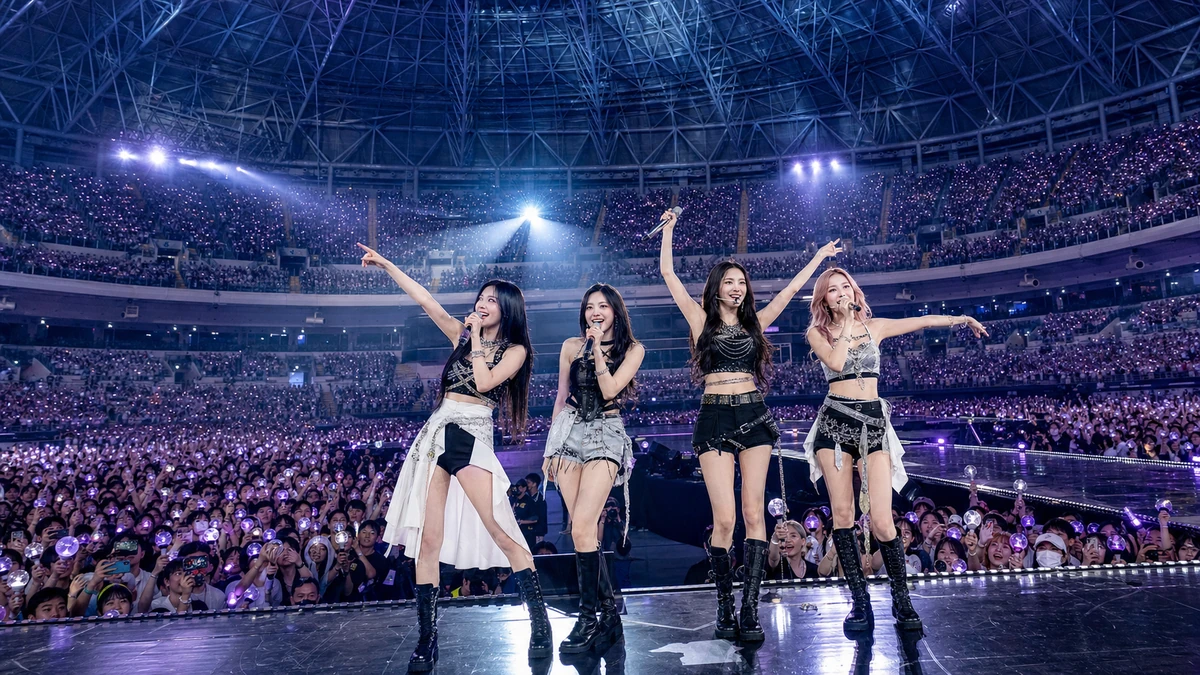
The group drew a combined 35,000 fans over two nights at Gocheok Sky Dome, according to South Korean media reports, capping the Seoul opening of its fourth world tour, titled “Synk: Complexity.” The second concert, held Sunday in the southwestern Seoul district of Guro, reportedly filled the venue up to its fourth-floor seats — no small feat in a country where concert attendance is closely watched as a measure of an artist’s real-world drawing power, not just online popularity.
For American readers unfamiliar with the venue, Gocheok Sky Dome occupies a place in Seoul’s live-entertainment ecosystem somewhat comparable to a major covered baseball stadium that doubles as a premier concert stop. It is home to the KBO’s Kiwoom Heroes, but for K-pop artists, booking a solo show there signals that a group has moved into the upper tier of Korean live performance. It is not merely about capacity. It is about prestige, logistics, visibility and, perhaps most importantly, the ability to command a room large enough to expose any weakness in stagecraft.
That this was aespa’s first solo concert at Gocheok made the weekend especially meaningful. The group is no newcomer. Debuting in 2020 and now entering its seventh year by Korea’s counting conventions around career progression, aespa has already built an international reputation through charting songs, world tours and major festival appearances. But there is still something symbolically powerful about a first dome headline show in the group’s home market. It tells fans, rivals and industry gatekeepers alike that the act has crossed another threshold.
The turnout also came during a stretch of punishing summer heat in Seoul, with temperatures climbing above 86 degrees Fahrenheit, or 30 degrees Celsius. Even so, thousands of fans made their way to the dome and filled the venue across both nights, underscoring a point that has become increasingly important in K-pop: digital fame matters, but what separates a major act from a merely visible one is whether fans will show up in person, spend hours in transit, wait in the heat and turn an online following into a live communal event.
By that standard, aespa’s Seoul kickoff did more than start a new tour. It showed that the group’s fan base is not only large, but organized, committed and ready to follow the act into bigger and more demanding live spaces.
Why Gocheok matters in K-pop
To understand why this weekend resonated so strongly in South Korea, it helps to understand how venue scale functions in K-pop culture. In the United States, fans might talk about a musician “moving up” from clubs to theaters to arenas and, for the biggest stars, to stadiums. South Korea has its own version of that ladder, and Gocheok Sky Dome sits near the top for domestic headline concerts.
It is one of the country’s best-known large indoor venues, which matters in a place where weather can be extreme and where production-heavy pop concerts rely on precise staging, lighting and visual effects. For idol groups — the highly trained pop acts that dominate much of Korea’s mainstream music business — a successful Gocheok run is treated as more than a scheduling achievement. It is proof that a group can sustain excitement at a large scale and can control a cavernous room where upper-deck audiences are far removed from the stage.
That kind of venue tests more than ticket demand. It tests whether performers can project energy to the farthest seats, whether fans remain engaged when they are watching from a distance and whether the production is compelling enough to create intimacy inside a giant bowl-shaped building. A smaller theater can flatter an act. A dome rarely does. If a group lacks experience, charisma or vocal stability, the size of the room can magnify those gaps.
That is part of what made the response to aespa’s concerts notable. Korean reports emphasized not just the attendance figure, but the sense that the group looked comfortable in the space. This is a crucial distinction. In K-pop, an act can technically “arrive” at a larger venue and still look overwhelmed by it. aespa, by contrast, appeared to use the stage like a group that had already learned how to scale up.
There is also a deeper cultural layer here. K-pop fandom is intensely participatory. Fans do not simply attend concerts; they prepare for them, organize around them and often treat them as collective milestones. The light sticks, fan chants, coordinated colors and rituals of support can be difficult for outsiders to grasp at first, but they are central to how these performances work. When a venue like Gocheok fills with an artist’s fandom, it becomes a visible manifestation of community — a physical map of loyalty, time and money invested over years.
For aespa, whose official fandom name is “MY,” the packed venue functioned as more than a crowd count. It was a demonstration that the relationship between artist and fan has matured enough to sustain one of the country’s largest headline rooms.
From digital concept to live force
aespa first drew global attention partly because of its futuristic aesthetic. The group debuted with a concept involving avatars, virtual worlds and a story line that blurred the line between the real and digital selves of its members. That may sound unusual to casual American audiences, but in K-pop, elaborate narrative “world-building” has become a major part of how agencies market artists. Groups often debut not just with songs, but with a whole universe of visuals, symbols and recurring themes that fans can track across albums, videos and performances.
In aespa’s case, those themes have long centered on sleek sci-fi imagery, high-concept production and a hard-edged musical identity that Korean fans sometimes refer to with the slang term “soe-mat,” or “metal taste.” The phrase does not literally mean heavy metal music. Instead, it loosely captures a sharp, industrial, cool-toned intensity — something hard, polished and unmistakably modern. It has become a shorthand for aespa’s signature style: aggressive beats, glossy visuals and a performance attitude that feels both futuristic and confrontational.
But concepts alone do not sustain a live career. What matters over time is whether a group can translate branding into stage command. In Seoul this weekend, that appears to have been the larger story. Reports from the concerts stressed the combination of powerful performance and steady live vocals, suggesting aespa is now operating from a base of experience rather than novelty.
That matters because K-pop’s biggest groups eventually face the same challenge every pop act faces: once the visual hook becomes familiar, audiences begin to judge the fundamentals. Can they sing under pressure? Can they pace a large set? Can they maintain intensity across a full concert, not just a televised three-minute song stage? Can they hold attention between spectacular production cues?
aespa’s recent résumé suggests the group has been preparing for exactly this moment. Before opening the Seoul shows, the quartet had already completed three previous world tours and had just appeared at Lollapalooza Chicago, one of the most visible music festivals in the United States. That matters beyond bragging rights. Festival stages and headlining concerts require different instincts. At a festival, artists often perform for mixed crowds that may not know every song; they have to win over casual listeners quickly. At a solo concert, the act must reward dedicated fans and sustain emotional momentum over a much longer arc.
To move between those environments successfully is a sign of growth. It suggests aespa is no longer simply a K-pop group with overseas interest, but a touring act learning how to operate across different live contexts — Korean dome concerts, international festivals and global tour stops — while keeping its identity intact.
The emotional message: gratitude, safety and shared ownership
One of the most revealing details from the Seoul shows was not the production scale or even the attendance figure. It was what the members chose to emphasize at the end.
Winter, one of the group’s four members, reportedly told the crowd that she had never imagined aespa would perform at Gocheok Sky Dome and fill the seats there. She also promised that the group would keep working hard and continue to show growth. For a seasoned American pop watcher, that may sound like a standard concert speech. In K-pop, though, such remarks carry particular weight because fans pay close attention to how idols frame success: as entitlement, as ambition or as something shared.
Here, aespa’s message appears to have landed squarely in the third category. The members thanked MY repeatedly and expressed happiness that the two-day run had ended without injuries. That emphasis may seem unusual to readers used to concert recaps focused mostly on spectacle or celebrity sightings. But in the Korean pop industry, where performances are physically demanding, heavily choreographed and often involve enormous backstage operations, finishing a major show safely is not a throwaway line. It signals professionalism, relief and care for both performers and audience.
It also reflects a broader ethic in K-pop fandom culture, where the event is often understood as something co-created by artists, staff and fans. The performers deliver the show, but the audience contributes chants, timing, energy and discipline. In a large-scale production, the “success” of the night is not measured only by how many people attended but by whether the event felt unified, emotionally satisfying and safely executed.
That helps explain why the group’s post-show comments mattered. Rather than framing the concert primarily as a commercial victory — 35,000 tickets sold, first dome, bigger scale — aespa reportedly highlighted the fact that everyone had made it through the weekend together. In a year when live music is booming globally but concerns about crowd safety, heat and fan well-being remain serious, that note of gratitude carried extra resonance.
There was another signal of the concert’s significance: fellow K-pop artists were in attendance, including Sana of Twice and Miyeon of (G)I-DLE, according to Korean reports. For American entertainment readers, the equivalent might be musicians from peer groups showing up at a major arena date — a quiet acknowledgment that this was one of the industry events worth seeing in person. In K-pop, where schedules are packed and public appearances are closely watched, such attendance can be read as a sign of respect and interest from within the field itself.
What this says about aespa’s place in the global K-pop race
K-pop has entered a stage where global success is no longer unusual enough to be the whole story. Plenty of groups now tour internationally, chart abroad and cultivate large online audiences outside South Korea. The question for top-tier acts is becoming more specific: can they convert international visibility into a durable touring brand, and can they still make major domestic milestones feel meaningful?
aespa’s Seoul opener suggests the answer may be yes on both fronts. The timing was particularly notable. The group arrived at Gocheok just after appearing at Lollapalooza Chicago, one of the premier summer festival stops in the United States. That sequencing linked two worlds that are often treated separately in K-pop coverage: the global expansion narrative and the home-market validation narrative.
For years, Korean entertainment companies have pursued U.S. exposure as a marker of prestige, whether through festival bookings, television appearances, Billboard placements or English-language promotional campaigns. But domestic stature still matters enormously. A group that can impress overseas but cannot turn that momentum into a major Korean live event risks appearing imbalanced. Conversely, an act that dominates at home but struggles to connect abroad may look locally powerful but globally limited.
aespa’s latest weekend in Seoul argued against either limitation. By moving directly from a major American festival stage to a sold-out-feeling dome launch in Seoul, the group effectively stitched together two parts of the modern K-pop success formula: international adaptability and domestic consolidation.
That combination could matter as the fourth world tour unfolds. World tours in K-pop are no longer just fan-service exercises. They are increasingly central to an act’s identity, revenue model and long-term staying power. Album sales remain vital, but touring proves endurance. It reveals whether a group can maintain excitement city after city, not just comeback after comeback.
For aespa, the Seoul concerts also arrive at an interesting moment in the group’s career arc. The members are no longer rookies benefiting from debut novelty, nor are they legacy veterans relying on nostalgia. They sit in a competitive middle zone where expectations are high, peers are strong and every move is measured against both past achievements and the next leap forward. A successful dome debut helps settle one question — whether the group belongs among K-pop’s biggest live acts — while opening another: how much bigger can it get?
That is one reason Winter’s comments about continued growth matter. In the K-pop system, artists often speak in terms of improvement rather than arrival. It is partly humility, partly branding and partly survival instinct in an industry that changes at high speed. Success is never presented as final. It is always the basis for the next challenge.
Why American audiences should pay attention
For readers in the United States who do not closely follow Korean pop music, it can be tempting to see stories like this as niche entertainment news: another successful K-pop concert, another devoted fan base, another example of a genre that has already gone global. But that reading misses what makes events like aespa’s Gocheok shows worth broader attention.
First, K-pop is now a durable part of the international music economy, not a passing trend. Its biggest acts influence touring models, fan-engagement strategies, merchandising and digital culture across markets. Watching how groups like aespa grow offers insight into where pop performance is heading more generally: toward more immersive visual storytelling, tighter fandom ecosystems and a stronger blend of online mythology and in-person spectacle.
Second, the Seoul concerts illustrate how cultural power now moves in multiple directions. For decades, the American music industry largely imagined itself as the exporter and the rest of the world as the audience. K-pop has helped scramble that hierarchy. Now a group can build a massive base in South Korea, test itself at an American festival like Lollapalooza, then return home and convert that international momentum into a domestic triumph. The exchange is circular, not one-way.
Third, aespa’s weekend is a reminder that live performance remains one of the clearest tests of whether hype is real. Social media can inflate visibility. Streaming can be driven by intense fan organization. But filling a dome in extreme heat over two nights — and doing so at the start of a new tour, not just at the peak of a one-off craze — points to something more durable. It suggests a fandom willing to invest time, money and emotion over the long haul.
There is also a specifically American reason to watch aespa right now. U.S. festival audiences and concertgoers are increasingly comfortable with multilingual pop. The old assumption that a non-English act must “cross over” by abandoning its identity has weakened considerably. Artists can now build meaningful U.S. followings while remaining rooted in their home language and aesthetic. aespa, with its unapologetically stylized sound and strong conceptual branding, fits that moment well. It does not need to become a conventional American pop act to connect with American fans.
That may be the deeper significance of the Seoul kickoff. It was not only a celebration of what aespa has already achieved. It was a demonstration of the infrastructure now supporting Korean pop at a global level: trained performers, highly organized fandoms, venue ambition, festival credibility and a narrative sophisticated enough to travel across cultures without losing its local distinctiveness.
A launch, not a finish line
If there was a unifying message to the weekend, it was that aespa is treating this milestone as a beginning rather than a culmination. That is often how major pop tours are framed, of course, but in this case the sentiment appears to fit the facts. The Seoul concerts were the opening chapter of a new world tour, not a commemorative victory lap. They offered a first look at the standard aespa intends to set for the run ahead.
By all indications, that standard is high: intense choreography, stable live singing, visual ambition and a performance style that can bridge home-market loyalty with international expectations. The group’s recent experience on large stages seems to have translated into a calmer, more assured command of the room — precisely the quality that separates artists who reach bigger venues from those who can actually own them.
The attendance figure matters, and 35,000 fans over two days is a headline number by any measure. But the more revealing takeaway may be the one aespa itself emphasized: the sense that this achievement belonged not only to the group but to the relationship it has built with MY. In K-pop, that relationship is the engine behind nearly everything — the album sales, the tours, the online momentum, the staying power. This weekend, it also filled one of South Korea’s biggest concert venues.
For aespa, the first solo Gocheok Sky Dome concerts now stand as a clear marker of advancement. For the broader K-pop industry, they offer another example of how a group can evolve from concept-driven curiosity into reliable live force. And for global audiences, especially in the United States, they provide a useful snapshot of where Korean pop is in 2025: more international than ever, still deeply rooted in its domestic fan culture, and increasingly capable of turning local milestones into stories with global significance.
As the world tour moves on from Seoul, the specifics will change — different cities, different crowds, different set-list moments. But the image likely to linger is the simplest one: a full dome, a summer heat wave outside, fans packed all the way to the upper levels and a group standing onstage aware that it had reached a new tier without pretending the climb was over.




0 Comments