BIGBANG to Mark 20th Anniversary With New Single ‘BiiiG,’ Testing Whether a K-pop Giant Can Turn Nostalgia Into a New Chapter
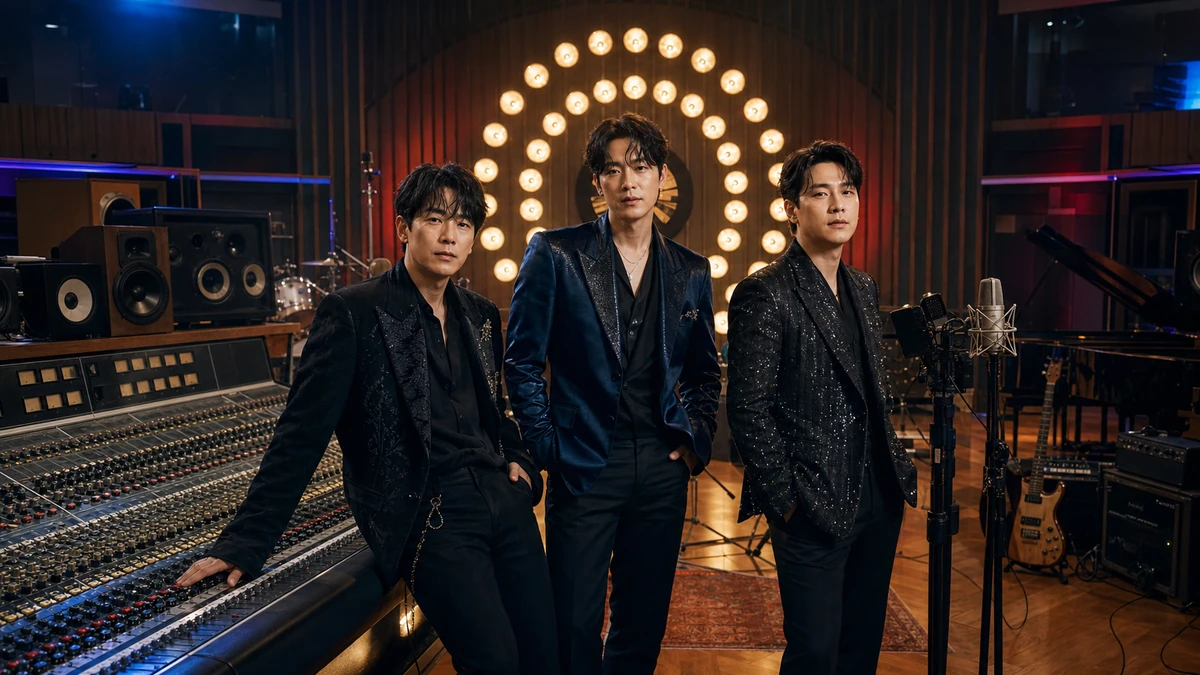
Image to help understand the article
A K-pop institution returns on its own anniversary
BIGBANG, one of the most influential acts in modern Korean pop music, says it will release a new digital single, titled BiiiG, on Aug. 19, the exact date of the group’s 20th anniversary. The announcement, made through YG Entertainment’s official channels and first reported in South Korean media, sets up a milestone moment not just for the band’s longtime fans but for the wider K-pop industry, which has spent the past decade building on foundations that groups like BIGBANG helped lay.
For American readers who may know K-pop primarily through BTS, Blackpink or the broader explosion of Korean pop culture on Netflix, TikTok and U.S. arenas, BIGBANG belongs to an earlier generation of stars — artists who helped turn K-pop from a regional phenomenon into a truly international business. In South Korea, the group is often described as a defining act of “second-generation K-pop,” a term used to describe the late 2000s and early 2010s, when idol groups began expanding aggressively across Asia and building global online fandoms before streaming and social media fully flattened national borders.
The new song is the group’s first release under the BIGBANG name since Still Life, which came out in the spring of 2022. South Korean reports frame the gap as four years and four months, an unusually long pause for a group returning with a commemorative single. But the timing is also part of the point. Rather than simply reissuing old hits, releasing remixes or leaning entirely on retrospective branding, BIGBANG is tying its 20th anniversary to fresh music. In an industry where anniversaries often become elaborate exercises in fan service, the message here is that the group wants to mark its legacy by saying something in the present tense.
YG Entertainment has offered only a limited preview of the track, saying BiiiG is designed to show “the present” of BIGBANG most clearly. That phrasing matters. It suggests the single is being positioned not as a museum piece or a nostalgic callback, but as a statement about what the group sounds like now after two decades of fame, change and long stretches of silence.
Why BIGBANG still matters in the history of K-pop
To understand why this release is getting so much attention, it helps to understand where BIGBANG fits in K-pop history. Debuting in 2006 under YG Entertainment, the group emerged during a period when South Korean pop acts were becoming more polished, more exportable and more ambitious about crossing borders. BIGBANG stood out because it blended idol-group performance with a stronger hip-hop foundation, a heavier emphasis on swagger and a more visible role for members in songwriting and production than many of their peers.
That last point is especially important for American audiences used to measuring pop authenticity by who writes the songs or shapes the sound. K-pop groups are often dismissed in the United States as factory-made, but BIGBANG complicated that stereotype early. The group became known not only for sharply defined member personalities and arena-ready hooks, but also for music that carried a more distinct internal signature. Its catalog helped prove that idol pop could be commercially huge while still presenting itself as artist-driven.
Over the years, BIGBANG built a run of songs that remain staples of the K-pop canon: Lies, Last Farewell, Haru Haru, Fantastic Baby and Bang Bang Bang, among others. Each captured a slightly different version of the group’s identity, whether emotional, theatrical, club-driven or explosively maximalist. If American pop listeners think of a group’s major singles as chapters in an evolving brand — say, the way Madonna, Outkast or even Kanye West in different eras used hit songs to reinvent public expectations — BIGBANG played a similar role within Korean pop.
The group was also central to the visual expansion of K-pop. Long before “fashion ambassador” became common shorthand for idol celebrity, BIGBANG members were closely watched for their styling, stage wear and public image. In Korea, that mattered because K-pop was never only about audio. It was always an ecosystem of music, fashion, performance, video and identity. BIGBANG helped sharpen that model at a time when YouTube and international fan communities were beginning to spread those images far beyond Seoul.
In practical terms, that means BIGBANG’s influence can still be seen in the DNA of today’s global K-pop scene: the genre-blending songs, the emphasis on distinct member personas, the fashion-forward branding and the idea that idols can be both mainstream stars and self-conscious auteurs. Whether younger fans realize it or not, many of the rules that govern contemporary K-pop stardom were either popularized or accelerated by acts like BIGBANG.
What the title ‘BiiiG’ may be signaling
The title of the new single, BiiiG, is a stylized twist on the word “big,” unmistakably echoing the group’s name while stretching the spelling into something more playful and self-aware. That kind of typography is common in K-pop marketing, where lettering, punctuation and visual design often serve as part of the concept itself. But in this case, the title seems to do more than offer a graphic flourish. It plays with scale, identity and legacy — all unavoidable themes for a group celebrating 20 years in an industry notorious for short life cycles.
So far, YG has not disclosed the song’s genre, production details or broader concept. That lack of information is itself fueling anticipation. K-pop fans are used to an ecosystem of teaser photos, track samplers, visual motifs and tightly managed reveal schedules. When details are withheld, speculation becomes part of the event. The company’s statement that the song best captures BIGBANG “as they are now” invites listeners to focus less on whether the track sounds like a classic BIGBANG hit and more on whether it opens another lane in the group’s musical identity.
That distinction is crucial. Anniversary projects often fall into a trap familiar to American music audiences, too: they can become sentimental exercises that reassure fans without risking anything creatively. But BIGBANG’s own discography argues against standing still. The group’s biggest songs were never all variations of the same formula. Some were powered by dramatic melody, others by hip-hop confidence, others by large-scale electronic bombast. And Still Life, the group’s most recent team release, was reflective and seasonally symbolic, using the passage of time itself as a frame.
Seen in that context, BiiiG arrives with a built-in question: Is the group looking backward, or is it trying to define what maturity looks like for a K-pop act that has already passed through peak idol fame and entered legacy status? If the company’s messaging is to be taken at face value, the answer is closer to the latter. Rather than simply repeat the sound that made BIGBANG famous, the single appears intended to show what remains artistically relevant about the group after 20 years.
That is a harder task than it sounds. In pop music, anniversaries can preserve legend, but they can also expose the gap between memory and momentum. A new song forces comparison not only with a group’s past but also with the present landscape — the younger acts, new production trends and altered expectations of what K-pop should sound like in 2026. That is precisely why BiiiG carries more weight than a standard commemorative release.
From comeback single to stadium launch
The timing of the release also gives the song a larger role. Just two days after BiiiG arrives, BIGBANG is set to open its 20th-anniversary world tour, XX : COSMOS, with three concerts from Aug. 21 to 23 at the main stadium of Goyang Sports Complex in Goyang, just northwest of Seoul. In Korean entertainment terms, that sequencing matters. A comeback single is not being left to live online on its own; it is being immediately folded into a major live event, where new material can be reframed by performance, visuals and fan response.
The title of the tour appears carefully chosen. XX plainly evokes the number 20, while COSMOS suggests scale, expansiveness and a larger artistic universe. Taken together, the name reads like a typical K-pop construction — conceptual, a little abstract and built to carry visual symbolism across merchandise, staging and promotional design. For fans, those choices are part of the experience. K-pop world tours are rarely just concert itineraries; they are narrative packages, complete with branding, emotional cues and an implied storyline about where the act stands in its career.
According to the South Korean summary, the tour is expected to span 19 cities across North America, Europe, Oceania and Asia, with 33 shows in total. That global routing underscores another key point for readers outside Korea: BIGBANG’s 20th anniversary is not being treated as a domestic nostalgia event. It is being staged as a multinational moment, one that assumes fans across continents still recognize the group as an active name rather than merely a historical one.
That reflects a broader shift in how K-pop operates. Two decades ago, a Korean group’s overseas ambitions often centered on select Asian markets and occasional showcase appearances elsewhere. Today, a world tour implies integrated global fandom, instant digital consumption and audiences who can turn a Korean release into a transnational event within hours. BIGBANG helped build the earlier model. Now it is returning in a marketplace shaped by the worldwide infrastructure that later K-pop successes normalized.
Whether BiiiG becomes a staple of the set list or functions more as a symbolic opening statement remains to be seen. But from a strategic perspective, the schedule is smart: release the song on the anniversary date, let fans absorb its message, then immediately translate that message into stadium spectacle. In other words, BIGBANG is not simply celebrating that it lasted 20 years. It is trying to show what 20 years of accumulated meaning looks like when turned back into a live, public event.
The challenge of turning legacy into relevance
There is a familiar tension here, and it extends beyond K-pop. Any veteran act attempting a major return faces the same basic problem: how to satisfy an audience’s emotional attachment to the past without becoming trapped by it. American music fans have seen versions of this with reunion tours, comeback albums and anniversary performances by rock bands, boy bands and legacy pop stars. The crowd wants the classics. The artists, if they want to remain artists rather than tribute acts to themselves, need room to say something new.
For BIGBANG, that tension may be even sharper because K-pop moves so quickly. Groups are often built around youth, momentum and intensive release cycles. The system rewards constant visibility. In that environment, a four-year-plus gap between team releases is a long time, and a 20th anniversary is almost an anomaly. Survival alone becomes part of the headline.
That is why the framing around BiiiG matters so much. The song is not being pitched primarily as a look back at landmark hits such as Lies or Bang Bang Bang. Instead, it is being presented as a clear expression of who BIGBANG is now. If successful, that framing allows the group to move from legacy act to active participant in the current moment. If it misses, the release risks being judged mainly as a sentimental add-on to a more powerful past.
Still, there are reasons to think the group’s return will resonate. BIGBANG’s musical history gives it a broader range than many acts built around a single signature sound. The members’ long-standing reputations for helping shape their material also create room for a comeback that feels more authored than ceremonial. And because K-pop has matured into a global genre with its own generational memory, there is now a large audience capable of appreciating not only novelty but lineage. Fans who discovered K-pop through newer acts often end up tracing its influences backward, much as American listeners eventually work their way from current chart stars to the artists who defined earlier eras.
In that sense, BIGBANG’s anniversary arrives at a moment when K-pop’s own history has become part of its appeal. There are now enough generations, enough stylistic shifts and enough global milestones for return narratives to carry real weight. The question is no longer just whether K-pop can conquer new markets. It is whether its foundational artists can age, evolve and still command attention in a system that once seemed built to replace itself every few years.
A milestone for fans — and a measure of K-pop’s maturity
For longtime fans, the emotional draw of this release is easy to understand. Hit songs live in memory, but a new song records the present. That is especially true in fandom cultures shaped by long waits, military service interruptions, solo projects, lineup changes and the stop-and-start rhythms that often define K-pop careers over time. A commemorative single can function as a bridge between the people fans once were and the ones they have become while following an artist across decades.
That may help explain why releasing BiiiG on the group’s exact debut anniversary carries symbolic force. The date turns the song into more than a product drop. It becomes a marker of shared time — a public acknowledgment that the group and its listeners have traveled a long way since 2006. In Korea, where fan culture often places strong value on anniversaries, milestones and collective commemoration, such timing is especially meaningful. For American readers, the closest parallel might be a major band choosing to debut new material on the exact anniversary of its first album, then immediately taking it into a stadium tour built around both memory and reinvention.
The broader significance is industrial as well as emotional. K-pop has spent years proving that it can produce global sensations. What it is proving now is something different: that it can sustain legacy. That matters because durable pop cultures are not built only on breakout stars. They are built on continuity, on the ability of one generation to remain legible to the next. When a group like BIGBANG returns with a new single and an international tour, it offers a test of whether K-pop’s canon is becoming as self-renewing and historically conscious as American pop, rock or hip-hop traditions.
There is also a timing element here in relation to the wider Korean Wave, often called Hallyu, the term used for the global spread of South Korean entertainment and culture. U.S. audiences now encounter Korean content regularly, whether through music festivals, prestige television, award-winning films, beauty brands or international fashion campaigns. BIGBANG’s anniversary unfolds in a world where Korean cultural exports are no longer niche imports. That does not guarantee success for any one release, but it does mean the context for understanding BIGBANG is more familiar to global audiences than it would have been a decade ago.
Ultimately, BiiiG will be judged by the music itself. But before anyone hears a note, the release already says something about K-pop’s evolution. A group that helped define one era of Korean pop is attempting to step back into the present not through a boxed-set retrospective, but through a new song timed to an anniversary and backed by a world tour that spans multiple continents. For fans, that is a celebration. For the industry, it is a stress test. And for everyone watching the ongoing globalization of Korean culture, it is another sign that K-pop’s story is no longer only about the next phenomenon. It is also about what happens when the architects of the wave return to see whether they can still move it.
Comments
Post a Comment