BTS’ ‘Fake Love’ Hits 1.4 Billion YouTube Views, Showing How K-pop’s Back Catalog Has Become a Global Long Game
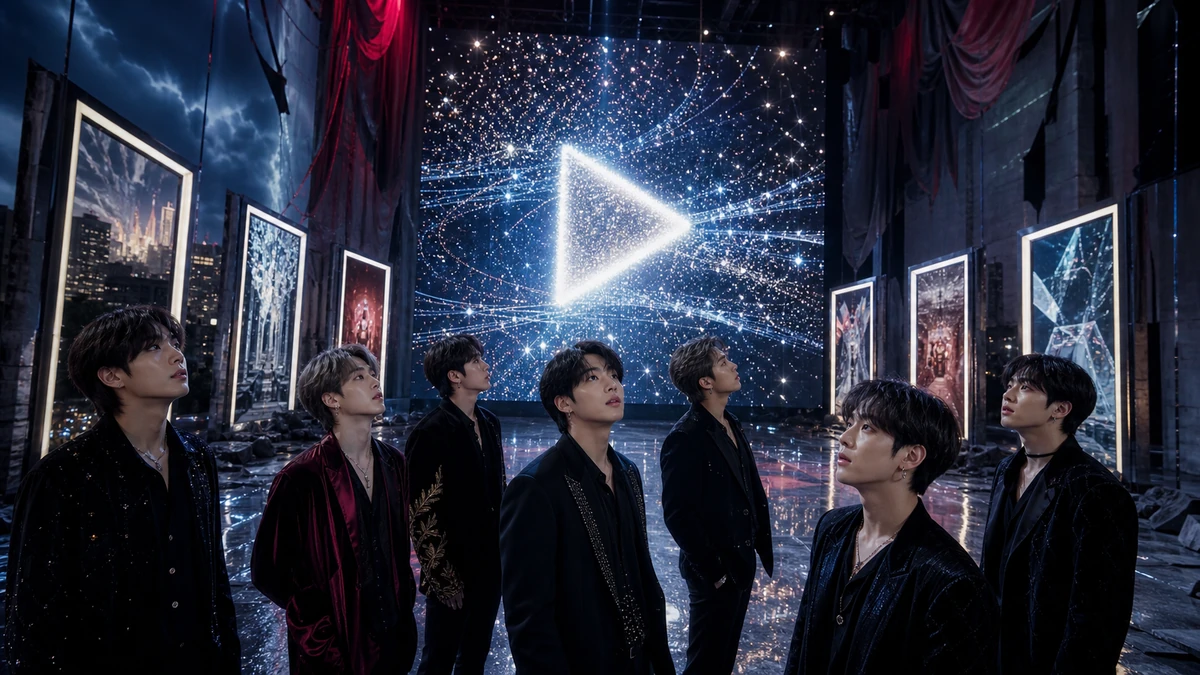
Image to help understand the article
A 2018 BTS hit is still growing in 2026
BTS’ “Fake Love” music video has crossed 1.4 billion views on YouTube, a milestone that says as much about the changing mechanics of global pop as it does about one song’s staying power. According to BigHit Music, the video passed the mark on Aug. 13, becoming the sixth BTS music video to reach 1.4 billion views. On paper, that is a familiar kind of digital-era achievement: a giant number attached to one of the world’s biggest acts. In practice, it points to something more revealing. “Fake Love” is not a new release riding the heat of a comeback cycle. It is an eight-year-old song, and it is still being actively discovered, replayed and recirculated across borders.
That matters because streaming-era popularity is often treated as a sprint. Songs explode on TikTok, debut high, then vanish from the cultural conversation within weeks. By contrast, “Fake Love” shows what a long-tail fandom looks like when it is backed by a deep catalog, a highly organized global fan base and a platform ecosystem that rewards both nostalgia and discovery. In the American music business, catalog is increasingly king; older songs routinely return to the charts after appearing in films, TV series or viral clips. What BTS has built is a version of that dynamic on a global scale, with K-pop’s visual storytelling and fan culture helping keep older work alive far beyond its original release window.
For American audiences who may know BTS mainly through the English-language smash “Dynamite” or headlines about sold-out stadium tours, “Fake Love” is a useful reminder that the group’s global impact was not built on a single crossover moment. It was built over years, across multiple sounds and eras, and with a depth of fan engagement that continues to pull new listeners into older material.
Why “Fake Love” still resonates
Released in May 2018, “Fake Love” arrived at a pivotal moment in BTS’ rise. Musically, it stood apart from brighter or more exuberant pop offerings. The song blends grunge-rock guitar textures with trap rhythms, creating a darker, more emotionally unsettled sound. Its mood is heavy and bruised, centered on the realization that a love once believed to be destiny was, in fact, false. That emotional frame matters. One reason the track has endured is that it does not depend solely on a trend, a dance challenge or a seasonal vibe. It taps into themes that travel easily: heartbreak, disillusionment, confusion and self-reckoning.
That is also where K-pop’s often misunderstood strengths become clear. To outsiders, K-pop is sometimes reduced to polished choreography, glossy production and devoted fandoms. But one reason the genre works internationally is that it communicates through multiple channels at once. Even if a listener does not understand Korean, they can grasp mood through arrangement, performance, staging, editing and facial expression. “Fake Love” is an especially strong example of that. Its visual world is dramatic and emotionally legible, with performance and imagery doing some of the work that subtitles or lyric translations might otherwise carry.
For American readers, it may help to think of the song less as a typical radio single and more as a fully integrated pop statement, somewhere between a music video premiere, a conceptual album chapter and a live-performance showcase. That multi-layered approach has long been part of K-pop’s appeal. Fans do not simply hear a song; they enter an era. They revisit its performances, wardrobe, symbolism and fan discussions years later. A track like “Fake Love” is therefore not frozen in 2018. It continues to function as both a song and a portal.
Its durability also reflects how pop listeners behave now. Younger fans, especially, do not necessarily consume music in chronological order. A fan who discovered BTS in the mid-2020s through solo work, social media clips or newer releases can easily move backward through the group’s catalog. In that sense, “Fake Love” benefits from the same kind of back-catalog rediscovery that has lifted older songs by Fleetwood Mac, Kate Bush and other acts in the U.S. streaming era. The difference is that BTS’ international fan infrastructure makes that rediscovery more continuous and more communal.
More than one hit: what six videos at 1.4 billion tells us
The most telling detail in this milestone may not be the number itself, but the company it keeps. Before “Fake Love,” five other BTS videos had already hit 1.4 billion views: “Dynamite,” “Boy With Luv,” “DNA,” “Mic Drop” and “Idol.” That spread matters because those songs do not all represent the same musical formula, visual style or career stage. They come from different periods and project different versions of BTS. Some are more pop-forward, some more swaggering, some more celebratory, some more emotionally intense.
In industry terms, that suggests breadth rather than dependence on one breakout template. Many global acts have one song that becomes the permanent gateway track, the outlier hit that towers over the rest of the catalog. BTS certainly has signature songs, but the viewing data suggests a deeper pattern: audiences are not consuming one isolated anthem. They are moving across a body of work. For entertainment companies, that distinction is huge. It means the brand is not tied only to novelty or one viral moment; it has repeatable value across multiple releases and moods.
In the U.S., that kind of catalog strength is the dream scenario for labels and platforms alike. It means more than first-week sales or opening-day streams. It means a library that keeps working. That can support everything from documentary releases and concert films to merchandise, licensing and renewed chart attention when anniversaries or reunions arrive. It also changes how a group’s legacy is measured. Instead of being remembered for one era, BTS increasingly looks like a catalog act in the classic sense, even while remaining a contemporary phenomenon.
There is also a cultural point here. K-pop fandom is often stereotyped as focused only on the newest release, the newest teaser, the newest chart target. Those elements are real, and highly visible. But the “Fake Love” milestone underlines another side of fandom culture: archival behavior. Fans revisit older videos, celebrate view-count milestones, create new edits, explain older concepts to newer fans and keep a shared timeline alive. In practical terms, that turns past releases into living content rather than digital leftovers. The archive does not sit still; it circulates.
The chart history still matters
“Fake Love” carries additional weight because of where it landed in BTS’ international ascent. The song appeared on the album “Love Yourself 轉 ‘Tear,’” which became the first K-pop album to reach No. 1 on the Billboard 200. The single itself reached No. 10 on the Billboard Hot 100, while also charting in the United Kingdom’s Official Singles Chart Top 100. Those achievements were major markers in 2018 because they showed that BTS was no longer just a niche import or a social-media sensation with a passionate online fan base. The group was posting top-tier numbers in the core metrics that American and British music industries still use to signal mainstream legitimacy.
Viewed from 2026, the 1.4 billion YouTube milestone connects that breakthrough moment to a second, slower kind of validation. Chart peaks show concentration: how strongly a song lands when it is new. Long-term video views show endurance: how often people keep choosing it after the initial promotional cycle is over. One does not replace the other. Together, they tell a fuller story about cultural staying power.
That distinction is especially important in an era when chart success can be driven by short bursts of fan mobilization, playlist support or momentary virality. The deeper question is always what remains after the release-week attention fades. “Fake Love” now offers a strong answer. It was not only a breakthrough-era hit; it became a durable piece of the BTS canon.
For Americans tracking the globalization of pop, this is also a reminder of how central Billboard remains symbolically, even as listening habits become more platform-fragmented. When Korean entertainment companies cite Billboard 200 and Hot 100 performance, they are not doing so by accident. Those charts still represent the American market, and the American market still functions as a key stamp of international cultural legitimacy. That BTS translated a 2018 chart breakthrough into years of continued digital engagement helps explain why the group’s footprint has outlasted many trend-cycle assumptions about K-pop in the West.
What this means in the United States
For the United States, the “Fake Love” milestone is less about one more record on a fan-made scoreboard and more about what it reveals regarding American consumption habits, media companies and cultural ties with South Korea. First, it confirms that K-pop is no longer operating in the U.S. solely as a novelty import. It has become part of the broader music economy, where old and new releases coexist, where fan communities treat back catalogs as active cultural property and where YouTube remains a crucial discovery engine, especially for younger, visually oriented audiences.
Second, it highlights how deeply BTS helped reshape the American industry’s understanding of non-English-language pop. Before BTS’ rise, major U.S. labels and broadcasters often treated language as a hard barrier. There were exceptions, of course, but crossover logic typically assumed that English was the entry ticket to sustained mainstream visibility. BTS complicated that assumption well before “Dynamite.” “Fake Love,” with its Korean lyrics and dark emotional palette, reached the Hot 100 top 10 in 2018. That alone forced parts of the U.S. industry to reckon with an audience that did not need heavy localization to engage.
Third, the milestone is relevant to American companies because catalog monetization has become one of the most important stories in the entertainment business. Record labels buy old catalogs. Streamers mine nostalgia. Film and TV supervisors search for music that already carries emotional meaning for devoted fan groups. A song like “Fake Love” has value not just because it once charted, but because it continues to live in audience memory and platform behavior. That is attractive in any market, including the U.S., where executives increasingly prize dependable long-term engagement over one-off spikes.
It also speaks to the broader U.S.-South Korea relationship in soft-power terms. Washington’s alliance with Seoul is usually discussed through security, semiconductors, trade and North Korea. But culture has become one of the most visible ways many Americans actually encounter South Korea in everyday life. K-dramas, Korean food, beauty products and K-pop have turned the country into a familiar presence in American consumer culture. BTS has been one of the most important drivers of that visibility. When an older BTS video keeps attracting billions of views, that is not merely entertainment trivia. It reflects the staying power of Korean cultural exports in the American attention economy.
For U.S. fans, there is another layer. American pop culture has long rewarded eras and reinvention, from Madonna to Taylor Swift to Beyoncé. BTS’ catalog-era thinking fits neatly into that tradition, even though it emerged from a different entertainment system. Fans in the U.S. increasingly approach BTS with the same kind of close reading they might apply to a Marvel franchise, a prestige-TV universe or a major pop star’s album cycle. They map symbolism, revisit older chapters and recruit newcomers into a larger narrative. That behavior helps explain why older songs continue to perform well years after release.
K-pop’s archive economy and the future of fandom
One of the clearest takeaways from “Fake Love” reaching 1.4 billion views is that K-pop has matured into what might be called an archive economy. In older music-industry models, catalog was something that accumulated after an artist’s peak. In the platform era, catalog begins working almost immediately. A new fan can enter the ecosystem through a current hit, a reality clip, a fancam, a solo release or a recommendation algorithm, then travel backward through years of content in a matter of hours. Every music video, performance clip and behind-the-scenes feature becomes part of a continuously monetizable and continuously discussable library.
BTS is especially well positioned for this because the group’s discography and visual output span multiple emotional registers. “Fake Love” matters here because it demonstrates that darker, more emotionally complex material can endure alongside brighter crossover hits. In other words, the audience is not rewarding just the most universally accessible or English-friendly songs. It is also returning to work that feels specific, theatrical and emotionally dense. That is a sign of artistic breadth, but it is also a sign that global pop audiences have become more adventurous than the old gatekeepers often assumed.
There is a lesson here for the broader music business, including U.S. labels trying to develop global acts. The value of a fan base is not simply how loudly it can support a new release. It is how effectively it can keep older work in circulation. That involves storytelling, community rituals, shared milestones and a sense that engaging with the archive is part of being a fan. BTS fandom, known as ARMY, has been unusually effective at all of those things. The result is that a 2018 release can continue behaving like current content in 2026.
That does not mean view counts tell the whole story. YouTube views are one metric, and like all metrics, they can flatten as much as they reveal. They do not fully capture emotional impact, demographic reach or how a song travels across offline spaces. But in this case, the number is useful because it aligns with a broader pattern: BTS’ old material keeps finding life among both first-time listeners and longtime fans. The milestone is credible not as an isolated brag, but as part of a larger ecosystem of sustained attention.
What to watch next
The immediate question is which BTS videos may join the same long-run tier next, but the more interesting question is what this says about the group’s post-breakthrough legacy. “Fake Love” crossing 1.4 billion views suggests that BTS’ influence is not fading into a greatest-hits narrative. Instead, their catalog is becoming more layered over time, with different eras serving different entry points for different generations of fans. Some will arrive through “Dynamite.” Others will start with “Boy With Luv,” “DNA” or solo work and then work their way backward. “Fake Love” remains one of the key doors into that universe.
For American observers, the larger trend is clear: K-pop’s global success is no longer just about explosive debuts or fandom spectacle. It is increasingly about durability, archives and multiyear cultural presence. South Korea’s entertainment industry has become adept at building content ecosystems rather than simply launching songs. U.S. companies have noticed, and in many cases are borrowing elements of that model, from fan-platform strategy to visual world-building.
That is why the “Fake Love” milestone matters beyond BTS fans. It offers evidence that global pop consumption now runs on a different clock. Hits do not simply peak and disappear. In the right ecosystem, they can remain active, searchable and emotionally meaningful for years. In that sense, “Fake Love” at 1.4 billion views is not just a number attached to an old music video. It is a marker of how fandom, platforms and Korean pop culture have changed the afterlife of a song — in South Korea, in the United States and across the digital music world.
Comments
Post a Comment