BTS’ V says he is being treated for significant hearing loss in one ear, offering fans a rare look at the physical toll behind K-pop’s biggest stages
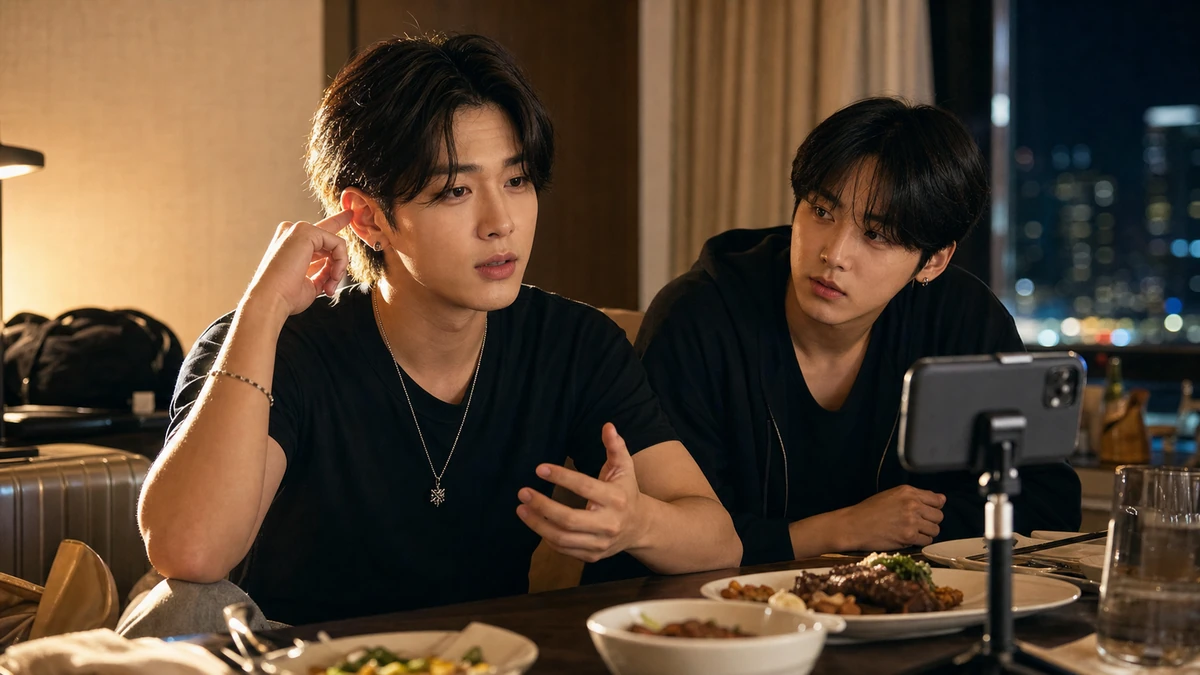
Image to help understand the article
A candid health update from one of the world’s biggest pop stars
Kim Tae-hyung, better known globally as V of BTS, has disclosed that he is undergoing treatment for a significant drop in hearing in his right ear, sharing a deeply personal health update with fans during a livestream that quickly drew concern across the group’s vast international audience.
Speaking on Weverse Live, a fan community platform widely used by K-pop artists and their followers, V said his right ear hears far less than his left. He framed the difference in simple, nonmedical terms that listeners could easily understand: if his left ear hears at “100,” he said, his right hears at about “30.” He added that he has been dealing with the issue for roughly two and a half years, is taking medication consistently and has been regularly visiting the hospital for treatment.
The disclosure did not come through a polished statement from a management company or a formal press conference. Instead, it emerged in the relaxed afterglow of a concert stop in Baltimore, where V and fellow BTS member Jung Kook appeared together and spoke informally with fans after sharing a meal. In an entertainment industry known for tightly controlled messaging, especially around the health of major stars, the moment stood out for its unguarded honesty.
For American audiences who may know BTS as the chart-dominating group that helped bring K-pop firmly into the U.S. mainstream, the revelation offered something more intimate than a headline about tour dates or streaming milestones. It was a reminder that behind the choreography, high notes and camera-ready perfection are performers managing the same kinds of physical strain, anxiety and uncertainty that athletes, Broadway stars and touring musicians often face — only under a level of scrutiny few American celebrities ever experience.
Just as striking as what V said was what he did not say. He did not identify a diagnosis, cite test results or predict when or whether his hearing might fully recover. Based on what has been publicly shared, there is no verified medical label attached to his condition. What is known is narrower, and important to keep narrow: he says he has experienced a substantial difference in hearing between his ears for about two and a half years and is continuing treatment.
That distinction matters. In the age of social media fandom, where concern can easily become speculation, even a straightforward health update can quickly spiral into amateur diagnosis. V’s comments were personal testimony, not a medical bulletin. But for fans who have watched him perform throughout that period without any public indication of an ongoing hearing problem, the news landed with particular force.
Why hearing matters so much for a performer like V
Hearing is central to any musician’s career, but in K-pop the stakes can be especially high. Idol performers like V are expected to sing, dance, keep formation with multiple members, respond to in-ear cues, monitor live sound and maintain emotional connection with audiences in arenas that can hold tens of thousands of screaming fans. The genre’s polished sheen can make those demands look effortless. They are not.
For American readers, a useful comparison might be to imagine a pop star trying to deliver a stadium show while also executing the kind of precision expected of elite backup dancers and the multimedia timing of a live television special. K-pop performances often require all of those skills at once. If a singer is managing impaired hearing in one ear, even routine stage tasks can become more complicated, from pitch monitoring to spatial awareness to balancing sound coming through in-ear monitors.
That is one reason V’s disclosure resonated so strongly. Hearing is not just another health concern for someone in his position; it is tied directly to the core mechanics of how he does his job. Yet his remarks also suggested continuity rather than collapse. He did not say he was unable to perform. He did not say treatment had stopped. On the contrary, he described active, ongoing care — taking medicine and making regular hospital visits — while continuing to work.
There is a tendency in celebrity coverage, in the United States and elsewhere, to flatten health news into one of two narratives: heroic endurance or impending crisis. The truth is often more mundane and more human. Many performers function while managing chronic or unresolved physical issues. They adapt, seek treatment, reduce strain where possible and decide, sometimes day by day, what they can realistically do. V’s comments fit more closely into that reality than into any dramatic arc.
His choice to tell fans now, after not previously discussing it publicly, may also reflect the changing culture around vulnerability in pop stardom. BTS has built a reputation over the years for speaking more openly than many peers about topics ranging from burnout to self-doubt to the pressures of fame. That does not mean every revelation becomes public immediately. But when members do share personal struggles, fans often read it as an extension of the bond BTS has long cultivated with its audience.
In that sense, the hearing update was not only a health disclosure. It was also a communication decision — a choice to let fans see the gap between the seamless image of performance and the uneven reality behind it.
Jung Kook also revealed an injury, underscoring the strain of performance
V was not the only BTS member to speak candidly about his physical condition during the livestream. Jung Kook also described ongoing pain in his shin, saying he had been dealing with significant inflammation and what he characterized as a condition close to a stress fracture. He said that during the Baltimore performance, he wanted to move more energetically but was limited by pain that intensified at points during the show.
He clarified that he had not been definitively diagnosed with a stress fracture, but said there appeared to be substantial inflammation in the shin area and possible minor bone damage. He asked fans to understand why his movement on stage may have looked more restrained than usual. He also expressed determination to manage the condition as well as possible and continue performing.
Taken together, the two disclosures gave fans an unusually direct explanation of something audiences often sense but rarely hear spelled out: when a performer seems less animated than expected, the reason may have far more to do with health management than commitment or effort.
That point is especially relevant in K-pop, where fan culture can be intensely attentive to detail. Viewers notice changes in facial expression, choreography intensity, vocal delivery and even walking pace. That level of observation is part of what makes fandom communities vibrant, but it can also create unrealistic expectations. In many corners of pop culture, including in the United States, audiences are conditioned to read “giving 100%” as visible maximum effort at all times. What V and Jung Kook effectively argued is that responsible performance can sometimes look like restraint.
There is a lesson there that extends well beyond BTS. Sports fans have gradually become more accustomed to the idea of load management, recovery time and playing through carefully monitored limitations. Pop music audiences have been slower to embrace similar language, though the physical demands can be enormous. An artist who scales back movement in the middle of a tour is not necessarily disengaged. He may be doing what medical reality requires in order to protect a longer career.
Jung Kook’s comments also helped frame V’s disclosure as part of a broader conversation about sustainability. These were not confessions of failure. They were explanations of how two elite performers are navigating pain and impairment while trying to keep meeting the expectations attached to one of the most recognizable music brands in the world.
Understanding Weverse, ARMY and the intimacy of K-pop fan culture
To understand why this moment mattered, it helps to understand the platform where it happened and the culture surrounding it. Weverse is a South Korea-based fan platform that combines some of the functions Americans might associate with Instagram Live, Discord, exclusive fan clubs and artist message boards. It is designed to create direct communication between entertainers and their fan communities, often bypassing traditional media filters.
That matters because the tone on Weverse Live is often notably different from a formal interview on NBC or a late-night talk show appearance. Artists may appear in casual clothes, speak loosely, joke with fans, eat meals or share thoughts that feel less scripted. Those moments can create a sense of intimacy that is central to modern K-pop fandom.
BTS fans, known collectively as ARMY, are among the most organized and globally influential fandoms in contemporary music. The acronym originally stood for “Adorable Representative M.C. for Youth,” but in practical terms it has become shorthand for a massive international community that supports the group through album purchases, streaming campaigns, charitable projects and social media advocacy. In the United States, ARMY has helped propel BTS to No. 1 songs, sold-out stadiums and major awards show visibility that once seemed unlikely for a Korean-language act.
That relationship between artist and fandom is more interactive than many Americans may expect. BTS members frequently communicate directly with fans online, and fans often interpret those exchanges as evidence of mutual trust. When V said he had never previously told ARMY about his ear condition, that carried emotional weight not simply because the information was new, but because it suggested he was choosing this moment to let supporters into a part of his private struggle he had long kept to himself.
In American celebrity culture, stars often reveal health issues through magazine exclusives, documentary projects or carefully managed statements released by publicists. In K-pop, those pathways exist too, but the fan-platform ecosystem creates another channel — more immediate, more emotionally resonant and, sometimes, more vulnerable to overreaction. The upside is authenticity. The downside is that snippets can spread globally within minutes, often detached from nuance.
That is why context is so important here. V’s “100 to 30” description was not presented as a clinical measurement. It was an everyday way of helping fans grasp the magnitude of what he feels. The danger comes when those kinds of descriptions are treated as exact medical data, or when concern morphs into rumor. Both V and Jung Kook offered enough information to explain what they are managing. They did not invite the public to fill in the blanks with certainty.
The larger pressure system behind K-pop perfection
The disclosures also reopen a familiar question in South Korean entertainment: what does the pursuit of perfection cost the people expected to deliver it? K-pop is admired worldwide for its precision, ambition and spectacle. But those same qualities are inseparable from long rehearsals, constant travel, high performance standards and a culture that often rewards endurance.
That pressure is not unique to Korea. American pop has its own history of artists performing through exhaustion, pain and emotional breakdown, from grueling world tours to punishing promotional cycles. The difference is partly one of structure. K-pop’s training system, group choreography, synchronized branding and always-on fan engagement can compress many forms of labor into a single career path. Idols are singers, dancers, ambassadors, livestream hosts and public personalities all at once.
When fans watch a BTS concert, they are not simply watching seven men sing hit songs. They are seeing the outcome of a system that asks for exact timing, visual consistency and emotional availability at industrial scale. Even for artists at the top of the industry, there can be pressure to remain composed, grateful and strong in public while privately managing injuries or health setbacks.
That is part of why honest disclosures can matter so much. They puncture the illusion that star-making machinery eliminates bodily limits. V’s hearing problem and Jung Kook’s shin pain are not side notes to the performance. They are part of the reality underneath it. And by speaking about them directly, the two artists shifted attention away from the fantasy of flawlessness and toward the practical importance of treatment, rest and adaptation.
There is also a cultural dimension worth noting for international readers. In South Korea, public discussion of health, especially when it could affect work, can be shaped by concerns about burdening others, disrupting schedules or provoking unnecessary alarm. Entertainment companies are often cautious, and artists themselves may delay sharing personal struggles until they feel they can frame them carefully. V’s admission that he had kept quiet about the issue for years fits that broader pattern.
None of this means fans should romanticize suffering or praise artists for pushing through anything at any cost. If anything, the healthier takeaway is the opposite: maintaining a career sometimes requires setting limits, disclosing conditions honestly and accepting that a “perfect” performance is not worth long-term harm. That may sound obvious, but it cuts against the expectations that have powered much of global pop spectacle for decades.
What fans know, what they do not know, and why that distinction matters
In the immediate aftermath of V’s comments, the instinct among supporters was predictable: worry, encouragement and a flood of messages wishing him a full recovery. That response is understandable. BTS fans are emotionally invested, and hearing that a member has been coping with reduced hearing for years naturally raises concern.
But the most responsible reading of the situation remains a limited one. Publicly confirmed facts are few. V says he has experienced a major perceived hearing imbalance between his left and right ears for about two and a half years. He says he is taking medication and receiving hospital treatment. He has not publicly identified a diagnosis, and there is no verified timeline for recovery. Jung Kook says he is managing significant shin inflammation and possible minor bone damage, though not a confirmed stress fracture. Beyond that, much remains private.
That boundary should matter to media outlets and fans alike. Celebrity health reporting can easily drift into speculation masquerading as concern. A phrase intended to help fans understand a symptom can become a false headline about percentages, prognosis or irreversible damage. The ethical task for journalists is to report what was said, explain why it matters and resist the temptation to overstate what is unknown.
For fans, the equivalent task may be learning to treat access with care. K-pop’s direct communication channels can make audiences feel unusually close to artists, but closeness does not equal entitlement to every medical detail. In fact, one of the clearest forms of support may be accepting the limits of what has been shared and not demanding more.
That is especially true when artists are still actively working. Both V and Jung Kook described management, not withdrawal. They are not disappearing from public view; they are trying to navigate health issues while staying connected to fans and, as much as possible, continuing their responsibilities. The challenge for the public is to meet that honesty with patience rather than pressure.
A revealing moment for BTS and for the global culture around performance
For years, BTS has occupied a rare place in American pop life. The group broke barriers that once seemed fixed, bringing Korean-language songs to the top of the Billboard charts, speaking at the United Nations, selling out stadiums from Los Angeles to New Jersey and building a fan base that cuts across language, age and geography. That success has often been told as a story of scale: record sales, streaming numbers, sold-out dates, military service milestones, crossover acclaim.
But moments like this point to another story, one less glamorous and arguably more important. They reveal the bodily reality behind global entertainment. The superstar on stage is also a worker managing pain. The polished livestream appearance may follow a hospital visit, a course of medication or a performance completed under physical limitation. The image remains powerful, but the humanity underneath it becomes harder to ignore.
In that sense, V’s health update and Jung Kook’s admission about his shin were not interruptions to the BTS narrative. They were part of its evolution. As the members move through adulthood under enormous public attention, their relationship with fans appears to be changing too — less about preserving the illusion of invulnerability, more about acknowledging the costs of sustaining excellence over time.
For American audiences, there is something familiar in that shift. U.S. sports, music and film have all, in recent years, become more open to conversations about mental health, overwork and the dangers of treating famous people as inexhaustible products. K-pop, for all its distinct cultural context, is now grappling with some of the same questions in real time and on a global stage.
The Baltimore livestream did not offer medical closure, and it was never meant to. What it offered instead was perspective. V and Jung Kook gave fans a glimpse of the compromises and care that can exist behind a major performance. They reminded audiences that what looks effortless from the seats or on a phone screen may be held together by discipline, treatment and sheer adaptation.
For now, the clearest response is also the simplest one: concern without speculation, support without pressure and recognition that health is not separate from performance but central to it. If there is a lasting message in what V shared, it may be that the most meaningful way to value an artist is not to demand perfection from him, but to make room for his limits while he works to recover.
Comments
Post a Comment