A New Generation of Cultural Exchange Takes Root in Almaty
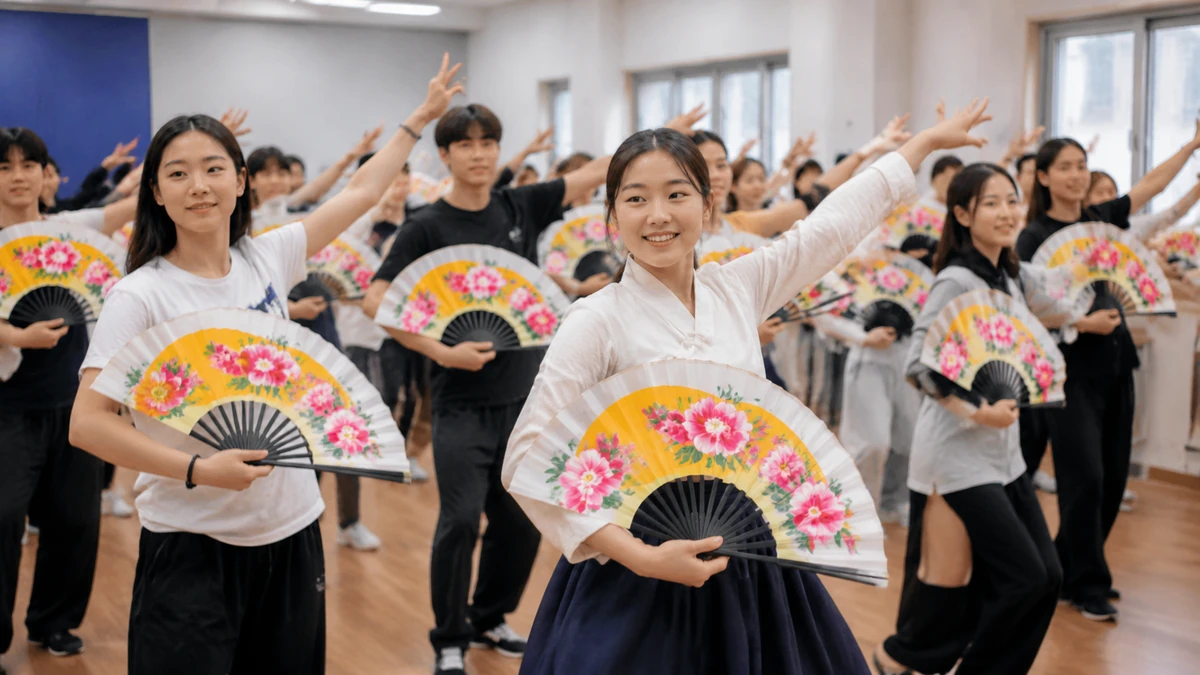
ALMATY, Kazakhstan — A group of South Korean university students recently traveled thousands of miles to connect with young people in Central Asia through language, music and cultural experiences, showing how the global Korean Wave is moving beyond screens and into face-to-face relationships.
The Korea Education Center in Almaty, Kazakhstan, worked with the 38th Overseas Volunteer Group from Pusan National University to organize a Korean language and K-culture exchange program from July 20 to Aug. 3. The program brought together more than 100 local students and young members of Kazakhstan’s ethnic Korean community, known as Koryo-in, for classes and cultural activities.
For many Americans familiar with the popularity of Korean dramas, K-pop and Korean films around the world, the program represents a new stage of the Korean Wave, or “Hallyu.” Instead of simply consuming Korean entertainment online, participants are learning the language, practicing traditional arts and forming personal connections with Koreans themselves.
The initiative highlights the growing role of education and youth exchanges in strengthening cultural ties between South Korea and countries far beyond East Asia.
A Bridge Between South Korea and Central Asia’s Korean Community
Kazakhstan has a unique historical connection with Korea through its Koryo-in population. The term refers to ethnic Koreans whose families were relocated to parts of the former Soviet Union, including Central Asia, during the 20th century. Today, many Koryo-in communities maintain connections with Korean heritage while also being deeply rooted in the societies where they live.
The Almaty program created a meeting point between South Korean university students and local young people interested in Korean language and culture. Rather than presenting Korean culture as a one-way export, organizers focused on conversation and shared experiences.
The Pusan National University volunteer group included 33 members, including student participants, a team leader and administrative staff. Before arriving in Kazakhstan, the volunteers completed more than 100 hours of preparation and training to design educational activities suited to local participants.
The effort reflects a broader trend in international cultural diplomacy: relationships are often built not only through official agreements between governments but also through direct interaction among young people.
Learning Korean Through Music, Martial Arts and Creative Activities
The program combined classroom learning with hands-on cultural experiences. In the mornings, participants attended Korean language classes designed around their different skill levels. In the afternoons, they joined activities including Taekwondo, K-pop dance, art projects and traditional Korean percussion performances known as “modum-buk.”
This approach mirrors how many people around the world have discovered Korean culture in recent years. A fan who first encounters Korea through a K-pop group may later become interested in learning the Korean language, visiting Korea, studying Korean history or exploring Korean food and traditions.
For participants in Almaty, the activities offered a chance to experience Korean culture beyond entertainment. Taekwondo introduced elements of Korean martial arts and discipline, while traditional percussion connected students with Korea’s cultural heritage. K-pop dance provided a familiar entry point for younger audiences already influenced by global Korean music trends.
The program’s structure also reflects a shift in international education. Cultural understanding is increasingly built through participation rather than simply through lectures or presentations. By actively joining activities, students became participants in cultural exchange rather than passive audiences.
Transforming a Classroom Into a Korean Cultural Space
Beyond teaching classes, the volunteer group also helped improve the educational environment at the Korea Education Center in Almaty. Students decorated parts of the facility with murals featuring symbols associated with Korea, including Busan’s Gwangan Bridge, Admiral Yi Sun-sin, Seoul’s Namsan Seoul Tower and the hibiscus flower, Korea’s national flower.
The project turned the physical space into another form of cultural education. Instead of limiting Korean culture to textbooks and lessons, the volunteers created a visual environment where students could encounter Korean history and identity every day.
For international learners, these details can provide important context. A landmark such as Namsan Seoul Tower represents modern Seoul, while Admiral Yi Sun-sin is remembered in Korea as a historic naval commander who defended the country during the 16th century. These cultural references help students understand that Korea’s global image is shaped by both contemporary entertainment and centuries of history.
The combination of language education, creative projects and cultural symbols demonstrates how cultural exchange programs can create deeper connections than short-term promotional events.
K-Culture On Day Shows Local Students Becoming Cultural Ambassadors
The program concluded with an event called “K-Culture On Day,” where participants presented what they had learned. Students performed Taekwondo demonstrations, K-pop dance routines and traditional percussion performances for classmates, parents and local community members.
The final showcase was significant because local participants were not simply watching Korean culture — they were performing and sharing it themselves. The event transformed students from learners into active representatives of the cultural exchange.
Kim Hong-hwan, director of the Korea Education Center in Almaty, oversees the institution’s educational activities and emphasized the value of combining Korean language education with cultural experiences. Organizers said the program helped participants develop a stronger understanding of Korean culture through direct engagement.
For cultural experts, this type of exchange represents a more sustainable model for global influence. Entertainment content may attract initial interest, but long-term cultural relationships often develop through education, personal connections and shared experiences.
The Future of the Korean Wave: From Online Fans to Global Communities
The Almaty program reflects how the Korean Wave is evolving. In previous years, many international audiences encountered Korea primarily through television shows, films and music. Today, interest is increasingly expanding into language learning, academic exchanges and community-based programs.
This transition is especially important because cultural influence is not only measured by popularity. It is also measured by whether people develop meaningful connections with another society.
The participation of both local students and Koryo-in youth in Kazakhstan shows how culture can create connections across generations and backgrounds. Korean language classrooms became spaces where people with different histories could meet through a shared interest.
For American audiences watching the expansion of Korean culture worldwide, the Almaty exchange offers a broader view of the Korean Wave. K-pop and Korean entertainment remain powerful global forces, but programs like this show that the movement is also becoming a form of people-to-people diplomacy.
In Almaty, a group of university students, local youth and educators created a small but meaningful connection between South Korea and Central Asia. Their experience demonstrates that cultural exchange often begins not with major international events, but with conversations, classrooms and young people willing to learn from one another.
Comments
Post a Comment