How One Pitcher and One Swing Stopped the KBO’s Hottest Team — and Why American Baseball Fans Should Pay Attention
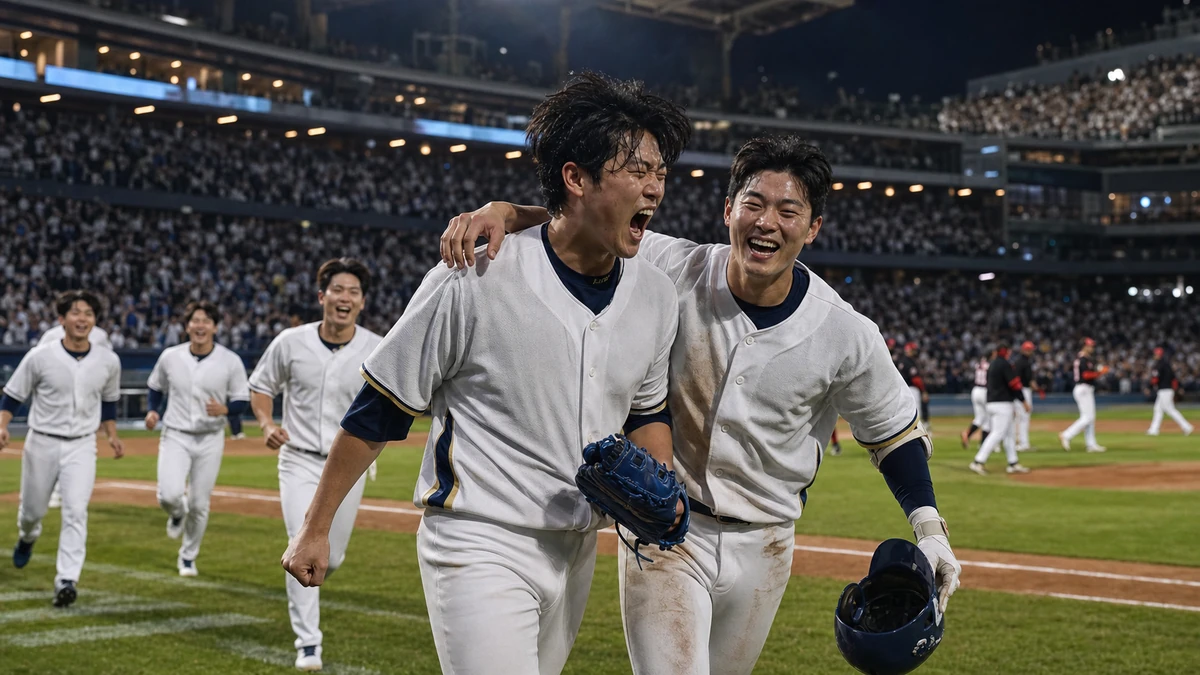
Image to help understand the article
A low-scoring game with outsized meaning
In American baseball, there is a familiar kind of game that seems to tighten with every inning: a frontline starter working out of trouble, a single mistake deciding the scoreboard, and a contender discovering that even the best run can end in one quiet night. South Korea’s KBO League produced exactly that kind of game Tuesday in Changwon, where the NC Dinos beat the first-place KT Wiz 3-0 behind seven scoreless innings from left-hander Koo Chang-mo and a decisive solo home run from Park Si-won.
On paper, the result looked like an upset. KT entered the game in first place at 60-37-2 and had a chance to extend its winning streak to eight games. NC, meanwhile, sat seventh at 44-51-2, well behind the league leader and still trying to build consistency in the second half of the season. But baseball rarely respects the standings for nine innings at a time. For one night at NC Park, the distance between first and seventh mattered less than command, timing and nerve.
Koo gave NC the kind of start that changes the emotional shape of a game. He allowed just two hits across seven innings, struck out five and walked four. The walk total shows this was not a spotless outing in the technical sense; he had traffic on the bases and faced real danger more than once. But the more important number was zero. Against a lineup leading the league table and playing with momentum, Koo kept shutting down scoring chances before they could become turning points.
Park’s contribution came in the third inning, when he drove a solo home run over the wall in right field. The reported distance — 130 meters, or roughly 427 feet — tells part of the story. But the context made it feel even bigger. This was not a 9-7 game where one more home run blended into a long night. This was a pitchers’ duel in which both starters were controlling the pace, and one clean swing changed the strategic picture for everyone on the field.
By the end, NC had done more than win a single game. It snapped a six-game losing streak against KT, halted the first-place club’s pursuit of an eighth straight victory, and reminded anyone watching that the KBO season, like Major League Baseball’s, is often shaped by who can win tight games against superior records. If the standings measure a season, nights like this measure a team’s belief.
What happened in Changwon
The game’s defining tension came from the symmetry of the two starting pitchers. KT’s So Hyeong-jun was excellent in his own right. He struck out eight, allowed four hits and gave up only one run over seven innings. In many games, that line is strong enough to earn a win or at least leave with the score tied and the bullpen taking over. Instead, he found himself on the wrong side of the thinnest possible margin because Koo was even better when it came to the only statistic that truly decided the night: runs allowed.
That dynamic is familiar to American fans who have watched classic duels in which both starters seem to deserve better than the final line. It was less a shootout than a battle of error tolerance. Every baserunner carried unusual weight. Every missed location risked becoming permanent. Park’s third-inning homer became the game’s first and most consequential crack in that balance.
NC later added insurance runs, but the emotional center of the game remained that one-run edge and whether Koo could keep protecting it. He did not cruise through seven stress-free innings. In the fifth, KT loaded the bases with two outs and had its clearest chance to erase the deficit or turn the game around entirely. That moment was the test of the night: not whether Koo could dominate from ahead, but whether he could remain composed when the game threatened to tilt.
He escaped. That matters because scoreless outings can sometimes look more comfortable in the box score than they felt in real time. This one was built on pitch-by-pitch crisis management. Koo did not simply avoid contact; he avoided the one hit that would have unraveled everything.
The pressure resumed after he left the game. In the eighth inning, KT put together another real threat against reliever Kim Jin-ho, getting a double from pinch hitter Ryu Hyun-in and a walk from Choi Won-jun to create a one-out, first-and-third situation. Again, the tying run stood close enough to transform the entire story of the game. Again, NC held the line.
That sequence is important because it kept the victory from becoming a one-man narrative. Koo set the tone, Park supplied the breakthrough, but NC’s bullpen and defense finished the work. In a sport that often turns stars into headlines, this was still a team win in the most practical sense: the starter created the advantage, and everyone else made sure it survived to the final out.
Why this game matters beyond one night
The broader significance of the result is not that NC suddenly becomes a title favorite because it beat the league leader once. That would be too much to claim from a single August game. The more useful takeaway is that NC demonstrated a repeatable formula that can make a mid-table or lower-table team dangerous: strong starting pitching, one timely power swing and clean crisis management with runners on base.
That formula may sound ordinary, but it is exactly why baseball can resist the logic of the standings. A club does not need to be better than an opponent in every department to win a short series or derail a hot streak. It needs one or two things to work at the highest level on a given night. NC got both. Koo worked deep into the game, which limited stress on the bullpen. Park supplied instant offense without requiring a long rally. The rest of the roster turned two moments of KT pressure into stranded runners.
For KT, the loss works as a reminder that first-place teams are not invulnerable just because they have built a strong overall record. The Wiz still held the top spot after the game, and nothing in this result erases what has been a successful season. But missed opportunities in tight games can linger, especially against a pitcher who allows some traffic but never the decisive hit. KT left behind its fifth-inning bases-loaded chance and its eighth-inning first-and-third opportunity. That is the anatomy of a shutout loss: not an offense that never threatened, but an offense that could not land the one swing or line drive that resets the night.
There is also a psychological dimension that applies in any league. Winning streaks create their own aura. Opponents can begin to play not just the team in front of them, but the idea of the team in front of them — the first-place team, the hottest team, the one everyone expects to find a way late. NC punctured that aura. Rather than merely surviving KT’s momentum, the Dinos seized control with a home run and then forced the league leader to keep proving it could answer. KT never did.
That is why the win could matter to NC beyond one mark in the standings. Teams outside the top tier often need evidence as much as they need victories. Evidence that their best players can dictate games against elite competition. Evidence that a narrow lead can hold. Evidence that a strong opponent’s pressure is manageable rather than overwhelming. NC got that evidence on Tuesday.
Understanding the KBO context for American readers
For Americans who do not follow Korean baseball closely, the KBO League occupies a place somewhat comparable to a top overseas soccer league in the way it blends local identity, high-level competition and increasing international visibility. It is South Korea’s premier professional baseball league, and while its style and atmosphere differ from MLB, it is fully central to the country’s sports culture. Baseball in South Korea is not a niche interest. It is one of the nation’s defining spectator sports, with deep regional loyalties, organized cheering sections and a game-day culture that can feel more communal and theatrical than the typical American ballpark experience.
NC, based in Changwon in South Gyeongsang Province, is one of the league’s younger franchises, while KT represents Suwon, a major city near Seoul and home to one of South Korea’s biggest conglomerates. Like many KBO clubs, both teams are tied closely to corporate ownership structures that shape team branding in ways that may feel more explicit than in the United States. The KT Wiz, for example, carry the name of the telecommunications company KT. The NC Dinos are backed by NCSoft, the gaming company known internationally for titles including “Lineage” and “Guild Wars.”
That corporate-link model does not make the fandom any less real; if anything, it sits alongside powerful local loyalty. American readers can think of it as a mix of regional sports identity and big-brand visibility, though not in exactly the same way as naming rights in the United States. The teams are still civic symbols, and a night like this one matters in Changwon as both a baseball result and a point of local pride.
The style of the game also matters. KBO baseball has long been associated in the American imagination with loud crowd choreography, bat flips and a more visibly emotional presentation of momentum. Those elements are real, but they can sometimes obscure how often KBO games hinge on classical baseball fundamentals: command, sequencing, situational hitting and the ability to manage pressure innings. Tuesday’s game was a good example. There was a 130-meter home run, yes, but the larger story was precision. Koo’s outing and NC’s defensive finish would have been recognizable to anyone raised on postseason baseball in the United States.
That matters because South Korean baseball is often best understood not as an exotic variation on the American game, but as a parallel baseball culture with its own rhythms and incentives. The talent pipeline, the fan expectations and the development system are different, but the core drama is deeply familiar. A team with a worse record can still beat a superior club because a starter commands the strike zone, a batter punishes one pitch and the late innings turn into a test of poise.
What this means in the United States
There is a reason American audiences should care about a 3-0 KBO game in August. South Korean baseball sits inside a larger U.S.-Korea sports relationship that has become more visible over the last two decades, especially as fans, scouts, media companies and streaming platforms look for talent and stories across borders. MLB organizations track players in Korea. American fans increasingly recognize Korean stars not only when they arrive in the majors, but while they are still building reputations at home. During the pandemic-shortened sports calendar in 2020, many Americans encountered the KBO for the first time when U.S. broadcasters aired games live, turning Korean baseball into a welcome overnight pastime for viewers hungry for live sports.
That exposure did not make the KBO a mainstream daily obsession in the United States, but it did establish something important: American baseball viewers can follow this league when given context. And context is exactly what a game like this offers. It shows why KBO baseball has value beyond novelty. This was not just colorful cheering or a social media clip of a long home run. It was a high-stakes contest between a first-place team and a challenger playing above its record for one night, with all the tactical tension U.S. fans expect from meaningful baseball.
For American teams and evaluators, games like this also reinforce why Korea remains an important baseball market. Scouts do not simply look for raw tools; they look for how players perform under competitive pressure, how they manage innings, how they respond when one mistake can decide a game. Koo’s outing, with runners on base and limited margin for error, fits the kind of profile that attracts attention anywhere. So does a hitter like Park delivering the night’s only meaningful blow against a strong opposing starter.
For U.S. audiences, there is also a broader comparison to be made with American baseball discourse. In MLB, there is constant debate over whether the modern game has become too centered on home runs, strikeouts and bullpen specialization. The KBO is not immune to those trends, but games like this one highlight a different balance: a starter working deep into the game, offense compressed into one decisive swing and tension sustained by baserunner management rather than constant scoring. For American fans nostalgic for tighter, lower-scoring baseball, this kind of KBO matchup can feel both familiar and refreshingly uncluttered.
The business angle matters, too. South Korean sports content has become much easier to export because the Korean Wave — or “Hallyu,” the global spread of Korean entertainment and culture — has already created an audience willing to try Korean products in music, television, film and food. Sports can travel on some of the same pathways. A U.S. consumer who discovered Korean dramas on Netflix, follows K-pop tours or buys Korean beauty brands is more likely than before to sample a Korean baseball broadcast, highlights package or social media clip. In that sense, the KBO is part of a larger ecosystem of Korean soft power, even if it remains a smaller export than pop music or television drama.
None of that means every standout KBO performance becomes an MLB audition or a U.S. story. But it does mean American media and baseball institutions have more reason than before to pay attention. A result like NC’s win over KT is not merely local. It is part of a trans-Pacific sports conversation in which South Korea supplies talent, competitive standards, fan culture and media products that increasingly intersect with American interests.
A lesson in pressure baseball, from one league to another
If there is a thematic lesson in this game, it is that pressure can compress baseball into its simplest truths. KT had the better record, the longer winning streak and multiple opportunities to change the result. NC had a starter willing to pitch through trouble, a hitter who capitalized on one opening and enough collective calm to preserve a fragile lead. That combination is timeless. It wins in Seoul and Changwon; it wins in New York and Los Angeles.
The box score suggests efficiency, but the texture of the game was anxiety. Koo’s four walks guaranteed that. He was not untouchable in the way a no-hit bid or double-digit strikeout performance can make a pitcher look untouchable. Instead, he was resilient. There is a difference, and it is often the more revealing trait. Resilience is what allows a pitcher to keep the game where he wants it when the opponent keeps pushing back. That is the quality NC leaned on all night.
So Hyeong-jun’s outing deserves similar respect, even in defeat. One run allowed over seven innings, eight strikeouts and only four hits conceded is the kind of work managers celebrate most nights. The problem was that in a game stripped down to the essentials, one pitch to Park was enough to define the result. Baseball can be brutal that way, especially for pitchers who do almost everything right. It is why ace duels remain among the sport’s purest spectacles. Dominance is not always rewarded equally; sometimes it is merely compared, and one side loses by a sliver.
That makes this game a useful case study in how baseball narratives form. It would be easy to summarize the night as “NC upset KT.” But the more accurate reading is that NC executed a highly specific winning blueprint nearly perfectly. The Dinos did not outslug the league leader or expose some broad flaw in KT’s roster. They won the first battle for leverage, converted one swing into a lead and kept every later threat from turning into a game-changing hit.
For a seventh-place team, that kind of win can function like a message to itself. For a first-place team, it functions as a warning against assuming momentum can solve every problem. Streaks are real until a left-hander mixes command with composure and a hitter barrels the right pitch into the night.
What to watch next
The two clubs were scheduled to meet again Wednesday in Changwon, with KT set to start Daniel and NC countering with Taylor. That matters because baseball is always asking whether one game is an isolated event or the beginning of a shift in tone. Tuesday’s result does not erase the standings, but it does create immediate pressure on the follow-up. Can KT respond quickly and prevent one frustrating loss from bleeding into a larger stumble? Can NC carry the confidence of this win into another game against the league leader, turning one sharp performance into the beginning of a more meaningful stretch?
For KT, the next step is less about panic than about situational correction. The club generated chances against both Koo and the NC bullpen. The issue was not an inability to reach base at all; it was the inability to cash in at the biggest moments. Good teams usually trust that process to normalize over time, but contending teams also know missed opportunities can shape a series if they begin to stack up.
For NC, the challenge is different. Upset victories can be emotionally expensive, and the hardest part is often proving the performance was not a one-night spike. The Dinos would like this to serve as evidence that their strongest formula can hold against upper-tier competition. That means more than celebrating Koo and Park. It means repeating the discipline, the pitching depth and the late-inning execution that kept KT scoreless.
For American readers, the larger point is worth holding onto even after this particular series moves on. Korean baseball rewards close attention. It is full of recognizable strategic drama, shaped by a sports culture that is distinctly Korean but increasingly legible to global audiences. And on nights like this one, when a first-place team is stopped cold by seven scoreless innings and one towering home run, the game tells a story that needs very little translation at all.
Comments
Post a Comment