
Image to help understand the article
How a surprising food claim traveled so far
Every few months, the internet rediscovers a nutrition claim so counterintuitive it practically demands a click. This time, it was pork fat. More specifically: the oft-repeated line that the BBC once ranked pork fat as the world’s eighth-most nutritious food.
At first glance, it sounds like the kind of contrarian health revelation tailor-made for social media. Lard, really? Ahead of foods Americans tend to associate with wellness — seeds, leafy greens, maybe even berries? The claim has circulated widely in Korea and elsewhere, often stripped of context and repackaged as proof that conventional dietary wisdom got it all wrong.
But the real story is less sensational and more useful. Yes, a BBC Future article published in 2018 did include pork fat at No. 8 on a list of 100 nutritious foods. But no, that does not mean nutrition scientists declared lard a superfood, or that home cooks should start spooning it into meals in the name of longevity.
What happened instead is a familiar modern-media problem: a technical scientific metric was flattened into an easy headline, and the headline took on a life of its own. In translation and reposting, “appears frequently in nutritionally efficient food combinations” became “one of the healthiest foods in the world.” Those are not the same thing.
For American readers, it is worth slowing down here, because this is about more than one oddball ranking. It is also about the way health language travels across borders, how marketing terms like “superfood” shape consumer behavior, and why nutrition stories often become simplified far beyond what the underlying research actually says.
In South Korea, where food trends move quickly and health-conscious consumers are highly responsive to rankings and expert lists, the phrase “superfood” has had a particularly strong afterlife. But the basic pattern is familiar in the United States too. Think of the boom-and-bust cycles around kale, coconut oil, açai, bone broth and celery juice. A study appears, a list goes viral, and a product suddenly acquires near-mythic status.
The pork-fat claim belongs to that same genre. And like many viral food narratives, it is not exactly false. It is just deeply misleading without the scientific and cultural context around it.
The first thing to understand: “superfood” is not a scientific category
Before getting into the BBC list or the pork-fat ranking, it helps to clear up the biggest misconception of all. “Superfood” sounds authoritative, almost medical, but in practice it is mostly a marketing term.
That is not a fringe view. Public health experts have said so for years. Harvard T.H. Chan School of Public Health’s nutrition resource, The Nutrition Source, has noted that the term is used more effectively to sell products than to deliver sound dietary guidance. In plain English: “superfood” is better for advertising than for science.
That distinction matters, especially because consumers often hear “superfood” and infer something much stronger: that a single ingredient has exceptional, proven, almost therapeutic health powers. In reality, nutrition researchers generally do not evaluate foods that way. They look at overall dietary patterns, substitution effects, portion sizes, food preparation methods, and long-term outcomes — not just whether one item has an impressive nutrient profile on paper.
Regulators in some places have also grown wary of the term. In the European Union, products generally cannot be marketed as “superfoods” without an authorized health claim to support the label. South Korea has taken a skeptical line as well. Korean authorities have treated the term as potentially misleading in advertising, reflecting concern that vague health language can confuse consumers and exaggerate scientific evidence.
That may surprise American readers, who are used to supermarket shelves lined with foods pitched as “immune-boosting,” “clean,” “natural” or “heart healthy,” often with only loose scientific grounding. In the United States, food marketing can sound quasi-medical without necessarily making a precise or regulated claim that ordinary shoppers can easily parse.
So when publications like Time or the BBC publish lists of notable foods, those lists are best read as curated discussions of nutrient-dense ingredients — not as a prescription, not as a scorecard of moral eating, and definitely not as evidence that one food can compensate for an otherwise poor diet.
That framing is especially important because food ranking stories tend to encourage exactly the wrong behavior: chasing miracle ingredients instead of building balanced habits. For most people, the boring advice remains the most evidence-based advice — eat a variety of fruits, vegetables, legumes, whole grains, nuts, seafood and minimally processed foods, while limiting excess sodium, added sugar and saturated fat.
There is nothing clickable about that. But it is still what mainstream nutrition science broadly supports.
What Time and the BBC were actually doing
Part of the confusion comes from the fact that major media outlets have published food lists that sound similar but are built in very different ways.
Time magazine’s “50 Healthiest Foods of All Time,” a feature that circulated widely in the mid-2010s, was essentially an editorial package. It drew on expert input, including commentary from a registered dietitian, and paired foods with nutritional explanations and recipes. It was useful as service journalism, but it was not a peer-reviewed, quantitative ranking. There were no scientific scores attached, and no claim that the foods had been mathematically ordered from best to worst.
That is worth stressing because many later summaries blurred the difference. Once a list enters internet culture, it is often described as if it were a hard-science ranking rather than a magazine feature. Tomatoes, salmon, onions and oranges become “scientifically selected elite foods,” when in fact they were included because they are broadly nutritious and familiar to readers.
The BBC Future list that sparked the pork-fat debate was different. Published in 2018, it presented “The 100 most nutritious foods” and assigned numerical scores. Near the top were almonds, cherimoya, ocean perch, flatfish, chia seeds, pumpkin seeds and Swiss chard. Pork fat appeared at No. 8, with a score of 73.
On the surface, that looks more scientific — and in a sense, it was. The BBC piece drew from a published study in the journal PLOS ONE, co-authored by researchers including Seunghyeon Kim, and explored a concept called “nutritional fitness.” But here is where many retellings went off the rails: the score did not measure “healthiness” in the everyday sense most readers would assume.
Instead, the researchers were asking a narrower and more technical question. Among raw foods, which ones most often appear in minimal combinations capable of meeting a specific person’s daily nutrient requirements? In the study’s model, researchers looked for sets of fewer than six foods, with a total weight under 4 kilograms, that could satisfy the daily nutritional needs of an active 20-year-old man. They then counted how often particular foods showed up across those qualifying combinations.
That is a very different exercise from asking, “What should people eat more of?” or “Which food best promotes long-term health?”
A useful analogy is a fantasy sports draft, or maybe a puzzle. A player might be valuable because he fits many lineup combinations, fills a niche, and complements other players well. That does not necessarily make him the best athlete in the league. Likewise, a food can rank highly because it helps complete nutrient requirements efficiently when paired with other foods. That does not make it, on its own, one of the world’s healthiest things to eat.
In fact, the study’s own authors cautioned against simplistic comparisons across categories. They also noted limitations, including the use of raw-food data. Those caveats are crucial when readers try to leap from a computational model to dinner-table advice.
What the BBC published was not fabricated. But what many people thought it meant was wrong.
Why pork fat scored well — and why that still does not make lard a health food
So why did pork fat rank so high at all?
In the study’s framework, fat can be nutritionally useful because it supplies energy efficiently and contributes specific fatty acids. If a modeling system is trying to build compact combinations of foods that collectively hit required nutrient targets, a fat source may appear repeatedly because it helps fill one part of the nutritional puzzle with relative efficiency.
That is likely the key to pork fat’s strong showing. It does not mean researchers were endorsing tubs of rendered lard as a wellness staple. It means pork fat, as a raw food category in a constrained mathematical model, often helped round out combinations that met daily requirements.
This is where translation and food culture matter. In American English, many readers hear “pork fat” and think of shelf-stable lard used for pie crusts, frying or old-fashioned Southern cooking. In Korean discussions, the term can sometimes travel more loosely, picking up associations with rendered cooking fat, pork trimmings or traditional ingredients. But nutritionally, those are not identical things.
That distinction becomes especially important when people begin making specific claims such as “lard is rich in B vitamins.” That statement is, at best, incomplete.
According to U.S. Department of Agriculture data, refined lard — the product many Americans would recognize as cooking lard — contains essentially no meaningful thiamin or niacin, two B vitamins sometimes cited in viral posts about pork fat. Raw pork backfat, by contrast, may contain small amounts because it still includes some protein and other components removed during refinement. Once fat is rendered and purified, many trace nutrients largely disappear along with moisture and protein.
In other words, the viral talking point often merges two different nutritional profiles: raw pork fatty tissue and refined lard. That is a major reason the claim sounds more impressive than it really is.
Even when trace nutrients are present, quantity matters. A food can technically contain a vitamin without being a practical source of that vitamin in ordinary eating patterns. If a modest nutrient amount is measured per 100 grams of pork fat, readers should remember that 100 grams of pure fat is an enormous serving, carrying roughly 900 calories. That is not how most dietitians would recommend getting micronutrients.
To be fair, lard is not nutritionally identical to every other animal fat. Its fatty acid profile includes a substantial share of monounsaturated fat — the same broad category associated with olive oil and avocados, though obviously in a very different food context. Pork fat typically has a higher monounsaturated proportion than beef tallow, for example. It also contains some vitamin D.
But those points should not be overstated. Having some favorable characteristics compared with other animal fats is not the same as being broadly cardioprotective or deserving “superfood” status. Nutrition is comparative, and the relevant comparison in modern public health is often not “Is lard worse than beef fat?” but “Is lard better than plant oils for everyday use?” On that question, the best available guidance still leans in a more cautious direction.
What mainstream health guidance still says about saturated fat
For all the churn of diet debates, public health advice on saturated fat has not dramatically reversed.
The World Health Organization recommends limiting saturated fat intake to less than 10 percent of total energy intake. The American Heart Association has urged even lower levels — around 6 percent of calories for people who need to reduce cholesterol, which works out to about 13 grams a day on a 2,000-calorie diet. South Korea’s dietary guidance is in a similar range, generally advising adults to keep saturated fat under 7 percent of energy intake.
That matters because lard, however one interprets the BBC ranking, is still a concentrated source of fat and includes a meaningful amount of saturated fat. One tablespoon, roughly 13 grams, contains about 5 grams of saturated fat. For someone trying to stay within commonly recommended daily limits, that is not trivial.
Put differently: if you use lard occasionally for flavor or texture, that is one thing. If you start treating it like a green juice or a handful of almonds because you heard it placed eighth on a BBC list, you are badly misunderstanding the evidence.
To be sure, saturated fat is one of those nutrition topics where debate never fully disappears. Some studies and meta-analyses over the past decade have questioned whether the case against saturated fat is always as straightforward as earlier public messaging suggested. Researchers have argued over the role of food context, what nutrient replaces saturated fat in the diet, and whether all saturated-fat-containing foods should be treated equally.
Americans may remember similar reversals or apparent reversals on eggs, coffee and dietary cholesterol — cases that helped fuel public suspicion that nutrition advice changes every year. In reality, the science usually gets more nuanced, not flipped upside down. The same is true here.
Large health organizations still do not endorse lard as a health food. The broad consensus remains that replacing a portion of saturated fat with unsaturated fats, especially from plant oils, is generally associated with better cardiovascular outcomes. Recent large cohort research in the United States has continued to support the idea that swapping animal fats such as butter for plant oils may be linked to lower mortality risk.
There is not, at least at this point, a comparable body of evidence suggesting that increasing lard consumption is a smart public health move.
That is the essential distinction often lost in online food debates: a quirky ranking result is not the same thing as a dietary recommendation.
If you want a more practical ranking, look to leafy greens
If the goal is not internet novelty but everyday usefulness, a far less glamorous list may tell consumers more.
One widely cited study published in the Centers for Disease Control and Prevention journal Preventing Chronic Disease in 2014 evaluated so-called powerhouse fruits and vegetables by measuring how much of 17 nutrients they delivered per 100 calories. In that ranking, watercress came out on top, followed by Chinese cabbage, chard, beet greens and spinach.
That result may not have the meme appeal of “pork fat is top 10,” but it makes intuitive nutritional sense. Dark leafy greens and cruciferous vegetables tend to offer high concentrations of vitamins, minerals and beneficial plant compounds for relatively few calories. They are the opposite of nutrition clickbait: familiar, unsexy, and remarkably consistent across dietary guidance.
For Korean readers, some of those vegetables are staples. For American readers, they should be familiar enough too, even if under slightly different names. Chinese cabbage is essentially napa cabbage, common in kimchi but also easy to find in U.S. supermarkets and Asian grocery stores. Chard and spinach are standard produce-aisle items. Watercress is less universally used in American home kitchens, but it appears in salads, soups and sandwiches and has long had a reputation as a nutrient-dense green.
The cross-cultural takeaway is simple. One reason Korean food can align well with contemporary nutrition advice is that many traditional meals incorporate a wide range of vegetable side dishes, fermented foods, seafood and soups, often served in multiple small portions rather than centered around a single oversized entree. That does not mean every Korean dish is automatically healthy — plenty are salty, sugary or heavy in refined carbs — but the format itself can encourage dietary variety.
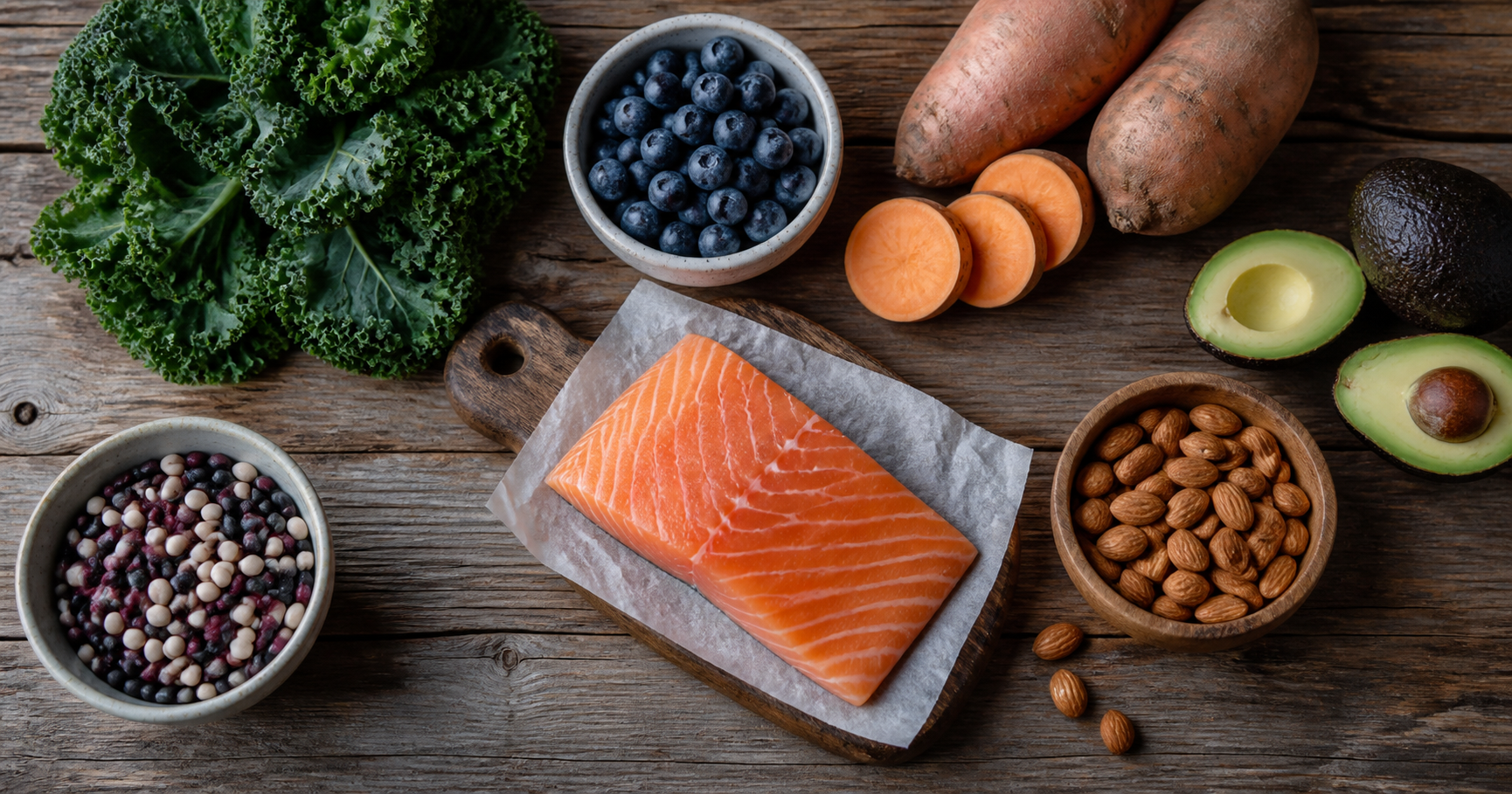
Americans looking for practical lessons from these rankings would probably do better borrowing that variety principle than chasing individual miracle foods. A dinner that includes salmon, greens, beans, whole grains and fruit is less exciting as a headline, but far more consistent with what nutrition science has supported for decades.
And that is another reason the “superfood” label can be so distracting. It encourages consumers to ask which one ingredient deserves a halo, instead of asking what kinds of overall eating patterns repeatedly show up in good health outcomes.
What consumers should take away from the pork-fat debate
For ordinary readers trying to navigate health claims, the lesson here is not that experts cannot be trusted or that media outlets are deliberately misleading people. It is that nutrition stories need careful reading, especially when they involve rankings, percentages or surprising results that seem to overturn common sense.
If a headline says a certain food is among the “best” in the world, the first question should be: best by what measure? Is the ranking based on calories, micronutrients, long-term disease outcomes, satiety, cost, environmental impact, or performance in a mathematical model? Those are different questions, and they produce different winners.
The second question is what version of the food is being discussed. Raw pork fat is not the same as rendered lard. Whole oats are not the same as sugary instant oatmeal packets. Yogurt can mean plain Greek yogurt or a dessert-like cup with candy mix-ins. These distinctions sound fussy, but they are often where viral claims fall apart.
The third question is what the food is replacing. This is one of the oldest and most important principles in nutrition research. Swapping one ingredient for another matters more than assigning individual foods a moral grade. Replacing some butter or animal fat with plant oils rich in unsaturated fats is different from adding extra fat on top of an already calorie-dense diet. Replacing chips with nuts is different from adding nuts to chips.
So, should people eat pork fat? In moderation, if they like it, sure. It has culinary uses, cultural significance and a long history in many cuisines, including American Southern cooking, Mexican cooking and traditional European baking. There is no need to treat it as poison. But there is also no sound scientific reason to elevate it to the status of a modern health food because of one widely misunderstood ranking.
That is perhaps the most durable truth to come out of this episode. Food culture thrives on rediscovery. Every generation enjoys learning that Grandma’s ingredient was secretly wise all along, or that elites got it wrong, or that a humble pantry staple has been vindicated by science. Sometimes there is something to that story. Often there is not.
In this case, the “BBC ranked pork fat No. 8” claim contains a sliver of truth wrapped in a much larger misunderstanding. The ranking existed. The interpretation did not hold.
The more responsible conclusion is also the less glamorous one: stop looking for nutritional magic bullets. Eat a varied diet. Treat “superfood” as advertising language, not a scientific verdict. And when a headline seems designed to shock you into rethinking everything you know about food, it is usually worth reading past the headline.
If there is a real superpower in nutrition, it is not hidden in a spoonful of lard. It is in context, balance and the unflashy discipline of eating well most of the time.


0 Comments