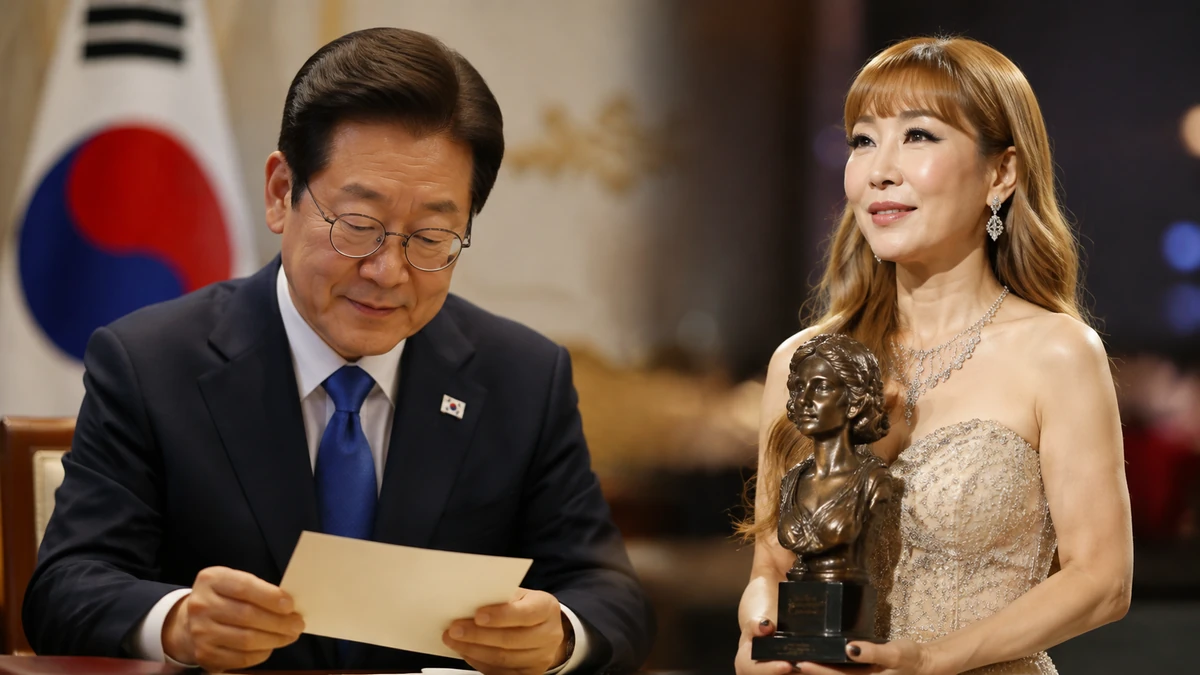
Sumi Jo’s International Recognition Celebrated as a Milestone for South Korean Culture
South Korean President Lee Jae Myung congratulated internationally acclaimed soprano Sumi Jo after she became the first Asian musician to receive the Maria Callas Special Award, describing the achievement as a moment of pride for the entire country. The recognition has drawn attention not only because of Jo’s decades-long career in opera, but also because it highlights the expanding global reach of South Korean culture beyond the country’s better-known pop culture exports.
For many Americans, South Korea’s cultural influence is often associated with K-pop groups, television dramas and films that have gained worldwide audiences in recent years. But the country’s cultural presence also extends into classical music, opera, theater and traditional arts. Jo’s award represents a different side of the Korean Wave, showing how Korean artists have built international reputations in highly specialized fields that require years of training and competition on global stages.
According to Yonhap News Agency, President Lee praised Jo’s achievement in a message shared on X, formerly known as Twitter, calling her receipt of the 12th Maria Callas Special Award a landmark moment for Korean arts. The award honors the legacy of Maria Callas, one of the most influential opera singers of the 20th century, and Jo’s recognition places a Korean vocalist among artists celebrated by the international classical music community.
Why the Maria Callas Name Carries Global Weight in Opera
The Maria Callas Special Award is connected to the legacy of Maria Callas, the Greek-American soprano widely regarded as one of opera’s greatest performers. Callas transformed expectations for opera singers through her dramatic interpretation, vocal ability and stage presence. Her influence remains strong decades after her death, and her name continues to represent artistic excellence in the opera world.
Opera is one of the most demanding forms of classical performance. Unlike many modern entertainment industries where global popularity can grow quickly through digital platforms, success in opera is typically built through years of formal training, language study, vocal development and performances in major theaters around the world. Singers are judged by international standards that emphasize technical precision, musical interpretation and artistic expression.
Jo’s recognition is significant because it reflects acceptance within a traditional European-centered art form that has historically been associated with countries such as Italy, Austria, Germany and France. Her achievement demonstrates how Asian performers have increasingly become major contributors to classical music worldwide.
South Korea has produced a growing number of internationally recognized classical musicians, including pianists, violinists, conductors and vocalists. Jo’s career has long served as one example of how Korean artists have entered elite international cultural spaces. Her latest honor reinforces the idea that Korean artistic achievements are not limited to contemporary entertainment but also include long-established global art traditions.
A Different Form of the Korean Wave: Classical Music as Cultural Diplomacy
The global popularity of Korean culture has often been discussed through the term “Korean Wave,” or “Hallyu,” which describes the international spread of South Korean entertainment and cultural products. While K-pop and Korean dramas have attracted millions of fans worldwide, cultural experts note that Korea’s international image is also shaped by achievements in fields such as classical music and performing arts.
Jo’s award illustrates what officials and analysts often describe as cultural diplomacy. Unlike traditional diplomacy, which is conducted through governments, treaties and official negotiations, cultural diplomacy works through people-to-people connections. Artists, athletes, filmmakers and musicians can influence how audiences abroad understand a country.
For the United States and other Western countries, this approach is familiar. American jazz musicians, Hollywood filmmakers and Broadway performers have historically contributed to the global image of the United States. Similarly, South Korean artists increasingly serve as representatives of their country’s creativity and innovation through international recognition.
President Lee’s message reflects this broader view of culture as a national asset. The recognition of an individual artist can become a source of national pride because achievements in the arts often shape perceptions of a country beyond its economic or political influence.
South Korea’s Cultural Identity Expands Beyond Popular Entertainment
South Korea’s rise as a cultural power has often been measured through the success of global entertainment companies, streaming platforms and music charts. However, the country’s cultural influence has developed across multiple areas, including classical performance, literature, visual arts and traditional heritage.
Jo’s achievement highlights this wider cultural landscape. Opera audiences may represent a smaller community than global pop music audiences, but the field carries significant prestige because of its history and artistic standards. Recognition in classical music can influence how a country is viewed within international cultural institutions and artistic communities.
The success of Korean classical musicians also reflects changes in global cultural exchange. In previous generations, many Asian performers sought opportunities primarily in Western institutions. Today, artists from Asia are increasingly recognized as leaders and innovators within international cultural fields.
For global audiences unfamiliar with South Korea’s classical music scene, Jo’s award offers a reminder that Korean cultural influence is not a recent phenomenon created only by digital entertainment. It is also the result of long-term investment in education, artistic training and international engagement.
The Role of Artists in Building International Connections
Governments around the world have increasingly recognized that cultural achievements can strengthen international relationships. While political disagreements and economic competition can affect relations between countries, cultural exchanges often create opportunities for cooperation and mutual understanding.
A performance by a world-class musician can reach audiences who may never interact with a foreign government or study another country’s policies. Through music, audiences experience a form of communication that does not depend on translation. This ability to connect people emotionally is one reason governments often highlight major artistic achievements as symbols of national capability.
In South Korea’s case, cultural diplomacy has become an important part of its international identity. The country has experienced a rapid transformation from a nation rebuilding after war into one of the world’s leading economies and technology centers. Cultural achievements have become another way for South Korea to present itself globally.
Jo’s recognition fits into this larger story. Her success does not represent a government achievement alone, but rather the result of an individual artist’s dedication and the broader environment that allows Korean performers to compete internationally.
A Symbol of Long-Term Investment in Arts and Global Competition
The significance of Jo’s award lies partly in the years of preparation behind it. International artistic recognition is rarely the result of a single performance or moment. It is usually built through decades of practice, education and experience on global stages.
For South Korea, the achievement also raises broader questions about the future of cultural development. As the country continues to expand its global presence, maintaining success will require supporting artists across many disciplines, from popular entertainment to classical performance.
Arts organizations and cultural institutions often emphasize that international recognition comes from sustained creative ecosystems. Talent development, access to education, international partnerships and opportunities for performance all contribute to whether artists can succeed worldwide.
Jo’s Maria Callas Special Award therefore represents more than an individual honor. It is a reflection of how Korean artists are participating in global cultural conversations across different genres and traditions.
What Sumi Jo’s Achievement Means for Global Audiences
For audiences outside South Korea, including those in the United States, Jo’s award offers a broader perspective on the country’s cultural influence. South Korea’s international reputation is no longer defined by a single category of entertainment. Instead, it is increasingly shaped by contributions across technology, cinema, music, sports and the arts.
The recognition of a Korean soprano in one of classical music’s most respected circles demonstrates the continuing globalization of culture. Artistic excellence is increasingly crossing traditional geographic boundaries, allowing performers from different backgrounds to participate in and reshape international traditions.
President Lee’s congratulatory message framed Jo’s accomplishment as a source of national pride, but its significance extends beyond South Korea’s borders. The award represents a shared global appreciation for artistic achievement and the ability of music to connect people across languages and cultures.
As South Korea continues to expand its cultural footprint, achievements like Jo’s show that the Korean Wave is not only about what the world watches and listens to online. It is also about the artists who have spent decades mastering their craft and earning recognition on the world’s most respected stages.
Comments
Post a Comment