South Korea’s Oscar Pick Signals More Than Awards Ambition: Lee Chang-dong’s ‘Possible Love’ Tests the Global Reach of Korean Art Cinema
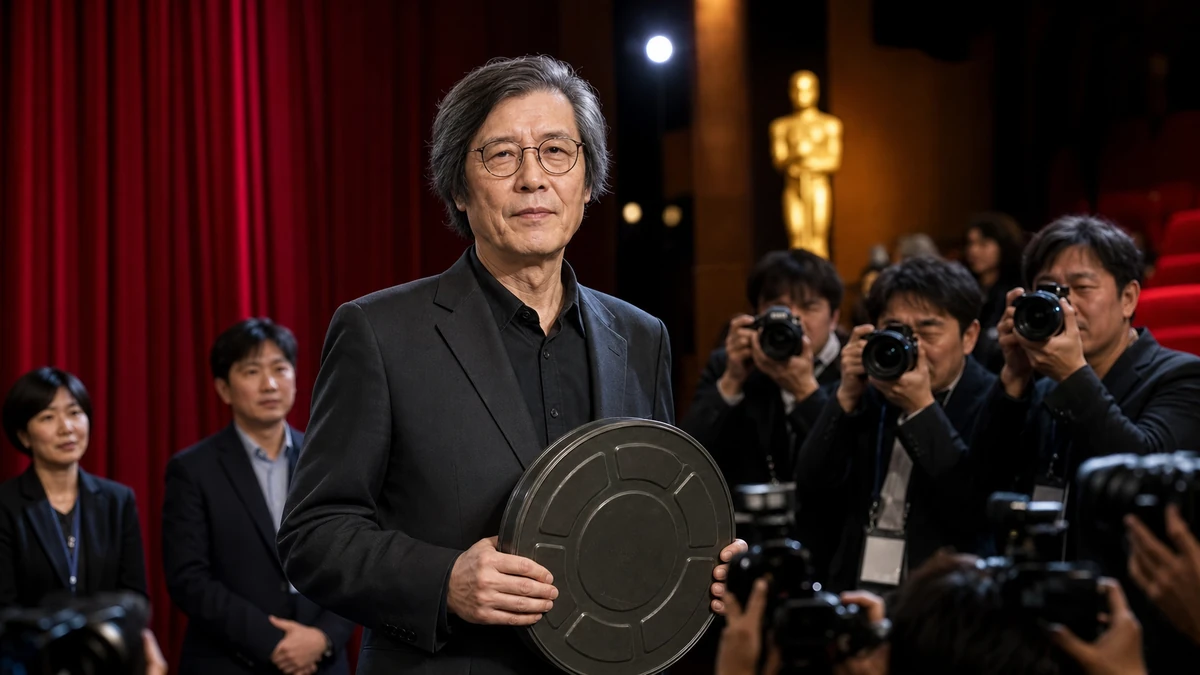
Image to help understand the article
South Korea’s Oscar submission is a statement about what kind of movie it wants the world to see
South Korea has chosen Lee Chang-dong’s new film Possible Love as its official submission for the 99th Academy Awards’ international feature film category, a decision that matters for reasons well beyond the annual Oscar horse race. In the international feature race, each country is allowed to submit just one film. That makes the choice less like a routine awards filing and more like a cultural declaration: This is the movie South Korea wants to put in front of Academy voters first, and by extension, in front of global audiences paying attention to the country’s cinema.
That alone would make the selection notable. But the pick carries added weight because it marks Lee’s first feature in eight years, following 2018’s Burning, and because it is also his first Netflix film. Lee is one of the most respected filmmakers to emerge from South Korea’s modern cinema boom, known less for commercial spectacle than for morally probing, emotionally exacting stories about ordinary people under pressure. His work has long attracted admiration from critics and festival programmers, even when it has not been designed for mass-market ease.
According to the Korean Film Council, the selection rested on the film’s overall quality, Lee’s clear message and its striking visual composition — what film critics often describe with the French term “mise-en-scene,” meaning the total arrangement of what appears on screen, from framing and movement to setting and mood. Just as important, the council praised the film’s layered characters and densely intertwined relationships. That emphasis is revealing. It suggests South Korea is not simply trying to send a movie that feels exportable in the most obvious sense. Instead, it is backing a director whose signature is seriousness: a filmmaker interested in how people hurt one another, misunderstand one another and, sometimes, find a way to reach one another anyway.
For American readers who may know Korean entertainment primarily through K-pop, Netflix thrillers or the global success of Parasite and Squid Game, Possible Love represents a different lane of the Korean Wave. It belongs to the tradition of prestige art-house cinema rather than pop-cultural sensation. And that is precisely why its Oscar submission matters. South Korea is reminding the world that its film industry is not only a factory for buzzy genre storytelling or breakout streaming hits. It is also a home for filmmakers who work in a more patient, literary and humanistic mode — one that has often shaped the country’s global reputation among critics before broader audiences catch up.
In that sense, the selection is as much about identity as about awards. It asks what kind of Korean story can travel now, in an era when streaming platforms and festival circuits overlap, when Academy voters are more international in outlook than they once were, and when audiences outside Korea are increasingly comfortable with subtitles and culturally specific settings. South Korea’s answer, at least this year, is not a flashy crossover object. It is a film about relationships, inequality and the fragile conditions under which love might remain possible.
A story rooted in class and labor, but aimed at something more universal
At the center of Possible Love are two couples from very different worlds: a laid-off worker and his wife, and a documentary director and her husband, who grew up in wealth. The worker, Ho-seok, is played by Sol Kyung-gu, and his wife, Mi-ok, by Jeon Do-yeon. The documentarian, Ye-ji, is played by Cho Yeo-jeong, while Zo In-sung plays Sang-woo, her affluent husband. The setup brings together people divided not only by money, but by profession, social position and the narratives they tell themselves about their own lives.
That premise is recognizably Korean in one sense. South Korea’s rapid economic growth has produced extraordinary prosperity, but also intense social pressure, labor insecurity and sharp awareness of class difference. Corporate restructuring, mass layoffs and the emotional aftershocks of economic dislocation have been recurring themes in Korean public life for decades. A documentary filmmaker making a project about a large-scale layoff crisis is therefore not just a plot device. It is a window into a society that often wrestles openly with the cost of economic success.
Still, the film’s structure suggests that Lee is after more than a social issue drama. The Korean Film Council’s comments emphasized that the characters do not remain mere types — not “the worker,” “the rich husband” or “the socially conscious filmmaker” — but become fully dimensional people whose desires and contradictions emerge through their relationships. That distinction is crucial. The most durable films about inequality are rarely the ones that simply sort people into moral categories. They are the ones that show how class shapes intimacy, how power can distort love, and how personal longing can survive even inside systems that reduce human beings to functions.
American viewers have their own frame of reference for this kind of story. U.S. cinema has a long history of exploring class tension through personal drama rather than policy argument, whether in independent films about labor and precarity or in family stories where money becomes the unspoken force behind every conversation. What makes Lee’s approach compelling is that he tends to resist easy ideological packaging. If Possible Love follows the path suggested by its summary, it will not ask audiences to identify the villain and move on. It will ask a more difficult question: What happens when people living under radically different conditions are forced to confront not only each other’s pain, but also their own private wants?
That is part of why the cast matters. Jeon, Sol, Cho and Zo are all major Korean stars, but they carry very different screen associations. Their presence gives the film a built-in tension between familiarity and unpredictability. For viewers outside Korea, those names may not all carry the same immediate recognition they do at home. Yet even for international audiences, the dynamic is legible: these are performers capable of embodying both social reality and emotional ambiguity. In a film about mirrored lives, that combination is likely to matter as much as the plot itself.
Lee Chang-dong’s real subject appears to be the conditions that make love possible
Lee described the movie in straightforward terms at its production event in Seoul: It is, he said, a film about love. But it is notable that the title is not Impossible Love, a phrase familiar from countless melodramas about forbidden or doomed relationships. Instead, the title asks what kind of love is possible, and what must exist for love to become possible at all.
That is a subtle but important shift. In American popular culture, stories about love often depend on obstacles that are either romanticized or exaggerated: bad timing, social disapproval, geographic distance, personal fear. The title Possible Love suggests a more grounded and perhaps more unsettling line of inquiry. If love is possible, under what material and moral conditions does it survive? Can it endure layoffs, humiliation, resentment, class resentment, marital disappointment or the ethics of turning another person’s suffering into a documentary subject? Can people who do not share the same social world still genuinely see one another?
Those questions fit squarely within Lee’s body of work. He is a filmmaker whose characters are often pressed into moments of reckoning, where private feeling intersects with larger social failures. His films do not usually offer sentimental reassurance. Instead, they dwell in discomfort, inviting the audience to look longer than it might prefer. That sensibility has earned him major recognition at international festivals, including best director at Venice for Oasis in 2002 and best screenplay at Cannes for Poetry in 2010.
For Academy voters, those credentials matter, but so does the emotional architecture behind them. The Korean Film Council specifically cited Lee’s humanism, a term that can sound vague unless unpacked. In this context, it means an insistence on treating even wounded, compromised or self-deceiving characters as fully human. It means refusing to reduce pain to aesthetic decoration or political talking point. In an awards landscape where many films are marketed around urgency, relevance or scale, a movie grounded in close observation of human connection can stand out — especially if it finds a visual and emotional language that feels fresh.
That may also explain why this film could travel internationally despite its specificity. A laid-off Korean worker’s circumstances may not be identical to those of a union machinist in the American Midwest or a contract worker in Los Angeles, but the emotional realities of instability, pride and strain are widely legible. So are the tensions between those who document suffering and those who live it, between the wealthy and the precarious, between marriage as social arrangement and marriage as mutual recognition. The more deeply the film investigates those tensions, the more likely it is to resonate across borders.
What Netflix changes — and what it does not
The fact that Possible Love is Lee’s first Netflix film adds another layer to the Oscar submission. In practical terms, it means the movie could reach viewers around the world more quickly and more broadly than a traditional art-house rollout might allow. For a director associated with festival prestige and contemplative cinema, that is no small shift. Streaming has dramatically expanded access to international film for American audiences, especially outside major cities where specialized theatrical releases often never arrive.
But Netflix also changes the conversation in less obvious ways. For years, the company has worked to position itself not just as a distributor of popular entertainment, but as a serious awards player and global film patron. Its involvement can bring marketing muscle, international visibility and built-in familiarity among younger viewers who discover foreign-language films through platform menus rather than repertory theaters or festival coverage. In that sense, Possible Love sits at the intersection of two major developments in world cinema: the growing prestige of Korean storytelling and the transformation of how international films reach English-speaking audiences.
At the same time, a Netflix release does not automatically flatten cultural difference or guarantee awards traction. It can just as easily create a new challenge: how to make a quiet, demanding film stand out in an environment designed for endless scrolling. For art cinema, visibility is not the same as attention. The platform can put a film within reach of millions, but it cannot ensure the kind of concentrated viewing that a filmmaker like Lee often asks of his audience.
There is also the Academy question itself. Being selected as South Korea’s official submission is only the opening stage. It does not guarantee a nomination, let alone a win. But even that first step matters because it signals confidence that the film can enter an international conversation already shaped by Lee’s earlier success with Burning, which became the first Korean film to make the Academy’s foreign-language shortlist in 2018. That history matters not as a promise of repeat performance, but as evidence that Lee’s work already has a foothold in North American critical culture.
More broadly, the Netflix angle reflects a shift in how national cinemas now project themselves abroad. A country can submit a film that represents its artistic ambitions while also acknowledging that global audiences increasingly encounter “national cinema” through transnational corporations. That tension is not unique to South Korea, but the Korean industry has become especially adept at navigating it. The result is a cultural ecosystem where local stories, international festivals and U.S.-based streaming platforms are no longer separate lanes. They are parts of the same route.
What this means for the United States
For the United States, the selection of Possible Love matters on several levels: cultural, commercial and institutional. First, it is another sign that South Korean film is no longer a niche import for American art-house devotees. Korean directors, actors and series have become familiar enough in the U.S. market that a new Lee Chang-dong film can be discussed not just as “foreign cinema,” but as part of a broader ongoing relationship between Korean storytelling and American viewing habits.
That relationship has deepened through both theaters and streaming. On one end are the prestige pathways that introduced many American critics and serious filmgoers to modern Korean cinema through festivals, repertory programming and distributors specializing in international titles. On the other end is the mass audience created by platforms such as Netflix, which have normalized subtitle viewing in American homes. That matters because it changes the threshold for entry. A film like Possible Love may still be more demanding than a genre thriller, but it enters a U.S. environment that is much more prepared for Korean-language storytelling than it was a decade ago.
Second, the subject matter is likely to land in recognizable ways for Americans. Stories about layoffs, class division and the emotional costs of economic restructuring have obvious echoes in the United States, where deindustrialization, corporate downsizing and the gig economy have shaped family life for generations. The details will be Korean, but the social pressure will not feel entirely foreign. If anything, one of the reasons Korean film has found such strong U.S. resonance is that it often dramatizes capitalism’s pressures with unusual clarity. American audiences may come for cultural difference, but they often stay because they recognize the system being described.
Third, the movie’s Netflix status speaks directly to American companies and the U.S. entertainment business. American streamers have become major gatekeepers for international cinema, and Korean content has become one of their most valuable global assets. A filmmaker of Lee’s stature making his first Netflix film is therefore not just an artistic development. It is also a marker of how far platform economics have reshaped world cinema. U.S.-based companies are no longer merely acquiring finished foreign films. They are increasingly part of the infrastructure through which national cinemas position themselves internationally.
Finally, there is the U.S.-Korea relationship at the level of soft power. For decades, the alliance between Washington and Seoul was discussed mainly in terms of security, trade and geopolitics. Today, culture is one of its most visible dimensions. Korean music, television and film have become part of everyday American consumption, giving the bilateral relationship a much broader public face. When South Korea selects a film like Possible Love, it is participating in that larger exchange — not through diplomacy in the formal sense, but through storytelling that enters American living rooms, media coverage and awards conversations.
The upshot is that this Oscar submission is not just South Korea talking to Hollywood. It is also South Korea speaking into an American market that now pays sustained attention. For U.S. audiences, companies and critics, the question is not whether Korean cinema matters. It is what kind of Korean cinema will define the next phase of that relationship: broad, bingeable hits, or more searching works of art that ask viewers to slow down.
The bigger trend: Korean cinema is broadening its global image, not abandoning it
It would be easy to read the choice of Possible Love simply as a prestige play: send the acclaimed auteur, aim for Academy respect, hope for serious reviews. But the more interesting interpretation is that South Korea is broadening the global image of its cinema at a moment when international appetite for Korean storytelling is already high.
For several years, Korean screen culture has often been exported to the English-speaking world through its most high-concept forms — social thrillers, survival dramas, revenge narratives and pop-inflected series that travel quickly across algorithms and social media. Those works have real artistic value, but they can create a skewed impression that Korea’s main export is intensity. Lee Chang-dong’s selection pushes against that simplification. It suggests there is confidence that a quieter, more reflective and more overtly literary film can also command international attention.
That matters because national cinema reputations can become self-reinforcing. Once a country becomes associated with a certain style, distributors, platforms and audiences start looking for more of the same. The risk is that global recognition turns into typecasting. By selecting a film centered on human relationships, labor precarity and the moral possibility of love, South Korea is resisting that trap. It is saying, in effect, that the world’s interest in Korean culture can sustain more than sensation.
What to watch next is not just whether Possible Love advances in the Oscar race, though that will certainly shape the conversation. More important is how the film is framed and received outside Korea. Will U.S. audiences approach it as an awards-season import, as a Netflix title, as a labor drama, as a relationship film, or as the return of a major auteur? Those categories are not the same, and each carries different expectations about pacing, politics and emotional payoff.
Another question is whether the film’s title and themes tap into a wider post-pandemic appetite for stories about connection under strain. After years in which many viewers gravitated toward either escapism or extreme narratives, there may be renewed space for films that ask quieter questions about how people continue living together amid social fracture. If so, Possible Love could arrive at a moment when its central concerns — vulnerability, inequality and the fragile work of understanding others — feel especially timely.
For now, the clearest point is this: South Korea’s Oscar submission is not merely a campaign move. It is a measure of where Korean cinema stands globally and how it wants to be seen. By choosing Lee Chang-dong’s Possible Love, the country is betting that one of its strongest messages to the world is not spectacle, but depth; not impossibility, but the hard, unresolved question of what makes human connection possible in the first place.
Comments
Post a Comment