Image to help understand the article
A scholar from Joseon enters a global conversation
As South Korean culture continues to reshape global entertainment, fashion and technology, there is a quieter question behind the rise of K-pop, K-dramas and Korean brands: What intellectual traditions helped shape modern Korea in the first place? A new look at the life of Yi Hwang, the 16th-century scholar better known by his pen name Toegye, offers one answer. He was not a pop icon, a politician in the modern sense or a military hero. He was a Confucian thinker, civil servant and teacher whose influence helped define the moral and intellectual architecture of Korea for centuries.
For many American readers, that may sound remote at first glance. But Yi’s story sits at the center of themes that are not foreign at all: the place of education in national identity, the tension between public service and private conscience, the role of grief in shaping moral life, and the continuing power of old ideas to organize modern societies. If Americans can readily grasp the cultural weight of figures such as Benjamin Franklin, Ralph Waldo Emerson or even the Founding Fathers as symbols of civic virtue and intellectual seriousness, South Koreans often place scholars like Yi Hwang in a similarly foundational category.
Born in 1502 in what is now Andong, a city in North Gyeongsang Province long associated with Korea’s Confucian heritage, Yi emerged during the Joseon Dynasty, when Neo-Confucianism served as the state’s governing philosophy. That meant scholarship was not simply academic. It shaped law, ritual, family life, bureaucracy and ideas about ethical government. To understand Yi Hwang, then, is to understand how Korea’s elite once imagined a well-ordered society — and why that legacy still matters in a country whose global image is often reduced overseas to export culture and consumer electronics.
The Korean account of Yi’s life emphasizes both his stature and his humanity. Revered after his death as one of the defining figures of Joseon Neo-Confucianism, he was also a man marked by repeated loss: his father died when he was an infant; his brother died in political exile; both of his wives died before him; a son and a great-grandson also died young. Rather than flattening him into a marble monument, the story presents a thinker whose scholarship and moral discipline were forged in hardship. That matters because in Confucian tradition, character is not measured only by abstract doctrine. It is tested in family life, mourning, duty and restraint.
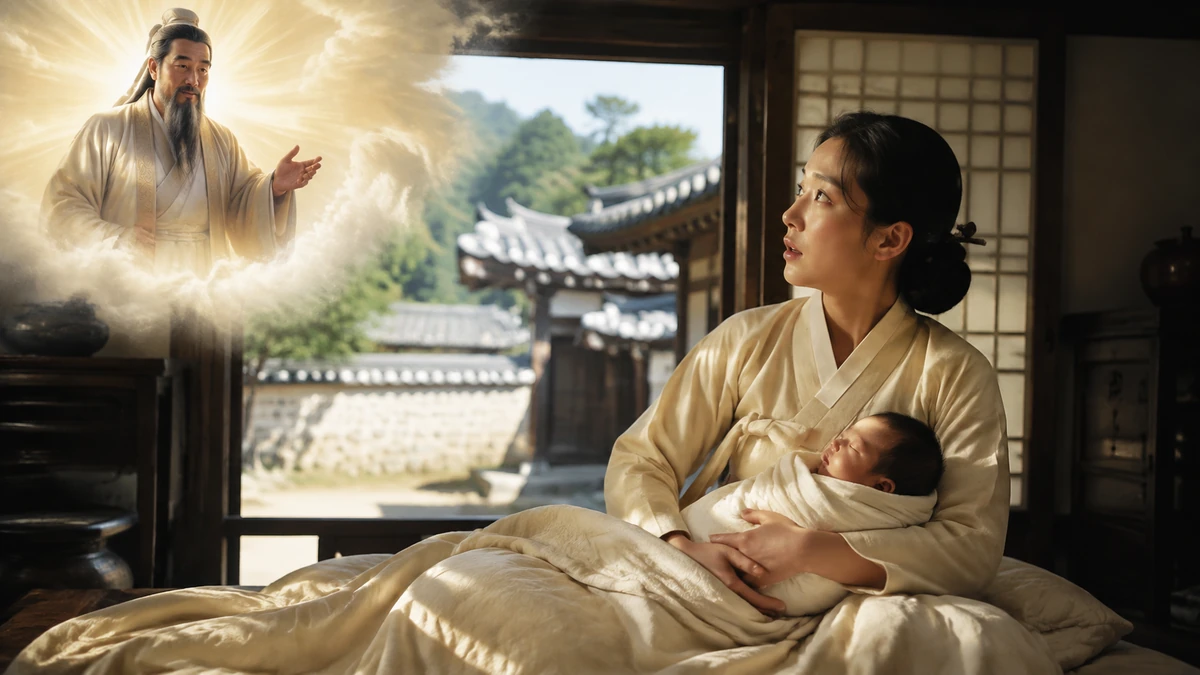
Even the legendary details surrounding his birth — including an account that his mother dreamt Confucius entered the family gate before Yi was born — show how later generations framed him. In the American tradition, stories about national figures often drift toward mythology, turning biography into civic instruction. Korea has done something similar with Yi Hwang, using memory not merely to preserve facts but to signal what kind of person and what kind of learning the culture chose to honor.
More than a bookish recluse
It is tempting to imagine a figure like Yi as an ivory-tower scholar detached from everyday life. The historical portrait suggests otherwise. He was precocious, emotionally sensitive and devoted to study from an early age. Family accounts say that as a child he was the only sibling to burst into tears when an older brother cut his hand, explaining that the sight of blood meant pain even if the injured brother himself was not crying. Whether read literally or as moral storytelling, the anecdote captures a trait that Korean tradition repeatedly associates with him: empathy as the starting point of ethical life.
That point is important for American readers because Confucianism is sometimes caricatured in the West as rigid, hierarchical and emotionally cold. In practice, its major thinkers were often preoccupied with self-cultivation, moral feeling and the discipline required to align one’s conduct with one’s principles. Yi’s intensive reading habits — so relentless that they damaged his health — fit within that world. He immersed himself in Chinese classical texts, especially the works of Zhu Xi, the Song Dynasty thinker whose interpretation of Confucianism became the backbone of the Joseon state.
For Americans, one rough analogy might be the role of biblical literacy, classical rhetoric and constitutional argument in earlier phases of U.S. public life. To master those texts was not simply to become educated; it was to gain access to the moral language through which political legitimacy was debated. Yi Hwang’s commitment to studying the “Four Books” and other canonical works made him legible within the power structure of his time, but it also positioned him to reshape it from within. His learning was not passive inheritance. It became intervention.
That is one reason his name endured. Korean history remembers many officials who passed state exams and held office. Far fewer became symbols of a larger intellectual current. Yi did. His scholarship helped consolidate what would become a major stream of Korean Neo-Confucian thought, particularly in the Yeongnam region of southeastern Korea. In a country where regional scholarly lineages once mattered deeply, this was not a narrow academic distinction. It helped create networks of teaching, influence and prestige that lasted long beyond a single lifetime.
Private grief and public ethics
One of the most striking elements in the Korean account is the attention paid to Yi’s conduct inside the family. That may puzzle readers accustomed to biographies that separate public accomplishment from domestic life. In Confucian thought, however, that division is weak. The family is the first school of ethics, and one’s behavior toward parents, spouses, children and even household dependents is part of the measure of virtue.
Yi’s life is presented as a case study in that moral framework. After his first wife died shortly after childbirth, he continued to care for his mother-in-law and handle affairs for her family until her death, a sign that marital duty did not end with bereavement. He later relied on a concubine, following the social customs of the era, to help raise his children and manage the household. What the Korean narrative emphasizes, however, is not the arrangement itself but his insistence that his children treat her with the same respect they would give a birth mother.
His second marriage, to a woman from the Kwon family who had endured severe trauma because of her family’s political persecution, deepens that portrait. The account says Yi treated her with dignity despite psychological instability that had roots in those earlier tragedies. Anecdotes describe him protecting her from embarrassment in front of relatives and responding with patience rather than anger. After her death in childbirth, his sons from his first marriage reportedly observed mourning near her grave, following their father’s teaching.
For American audiences, these details do not simply humanize a historical figure. They illuminate what moral authority meant in the Joseon world. Yi’s significance was not that he preached benevolence in essays while acting differently at home. Rather, later generations celebrated him because the two were seen as continuous. In modern newsroom terms, this is not just a profile of a philosopher. It is also a story about how a society decides whether a public intellectual has actually lived the values he promotes.
That helps explain why Yi Hwang remains meaningful today. In democracies around the world, including the United States and South Korea, there is persistent public fatigue with elites whose private conduct undercuts their public ideals. Yi’s appeal lies partly in the opposite model: a scholar whose reputation survived not just because of what he wrote, but because memory cast him as a person who practiced ethical consistency under strain.
Why stepping away from power became part of his legacy
Yi did not spend his entire life in retreat. He passed the state examination, entered office in 1534 and held a series of posts in the royal bureaucracy. He was promoted, recognized for his learning and at times trusted with responsibilities that reflected his standing in court. Yet the historical record summarized here also shows a repeated pattern: he served, withdrew, was recalled, then withdrew again.
That rhythm matters. In the Korean telling, Yi’s withdrawals were not simple acts of defeat or political irrelevance. They were responses to court turmoil, factional danger and persistent health problems, but also expressions of an ideal that learning and teaching could sometimes matter more than proximity to power. His pen name, Toegye, carries the sense of retiring beside a stream — a powerful image in East Asian literary culture, where withdrawal from office often signals not passivity but principled distance.
American readers may recognize a faint echo in the way some public figures are admired precisely because they appear reluctant to seek power for its own sake. There is a longstanding U.S. fascination with the statesman who leaves office, the judge who declines political temptation, the scholar who values institutional integrity over advancement. Yi’s case is not identical, but the moral geometry is familiar. Distance from court could enhance credibility.
That did not mean indifference to public affairs. The Korean summary notes that he submitted policy arguments, including one involving relations with Japan and border defense. He was neither a hermit nor an apolitical mystic. But his enduring reputation rests on a model of service that places conscience and learning above constant officeholding. In an era when political systems everywhere reward nonstop visibility, that model can feel surprisingly contemporary.
It also reveals a broader feature of Joseon political culture. Scholar-officials were expected not merely to administer but to remonstrate — to advise, criticize and sometimes refuse. That expectation helps explain why intellectual history in Korea cannot be cleanly separated from political history. Figures like Yi mattered because ideas had administrative consequences. Moral philosophy was part of statecraft.
The architecture of Korean Confucianism
To call Yi Hwang a major Neo-Confucian scholar is accurate but incomplete. His larger historical role was to help establish the mainstream flow of Korean Neo-Confucian thought. He built on earlier figures, especially thinkers such as Yi Eon-jeok, while developing a body of study centered on Zhu Xi’s writings and the classical canon. The Korean account underscores his determination to obtain the collected works of Zhu Xi and read them closely, a detail that signals both intellectual ambition and the importance of textual transmission in the 16th century.
For U.S. readers, this may sound like a specialist’s concern. But the stakes were much higher. Neo-Confucianism in Joseon was not an abstract school on a university syllabus; it was the organizing grammar of elite life. It shaped how officials were educated, how rituals were performed, how lineage was maintained and how authority was justified. A scholar who clarified or redirected that tradition could influence not just classroom debate but the broader social order.
That is why Yi Hwang’s importance extends beyond biography. He stands for the institutionalization of a moral-intellectual system that helped define Korea for centuries. In modern South Korea, where rapid industrialization, democratization and globalization have transformed daily life, the direct political power of Confucian scholars is gone. But the afterlife of that tradition remains visible in attitudes toward education, hierarchy, family obligation, ritual and the prestige of learning.
Americans often encounter Korea first through its most contemporary exports: music, film, beauty products, cuisine, smartphones and cars. Those are real and important. But the intense discipline, educational aspiration and social codes that foreign visitors often notice did not emerge from nowhere. They are products of a long historical layering. Yi Hwang is one of the names attached to that deeper layer — one of the people who helped give Korean civilization its internal vocabulary of ethical seriousness.
Seen that way, renewed attention to Yi is part of a larger trend in South Korea. As Korean culture expands globally, there is growing incentive at home to explain not only what the country sells or streams, but what it inherits. Nations experiencing a strong wave of soft power often revisit older figures to stabilize the story they tell about themselves. Japan has long done this with philosophers, tea masters and literary classics; China does it with Confucius; the United States does it with founders, abolitionists and constitutional thinkers. South Korea’s repeated return to Yi Hwang belongs in that same pattern.
What this means in the United States
For American audiences, companies and institutions, the significance of Yi Hwang’s story lies less in the details of 16th-century court life than in what it reveals about the cultural foundation beneath today’s U.S.-Korea relationship. South Korea is no longer a niche foreign market in American life. It is a treaty ally, a major technology player, an entertainment powerhouse and a cultural presence deeply woven into American consumer habits. Yet the Korean ideas most legible in the United States tend to be the newest ones. That can produce a distorted picture — as if Korea began with streaming platforms and semiconductor supply chains.
Understanding figures like Yi helps correct that. For U.S. businesses, especially in media, education and cultural exchange, it is a reminder that South Korea’s modern success is rooted in older traditions that prize scholarship, rigorous self-cultivation and the social authority of teachers. Those values do not map neatly onto every aspect of modern Korea, and they have often been contested, especially by younger generations pushing against hierarchy and pressure. But they remain part of the context American companies encounter when they partner with Korean institutions or market to Korean consumers.
For American fans of Korean culture, there is also a lesson in scale. A country that produces globally successful entertainment also carries a long philosophical lineage. That may sound obvious, but global fandom often flattens foreign societies into current trends. The same American audiences that can discuss plotlines in Korean dramas or chart performance by K-pop groups are increasingly likely to encounter museums, historical sites and educational content tied to Korea’s Confucian past. Yi Hwang is one of the figures through whom that deeper engagement can happen.
In academia and cultural policy, this matters too. The United States has spent decades expanding Korean studies, but public understanding still lags far behind public consumption of Korean culture. If Washington, U.S. universities and American media want a fuller grasp of one of Asia’s most important democratic allies, they need more than strategic analysis and entertainment coverage. They need intellectual history. Yi’s life offers an entry point because it touches issues Americans already debate: meritocracy, the burdens of elite education, moral leadership, care work inside families and the limits of political ambition.
There is also a more subtle comparison with the American experience. The United States often celebrates innovation and disruption; Korea’s story, as Yi represents it, gives equal weight to continuity and ethical inheritance. Neither model is complete on its own. But as the two countries deepen ties in business, defense and culture, better understanding that difference can be useful. It clarifies why South Korea’s future-facing dynamism coexists with enduring respect for older structures of learning and memory.
Beyond one biography, a broader trend to watch
The deeper significance of renewed interest in Yi Hwang is that it signals a broader attempt to connect Korea’s global present with its intellectual past. That is especially important now, when South Korea’s image abroad is both stronger and narrower than ever. International audiences know more Korean names, but those names are disproportionately drawn from entertainment and contemporary politics. Historical scholars, by contrast, remain far less visible, even though they shaped the institutions and values that helped form modern Korea.
There is an American parallel here. Popular global awareness of the United States often centers on Hollywood, Silicon Valley, presidential elections and pop music. But Americans themselves continue to revisit figures from earlier eras to explain who they are and what ideals they claim to inherit. South Korea is doing something similar when it returns to Yi Hwang: using a historical figure to ask what moral vocabulary still matters in a fast-changing society.
That does not mean uncritical reverence. Confucian traditions have also been blamed for reinforcing patriarchy, social rigidity and pressure-filled educational norms. Modern Korea, like modern America, is full of arguments over which parts of the past deserve preservation and which deserve revision. Yet the continued prominence of Yi suggests that many South Koreans still see value in his example — not as a blueprint to recreate the 16th century, but as a resource for thinking about responsibility, dignity and the uses of learning.
For English-speaking readers trying to understand Korea beyond headlines, Yi Hwang’s life offers a revealing lens. It shows a society that historically linked scholarship to state service, family conduct to public legitimacy and withdrawal from power to moral authority. It shows, too, how biography becomes national memory: the child marked by a dream of Confucius, the relentless reader who damaged his health in pursuit of truth, the official who stepped away from court, the grieving husband and father who tried to practice compassion at home, the teacher whose influence outlived his offices.
In the end, that may be why his story still resonates. South Korea’s rise on the global stage has created enormous curiosity about what the country makes. Yi Hwang points to a different question: what kind of moral and intellectual world helped make Korea itself? For Americans increasingly connected to Korea through markets, media, alliance politics and everyday culture, that is not a niche historical inquiry. It is part of learning how to read one of the most influential societies in the world today.
Comments
Post a Comment