Image to help understand the article
A Korean Animated Film About Identity, Survival and Belonging
South Korean animated film Gill, known in Korean as Agami, arrived in theaters on Sept. 9, introducing audiences to a fantasy story centered on a child whose life is transformed by an extraordinary physical change. The 2024 production combines Korean animation traditions with a deeply personal coming-of-age narrative about difference, acceptance and the search for belonging.
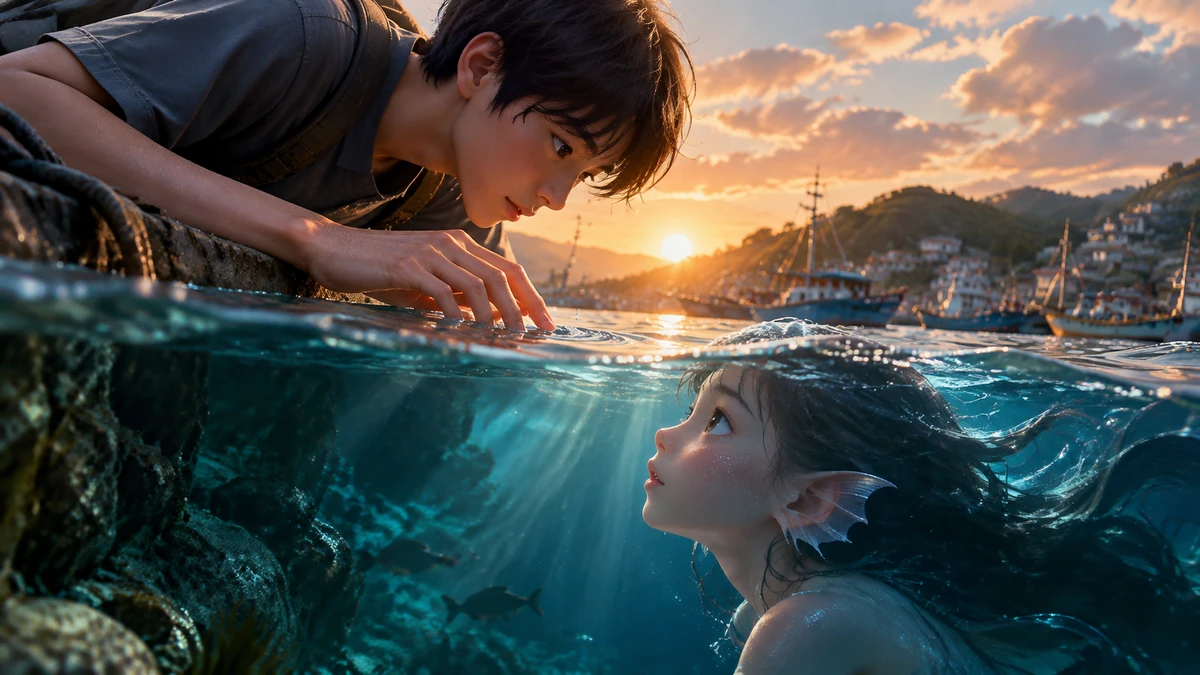
The film follows Gon, a child who develops gills after being thrown into deep water. According to the official synopsis, Gon becomes the only person in the world with this unusual ability, and the story explores the relationships and experiences that shape his life. The premise uses fantasy elements to examine themes familiar to audiences around the world: what it means to feel different, how people respond to those who do not fit expectations, and how identity is formed through relationships.
For international viewers who know Korean cinema mainly through acclaimed dramas, thrillers and streaming hits, Gill offers another perspective on South Korea’s creative industries. Korean animation has developed alongside the country’s broader entertainment expansion, often exploring emotional and social themes through distinctive visual styles.
Director Ahn Jae-hoon and a Korean Animation Tradition
Gill was directed by Ahn Jae-hoon, an animator recognized for works including The Shower, The Road Called Life, Green Days: Dinosaur and I, The Shaman Sorceress and Undertaker. His filmography reflects a focus on human emotions, Korean cultural memory and stories that often connect personal experiences with larger social themes.
The film was produced by Pencil and Meditation, a Korean animation company, and distributed by At Nine Film. It runs for 105 minutes and was released with a rating for audiences aged 15 and older in South Korea. The voice cast includes several well-known Korean actors, including Jung Hae-in, Kang Ha-neul, Lee Chung-ah, Yoo Jae-myung, Kim Sun-young and Won Ok-hwa.
In Korea, animated films are not limited to children’s entertainment. While many American audiences often associate animation primarily with family-oriented productions from major studios, Korean animation has a wider range of subjects, including literary adaptations, historical stories and mature emotional dramas. Gill fits into that broader tradition by using animation as a medium for exploring complex human experiences.
The Story Behind ‘Gill’: A Fantasy That Reflects Real Human Questions
The central idea of Gill begins with a fantastical question: what happens when a person becomes something no one else can understand? Gon’s transformation gives him a connection to water, but it also separates him from ordinary society. The film’s emotional focus comes from the tension between uniqueness and isolation.
The Korean title, Agami, refers to gills, the biological structures that allow fish and some aquatic animals to breathe underwater. For Korean audiences, the concept immediately suggests a boundary between human life and another world. The film uses that image as a metaphor for adaptation and survival.
Stories about characters who exist between two worlds appear frequently across global storytelling traditions. American audiences may find parallels with superhero origin stories, science-fiction narratives or fantasy films where unusual abilities create both opportunities and challenges. However, Gill approaches the idea through a quieter emotional lens, focusing less on power and more on personal relationships.
‘Gill’ Opens a Window Into South Korea’s Expanding Animation Industry
South Korea’s entertainment industry has gained worldwide attention through K-pop, television dramas and films. The global success of Korean content, often called the Korean Wave or Hallyu, has encouraged international audiences to explore more categories of Korean creative work, including animation.
Unlike some large-scale animated productions built around global franchises, many Korean animated films emphasize artistic storytelling and culturally specific perspectives. They often draw from Korean literature, folklore and everyday experiences while addressing universal themes that can travel across borders.
The release of Gill also highlights the diversity within Korea’s film ecosystem. The country’s movie industry includes major commercial releases as well as smaller independent and artistic projects. Animated features like Gill represent a segment of Korean cinema that may receive less international attention but contributes to the country’s broader creative identity.
What ‘Gill’ Means for the United States and American Audiences
For American audiences, Gill arrives at a time when interest in Korean entertainment continues to expand beyond music and live-action television. Korean films and series have reached U.S. viewers through theaters and streaming platforms, creating greater familiarity with Korean storytelling styles and cultural references.
The film’s themes may also connect with American discussions around representation and stories about outsiders. U.S. audiences have long embraced narratives featuring characters who experience transformation, exclusion or the challenge of finding community. While Gill comes from a Korean cultural context, its central questions about identity and acceptance are widely recognizable.
There is also a growing market opportunity for international animation in the United States. American viewers increasingly encounter animated works from different countries through global streaming services, film festivals and specialty distributors. Korean animation remains a smaller part of that market compared with Japanese animation, but films like Gill demonstrate the range of storytelling coming from Asia’s entertainment industries.
The connection between the U.S. and South Korea’s entertainment sectors has grown through collaborations, distribution partnerships and shared audiences. For American viewers interested in Korean cinema, Gill provides an example of how Korean creators are using animation not only for visual spectacle but also for emotional storytelling.
Box Office Performance and Early Reception in South Korea
During the week of Sept. 7-13, Gill ranked fourth among Korean films based on weekly admissions, according to data from the Korean Film Council’s integrated ticketing system. The film recorded 9,555 weekly viewers during that period, with a cumulative audience of 11,478 and weekly revenue of approximately 90 million won.
The film did not enter the overall weekly top 10 box office rankings during that period, but its release adds another title to South Korea’s diverse domestic animation landscape. Box office results provide one measure of a film’s performance, while international discovery through festivals, streaming platforms and overseas audiences can create additional paths for animated films.
For Korean animation, reaching global audiences often depends not only on theatrical performance but also on long-term visibility. Films with distinctive concepts and emotional storytelling can continue to find audiences after their initial releases.
A Different Kind of Korean Wave Story
Gill represents a quieter side of the Korean Wave. Much of the world’s attention on South Korea’s entertainment industry has focused on global music stars, blockbuster films and popular television dramas. Yet the country’s creative output also includes animated stories that explore personal struggles, imagination and cultural identity.
As international audiences become more familiar with Korean content, films like Gill show that the Korean entertainment landscape is broader than its most famous exports. The film’s story of a child searching for connection after becoming something extraordinary reflects a universal theme told through a distinctly Korean creative perspective.
For viewers in the United States and other English-speaking markets, Gill offers an opportunity to discover another dimension of Korean storytelling: one where animation becomes a tool for exploring humanity, vulnerability and the complicated process of finding a place in the world.
Comments
Post a Comment